

Fan Engagement > Podcasts > How to prove content success after YouTube’s new update
Summary
- Why Disney+ Just Bought the Sports Conversation Instead of Broadcast Rights: Gary Neville’s Overlap network has signed a distribution deal with Disney+ for 40 episodes of Stick to Football, plus a new spin-off, Stick to United, co-hosted by Wayne Rooney and Mark Goldbridge, who runs The United Stand fan channel. It’s the first time a single-club fan channel has been licensed this way to a major streaming platform. Disney+ isn’t buying broadcast rights, it’s buying into the sports conversation.
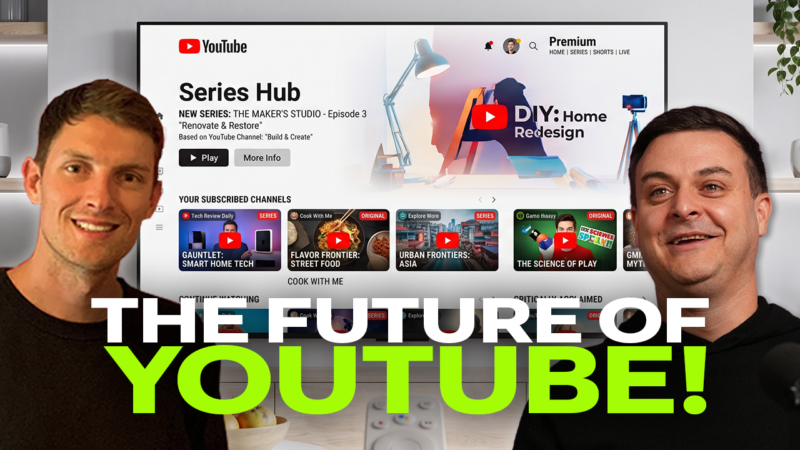
- Why YouTube Just Changed What Counts as a View: From 24 August, a YouTube view no longer needs any minimum watch duration. A real person just has to press play. Average view duration stays as the engagement metric, and only engaged views still count for monetisation. Every channel’s headline numbers get bigger overnight, but the view figure means less than ever.
- Why the NBA and WNBA Just Made TikTok Their Growth Engine: TikTok has signed a multi-year global partnership with the NBA and WNBA covering highlights, creator event access, GamePlan discovery and Pulse Premiere ad inventory. 497 million impressions during the NBA Finals converted to 426,000 direct referrals to watch games. 64% of women’s basketball fans cite TikTok as their primary source. The league is treating TikTok as core audience infrastructure.
- Why World 1 Just Built Sports Engineered to Finish in 30 Seconds: BattleBots veteran Nate Thomas and CEO Brett Morris launched World 1, a league of Micro-Sports designed to finish inside 30 seconds. Three formats: 10-yard sprints, bench press plus squat totals, and takedown-only fights. Backed by ten Olympic medalists. Instead of clipping an existing sport down for social, the sport IS already the length of a scrollable clip.
- Why Kick’s Founders Just Built Their Own Patreon: Kick co-founders Bijan Tehrani and Ed Craven launched Club, a superfan platform with subscriptions, tipping, paywalled content and a proprietary in-app currency called Club Cash. The currency locks fan spending inside Kick’s ecosystem, unlike Patreon’s neutral payment rails. It’s a Patreon rival built inside the company that already owns the creator base.
- Every Story This Week Is About Someone Rewriting What “Ownership” Means: Disney is buying the sports conversation, not broadcast rights. YouTube is redefining what a view is. TikTok is becoming a league’s growth engine. World 1 is inventing sports for the algorithm. Kick is building the Patreon it wants to compete against. Everyone is picking a different rulebook to tear up.
Shownotes
Transcription
Ed (00:13.838)
Hello and welcome to this week’s edition of the Attention Shift Podcast. I’m Ed Abyss and this is Andy Marston and we are back from our summer holiday break. But of warm weather training in Italy for me. I don’t recommend going round cities in Italy in August. Andy, do you have a good break?
Andy Marston (00:37.842)
Yeah, lovely break. I think you followed me out twitterly.
Andy Marston (00:44.018)
Yeah, nice break. Tottenham Tottenham ruins the break for me. But other than that
Ed (00:44.45)
Cool, right. Let’s duh Yeah, yeah, and similarly Burnley ruined my break yesterday at West Brom, but let’s not dwell on that. Right, let’s dive straight in. So there’s a lot happened over the last couple of weeks while we’ve been away. So first story Disney Plus are now challenging Netflix on who owns the sports conversation. So straight after the rest is football expanded their deal with Netflix, we’ve now seen Disney Plus go for the overlap network. So if anyone doesn’t already know, Gary Neville’s Overlap.
I’ve signed distribution deal with Disney Plus that puts Disney Plus in direct competition with Netflix Arrest’s football. The deal includes 40 episodes of Stick to Football with Neryl, Neville, Carriger, Wright, Keen, Jill, Scott, but also a new spin-off, Stick to United, which is co-hosted by Wayne Rooney and creator Mark Goldbridge. As everyone will probably know, Goldbridge runs a United stand, which is the largest Man United fan channel on YouTube. So it’s interesting that this is the first time a single club fan channel
has been licensed in this kind of way to Disney Plus. So I don’t think they are buying necessarily football coverage here, but they are trying to buy into single fan base’s loyalties. And interestingly I think this is something that it was going to be interesting what was going to happen with Goldbridge obviously when he went on board with overlap. And I think this is for the first signs of some change that we’re seeing.
Andy Marston (02:01.468)
Yeah, I think as well it’s interesting that the deal’s non exclusive, right? So everything will still be on YouTube, everything that goes on to Disney Plus.
Ed (02:07.959)
Yeah, the overlap made a point of saying we you know, we wanna stay in our in our spiritual home as well, which is different to what the rest of football are doing as well, because obviously they have come off YouTube with what they’re doing with Netflix as well.
Andy Marston (02:18.61)
Mm-hmm. Yeah, which I think’s to the point, right? You’re able to tap into different audiences. So I guess the the calculation that they’re making is that the audiences don’t necessarily cannibalize each other all that much. And that the people that are hanging out on Disney Plus looking for stuff to watch aren’t necessarily the same people that are browsing YouTube and treating it like T V.
Ed (02:42.773)
Is it do you think this is a signal that these fan led shows across all pe all Premier League clubs and also obviously bigger clubs around the world as well, are starting to have this transition now to become look look, we know that n th they’ve been mainstream for a while, right? But I think sort of in media circles they probably didn’t see them as mainstream. But clearly start we’re starting to see this crossover now, right?
Andy Marston (03:07.944)
Yeah, I mean so Sky Sports have had like YouTubers kind of built into their programming for like a couple years now, right? So I don’t think it’s anything entirely new. We’ve talked about it before on the on the podcast. Like I think podcasts are just really cheap programming for streamers and TV channels to take up. And it just allows them to have more stuff available. And like we saw it with with Netflix taking some YouTube content and starting to publish it on
Ed (03:14.411)
Yeah, absolutely.
Andy Marston (03:35.504)
Netflix as well, like not just in sport, but like I think they did a deal with with a creator outside of outside of sport specifically, where he went and put his content on onto Netflix. So I think it’s just the way of them adding additional programming. Don’t need to buy the rights. Manu obviously has a lot of interest around it as a club. There’s a big fan base, so you know that people there will be people that wanna watch. and I think to your point around
Goldbridge getting kind of access to talent by being part of the overlap. I think it’s interesting. Like obviously having Wayne Rooney there gives you a lot more credibility as kind of from a football perspective. And then you’ve also got Goldbridge bringing his audience, right? So you’re kind of getting the best of both sides.
Ed (04:22.935)
Yeah, I think it’s pretty unique as well. I think probably lots of people will have assumed, like me included, that that if something like Stick to United did sh did rear its head, that it probably would have been Mark with Gary Neville, ’cause I think they’d had plenty of banter down the years. and I know look for for a fact as well that Mark, you know, has the audience that he’s got and has the credibility with that audience and for a long period of time
was probably waiting to see how he could do that transition. But I think to go and get Wayne Rooney, who I think has managed to to over the last sort of year or so, you know, less you know, obviously he’s he seems to have stepped away from from football management and cultured. And I’m sure he’ll never say never, but he’s definitely gone for it one hundred percent with the with the punditry. I’m not sure many people saw that coming, and I I did I remember watch you know, when I watched the the promo for it as well, it was quite amusing. It’s gonna be interesting to see how much they agree, but more importantly how much they disagree.
Andy Marston (05:03.582)
Mm-hmm.
Ed (05:14.325)
Over the course of the season, ’cause I bet ya this week’s episode’s gonna be interesting, or the back of United’s performance at the weekend.
Andy Marston (05:19.986)
Yeah, I mean I think using Rooney makes sense in a lot of ways because I guess Neville already commands his own pretty large audience. Whereas Rooney’s obviously got the credibility, but not necessarily like the same following from people going to listen specifically to his insights. So like if Neville’s only got X amount time in the day, it makes sense to not double him up on this show. Like he’s already got so many other shows and media commitments. So I think it makes a lot of sense,
In terms of to the second point, and obviously like we you know, we mentioned at the start of the show about Tottenham and Burnley respectfully ruining our weekends, but you know, I think that’s where fan content comes into its own, right? Official publishers or the sorry, official team accounts find it difficult to criticise when things are going badly, but fans want to lean into that and they want they want justification for the way they’re feeling, and so that’s where like fan content has really like come into its own over the last decade.
And that’s where I think this kind of content kind of probably benefits the most from is like when it’s stuff that the official accounts can’t say. So yeah, they probably I mean, have timed it well with the start of the Premier League season. Either way, there’s gonna be lots to talk about from a transfer perspective, from a predictions perspective, but you know, losing a way to hull opening opening day of the season probably gives them an extra thing to talk about, but you know,
I think what’s nice is I’ve seen a few clips and you also get to understand Rooney’s perspective both as a player but also as a manager and what his mindset would have been going into it. So you do get some sort of level of credibility around like mentality as well as just it’s not purely just rage bait, which I think is nice.
Ed (07:09.047)
Yeah. Yeah, be interesting how that that relationship develops as well and also from the overlaps perspective, obviously gone and done what they’ve gone with stick to United. Clearly now there’s a plan there and the wider global group as well. You can see other stick to’s starting to rear their head. They you know, they’ve clearly gone down that path and it ends up being from a media and advertiser perspective, it is something that you can package for for brands.
to access a certain kind of audience. So you can definitely see the way they’re going there. And they obviously they’re getting it from the Disney Plus perspective, but they’re also getting it from the YouTube and a wider media cell perspective as well. So I’d imagine we’ll start to see more of those.
Ed (07:46.872)
Cool. Alright, then let’s move on to next story then. So YouTube, YouTube have announced that they’re a major update to their platform and it’s essentially mainly around what makes video success on the platform. So they have decided on the twenty four August that they’re gonna change how it counts views. And this is bringing it in line with lots of other social media and video platforms too. So a few a view still needs to be a real person to press play, but it no longer passes any minim minimum watch duration.
So average view duration, average per percentage view remains unchanged. Now, it narrows the gap between views and plain impressions. and any before or after view comparisons are gonna become a little bit meaningless if you cannot work out to do the adjustments. But importantly, what they have said as well is it’s like you’re not gonna make any more money just because you’re doing more views. This is because they are still gonna be looking at engage views as the way that you monetize.
your audience. But what do you think they’re trying to do with this?
Andy Marston (08:48.574)
I don’t know, I’d probably flip that question back to you. I think it’s probably just a vanity metric thing though.
Ed (08:55.735)
Yeah. I think that’s the point yeah, I was gonna make I mean it’s look, I think there’s there’s an element of trying to standardise how everyone else was counting views anyway, and they feel like they were being held probably to a higher authority and why should they? I think like I said, the point that they’ve made there that actually you’re only gonna get paid out anyway on engaged views, not on these views. So yeah, that lots and lots of people are gonna be able to tell whoever they’re working with, yeah, we’re doing way more views than we were doing before now and these are real views now and there’s gonna be this argument around, well, were they not real views before?
Andy Marston (09:07.014)
Right.
Ed (09:25.383)
but I think yeah, it just drives that that vanity metric, which for some people in the world really, really matters.
Andy Marston (09:32.669)
Yeah, it matters, but I think it’s also like something to grapple with in terms of like quality over quantity, right? And like when you’re s when you’re trying to understand audiences, like I think that’s something where like from a personal perspective, when I put podcasts up on YouTube, it’s always a little bit of a a difficult one ’cause it’s like it’s not all listeners or watchers are created equal, right? Some have d much greater decision making authority and therefore
actually for specific creators, you can kinda get drawn into a rat race if you start to chase just the the number of views on a on a video and you start to become more clickbaity in the way that you headline things and you start to become maybe more more divisive I guess in like the side of the argument that you take versus like nuance and measured responses. So I think like in general it
kind of bothers me when people overly index on like number of views versus like creating stuff for the sake of trying to put out good content and get across like good opinion. And then there’s another story that I wanted to get your opinion on that kind of t attaches onto this quite well. And it’s about a month old, but it came across it while we’re on the the holiday break, which is basically that the Cloudflare CEO announced in June AI bots overtook humans.
for bot sorry traffic on the internet, over like crossed over the threshold now, where bots make up fifty seven percent of all HTTP requests to HTML content versus humans at forty two point seven five percent. Which is pretty insane, right? So it’s like over half of the internet is just bots.
Ed (11:21.879)
Yeah.
I think what it I w I was gonna, you know, coming to the point you were making earlier. I know that when I look at viewing statistics across any of the clients that we work with, look right, you you you’ll need a volume of impressions and views to ultimately achieve what you want achieve. But it it’s the last thing I look at. I’m looking at click through late rates, I’m looking at average watch times, are those things going up? Are they increasing
Those are things that I’m really bothered about. I’m looking at where am I seeing dips in audience viewing, how long am I retaining that audience for? And I think the same would apply here for from a Cloudfare perspective, right? Like look, you know, yes, fine autocase. You’ve got tens of millions of people coming to your website, but ultimately what is the goal of your website digital platform? Ultimately, I imagine it’s gonna be about conversion in some way, shape or form. It’s gonna be about dwell time.
Andy Marston (12:08.766)
Okay.
Ed (12:15.371)
What I don’t know is on those AI bots, as much as it’s effectively f vacing views, is it also faking things like dwell times as well? Can’t fake click through can’t f can’t fake click through rates right. Well it’s maybe you can even do that right, but actual conversion, an actual human reaching out to you saying, I want some of what you are selling is difficult to fake. But even with some of those things I’ve seen as well where we’ve had inbounds, right? And you follow up on the inbound and you get no response and then I sit there thinking to myself, was that even a real inbound?
And and you’ve the reality is you’ve got to question everything and so it’s it’s not surprising but I guess it is sad and you’ve got to take then with a pinch of salt what your numbers are and probably go, Well it’s probably half of that in reality.
Andy Marston (12:57.66)
Yeah. And you also get people that will essentially create content. And I mean, the the podcast that got acquired by OpenAI, the T BPN show was a good example of this where essentially like the live streams were created to create the clips. And actually it was a clip it was basically just a clip farming exercise, right? Like it was create a three hour show, but then we’re gonna create thirty clips out of this that we’re gonna push across social channels and actually like
Ed (13:09.559)
Yeah.
Andy Marston (13:25.732)
the live streams might only be a couple thousand, but we’ve been acquired for a hundred million because we’re getting a ton of impressions across all the social platforms, whether it’s X, whether it’s Instagram, whether it’s YouTube thoughts, because we’re just constantly posting. so yeah, I think it’s as far as I guess takeaways, it’s like worthwhile I guess understanding.
that the view count has changed so that you don’t get duped by your by your agency telling you that you suddenly got a load more views. But then it’s also probably worth like rep like sort of introspectively asking yourself like what are the views for? And like what are you actually hoping to achieve from the views.
Ed (14:04.695)
You’ve got you’ve got to be driving some kind of conversion. Whatever your metric is, wherever you want to convert that audience to or for, becomes more important than ever for me. Like like I said, we have that we agonise over that as a B2B business internal terms of kind of like I I never get bogged down about about view metrics ’cause I’m always thinking about, yeah, but what did it actually mean? Because if that that view time is going down or if those click through rates are less than they were before
I I feel like like we failed. So I’m always looking I want to see those kind of metrics going on. But it always comes back to but you need a critical mass of audience to be able to then do all of those things too. So it’ll be interesting to see now that how that does impact all of those conversion metrics. that’s the thing I’m keeping my eye on. Cool. Alright then. Next story. So TikTok is becoming for the NBN WNBA
Andy Marston (14:40.371)
Yeah.
Andy Marston (14:44.7)
Yeah.
Ed (15:00.385)
as they’re terming it, an owned monetization layer, not just their highlights real. So they are they’re now becoming the probably one of the best examples of sports leagues who are using social media in the right manner. So TikTok has signed a multi year global partnership with the NBA and WNBA and they’re combining highlight distribution, creator event access, TikTok game plan, discovery and pulls premiere ad inventory. they’ve got thirty million combined TikTok followers. NBA interest up thirty percent.
W NBA interests up fifty percent since the start of twenty twenty six. So it’s actually a pretty big climb that in a relatively short space of time. And sixty-four percent of women’s basketball fans cite TikTok as their primary source for league updates. I know on some of the clients we work with, right, when we look at the audience, it’s still male skewed. So the fact that they’re getting such a high female skew is really, really interesting because I often always see an every metric male skew on some of those platforms. So during the NBA finals,
Game plan draw four hundred and ninety-seven million impressions, of which four hundred and twenty-six thousand direct referrals to watch the game. So, you know, the c I mean you can work out the conversion rate if you’re any good at maths there. How can more sports properties change their approach to social media to focus on business outcomes rather than reach? It follows on from the story with then the conversation we’ve just been having, really. Like ’cause views of vanity right, ultimately we want to convert. And they are suggesting that they are doing and using TikTok to do that.
Andy Marston (16:24.862)
Mm-hmm. Yeah, I mean, I wouldn’t say I’m an expert on TikTok specifically as a platform. So I don’t quite know what that monetization looks like. But I know that all the social platforms are trying to add in kind of more layers where whether it’s shopping, whether it’s like being able to tag products, etc. etc. So I would imagine that that does change things slightly. I also think that like the distinction between the MBA and the WMBA is important because
They’re they’re in slightly different stages. I know the WNBA has existed for quite a while, but I think you could still arguably call it a challenger league in terms of its kind of build.
Ed (16:58.241)
Yeah, it’s be it’s been through a bit of a lumpy period of time, hasn’t it, where it’s had to sort of reboot itself and so yeah.
Andy Marston (17:04.37)
And I would say it’s it’s it’s having a resurgence because of people like Sophie Cunningham and Caitlin Clark and Angel Reese. And there’s a bit of narrative there and there’s a bit of rivalry there, and there’s like some more sharp edges, I guess, to it, like where you’ve got kind of conflict between certain players, which I think is actually really positive for the league in terms of like having those rivalries and then the narrative that you can build around that. Like you suddenly start to follow it a bit more closely. And I think it’s kind of a case of
If you are a challenger league and you’re trying to build out your audiences, then you need to be where the audiences are. And specifically to the point around female audiences, if a lot of women are on TikTok and a lot of women are creating content on TikTok, then you need to be present on the platforms where the women are. You can’t just expect them to suddenly be tuning into ESBN and watching a full WNBA game if that’s not how they’ve ever really behaved in the past. So
I think it makes a lot of sense, particularly for the WNBA and for any Challenger League. And obviously it still makes sense for the NBA, but probably to a slightly lesser extent, because I would say the familiarity of the NBA is already pretty high. But maybe there are markets around the world where TikTok has big audiences, like Europe, for example. I know the NBA cares a lot about Europe right now. Obviously in Asia and then the Middle East, like TikTok’s also massive. So I can imagine for like non-US markets, like
TikTok’s probably great from a sort of global visibility and awareness perspective.
Ed (18:36.856)
Yeah, and and and I was gonna I was gonna give them some credit as well for not only measuring the fact that how you know how many direct referrals did they have but actually putting it out there as well so we can see ourselves. And when you look at it, right, I mean unless my maths is terrible, it’s about one percent, right, the the referral rate. I do take issue with them calling it though the owned monetised lair, ’cause the reality is it’s contradiction. They don’t own any of it. It’s owned by TikTok. They’re just borrowing it, they’re just renting it for a period of time they’re there. And if TikTok suddenly decide to change something, which as we know a lot of the platforms do
They’ve got to start all over again in terms of how they’re doing things. Now, you’d probably imagine at that kind of scale, TikTok are speaking to the likes of the NBA, WNBA, saying, We are going to make some of these changes. This is how they’re going to impact you. So they’re giving them a heads up to do it as well. but as we saw when when TikTok got switched off a a while ago, when there’s a lot of, you know, political flux
That suddenly goes off and everything you built there is he’s not yours anymore. So look, they are trying to drive direct refills and that’s the main thing, but they don’t own that there.
Andy Marston (19:39.015)
Yeah. I guess it depends what’s in the contract, right? Because it said like they’ve gone and signed a global distribution deal with TikTok. They’re not just they’re not just adopting the platform aggressively on their own. So if there is like maybe there is when you have that much kind of brand value and you can negotiate a specific deal, maybe there is maybe there are ways to get slightly more access than a typical creator would have in order to to broadcast. But I I haven’t seen any
statistics specifically around that, but like maybe there are ways for them to own it in a slightly more direct way than like a somebody that’s just going hard on a TikTok strategy would have.
Ed (20:20.652)
Yeah, they’ve been good for a number of years in terms of engaging directly with the sports rights holders. so I’d imagine they’re continuing to do that. I think they you don’t get a sense of and look, Newtures been the same as well, right? themselves though. I think in the past where it was a bit more competitive, now is they’ve realized now that they are v vessels in themselves in a lot of ways and their job is to facilitate ’cause the reality is if they just facilitate letting these people do what they want within the realms of what’s controllable
people feel more inclined to do it rather than being told what they can and can’t do. And they’ve all they’ve all wised up as well that to not go in and necessarily be doing multi million dollar deals when they don’t really need to, ’cause what they have got the one thing everyone wants is access to audience.
That’s the main thing. Alright, cool. Next story. So, World One League have launched Micro Sports. So it’s a vertical, purpose-built sports engineer to finish inside 30 seconds. I’m st pretty new to this still, so I’m still reading into this a little bit. But they’ve they’ve launched three formats. And what we will do is we’ll put a link in the show notes after this as so people go and read about this and see if something themselves. But three formats. The fastest, which is a ten-yard speed chamber sprint, the strongest, which is a combined bench pressure squat total, and the toughest, which is take down.
Only five. So this is something that’s been founded by BottleBots veteran Nate Thomas and CEO Brett Morris. It’s backed by 10 Olympic medalists for athlete credibility. And they’ve got a monetization plan around advertising, sponsor, and licensing. so competitors are range from Olympic medalists to complete unknowns in this. So they’re really trying to mix it up and have a combination of of elite athletes but also creators, right? So
Interestingly trying to build something then and then retrofit it back to the audience, whereas more people try and go to the audience first and then build on it. So this flips that usual model. What chances it got to actually function and and be a success, I guess.
Andy Marston (22:17.372)
Yeah, I mean I guess that depends on a number of factors in terms of how much they’ve raised and what success has to look like in order for it to be a success. I guess for some of it though, I think like working backwards r and sort of retrofitting something to the modern day consumption habits is interesting in terms of like most sports are obviously very old and so
Ed (22:25.058)
How long can they stay in the game, I guess, yeah.
Andy Marston (22:43.586)
way that they have been designed doesn’t necessarily fit like modern consumption habits. And so you’re having to you’re having to compromise a lot in terms of what your what your product looks like. And so I think like the two insights that are interesting to me, one is you’re building backwards from from the consumption or behavior rather than trying to create a behavior in people based on a legacy model or a legacy format. And then the second part of it
Is that particularly the strongest and the fastest part, I think like a very objective measurement. And I think that that’s interesting because everyone can measure themselves against it. And also like there isn’t a bigger flex than being able to say that you’re the fastest in the world or strongest in the world.
Ed (23:33.038)
Well, I saw a Chinese robot of the weekend being the fastest in the world now, apparently.
Andy Marston (23:36.799)
Maybe that’s the next the next iteration is you have you have your athletes, you have your creators, and you have your robots. Like the it could be that it could be the third layer. But no, I think I’m really bullish on the on the fastest bit ’cause I think like you’ve seen I’ve seen quite a lot of clips around the the athletics, like ’cause you had the Commonwealth games then basically straight into the championships in Birmingham. And so like Yeah, just after
Ed (24:01.696)
And diamond league in betwe or just afterwards, was it or was it in between? Yeah.
Andy Marston (24:05.438)
Just after. So there was those like loads of athletics clips. And I think if you do look at like any moments like the Commonwealth Games or the Olympics, everyone cares about who’s the fastest. And so I do think there is like an innate human curiosity in that. but I haven’t got enough insight into exactly what the monetization model looks like. And so I think where a lot of challenger leagues have struggled is they’ve had to promise a lot to get the athletes on board.
I wouldn’t say that these sports are ones where the athletes aren’t incredibly well paid currently. And so there probably is a little bit of an easier opportunity to get them on board. Specifically over 10 meters, right? Because I think the people that like the best paid sprinters will be the hundred meter champions. And the hundred meter champion isn’t necessarily going to be the fastest over 10 metres, right? Like if you think about someone like Usain Bolt, he was often behind for the first 70% of the race. And then
Ed (24:42.488)
Yeah, definitely.
Ed (25:01.688)
Yeah, yeah.
Andy Marston (25:02.416)
As everyone else is slowing down, he was just able to keep his speed at a faster rate. So he’d overtake them kind of nearer the line. So I don’t know if they’ll have to I don’t know if they’ll have to pay out a lot to the athletes to begin with. It could just be a promise that they’re gonna make them famous on social, and then actually the monetization for the athletes happens through their own channels and through their own fame, having having the title and like having the the IP.
So actually the value’s all in the IP of being able to say like you’re World One champion or what you’re the world’s fastest and you have a verification. A bit like like a Forbes list, like it’s almost like you just want the badge. That’s all they that’s I think they need to create from it, but what do you think about it?
Ed (25:43.609)
Yeah, I think it was interesting, like from what I’ve read about it as well, there wasn’t a great deal of talk about like there was lots of th I saw lots of talk about, you know, advertising, sponsorship, licensing, all the commercial opportunities that come with it, but not a great deal of talk about if if this is something that people are actually asking for. are these questions that that your public is actually posing, you know, who is the fastest over ten metres or who is the can lift the most of this like i i i i is it gonna resonate enough? And I think they’ve got to have a bit of a plan around
Like I say, ’cause they are not the marquee events. How are they gonna interlink in and around when other things are happening? So they end up getting in that conversation around around the content that people are looking for. Like you say, we’ve just had that period where there’s been so much athletics going on. I’ve probably watched more than I’ve watched in in ages. And interestingly though, I didn’t see a great deal of the Commonwealth games because certainly in the UK, of the deal that got done, it it I feel like that’s the thing I saw the least of. I saw a lot of the European championships in a lot of the Diamond League, but didn’t see that.
So it just goes to show if you don’t get your distribution model right, it’s dead in the water. And and the distribution model for me is gonna have to be where people are consuming the content, the kind of content they’re looking for. Like I said, I I did see a lot about it was interesting, actually I did see a lot about the weekend about like, you obviously what was going on in China with the robot games. And interestingly, like everyone, you know, I think the media were jumping on the fact that this robot beat Hussein Bolt’s world record, but lots of people in China were saying
I’ll be little bit disappointed if a robot wasn’t beating that Usain bot, right? Isn’t that what we’re building the f like surely if we’re building it to do that, it should be able to do that. Yeah.
Andy Marston (27:12.657)
Yeah.
Andy Marston (27:17.724)
Yeah. Yeah. I think to that point though, like the robot thing is a good example, right? Because you say our R Joe public asking for it. I think there’s a different thing between asking for it and like what gets served up when you end up watching, right? ‘Cause I bet you weren’t asking for like I would love it if my algorithm just got taken over by like robots racing. But like the fact that you then watched it kind of qualifies it as worthwhile, right? So ultimately I guess what they’re saying is if we put this stuff
into the into the atmosphere of social media, we think that there’ll be high retention and a lot of people will want to watch it and be curious and keep watching. And they’ve also designed it in a way where like the content’s very short. I think what will be interesting is what comes out the back of it. Because I think it’s all good having the clips, but then you need somewhere to take people beyond that. So like if you keep watching someone win the 10 meter sprints,
There needs to be somewhere for you to evolve to where you can watch a longer form YouTube video that tells you more about their story and more about their personality. Because if all you have is 10 second clips and you never have any other product, then I think you’ll struggle. And I think that’s where like stuff like the United Stand or these fan content things work, is that they provide all of the shoulder programming, right? So I guess I would say the success for this is whether
Ed (28:22.572)
That that conversion, yeah.
Andy Marston (28:43.826)
People start creating shoulder content around it because they’re curious about it, or whether it only ever lives on as 30 second clips and people watch it and immediately scroll. and then never re engage with the characters or with the with the with the IP. Cause I don’t think ’cause I don’t think they’re gonna have crowds. But then I think that that allows them to keep the costs pretty low, right? So like where the challenge has been for a lot of Challenger leagues is you need stadia, you need to get
Ed (28:59.064)
I agree, I just don’t think there’ll be enough yeah, you’re right, you’re right.
Andy Marston (29:13.288)
fans into the stadium. Like you need to sell tickets, you need to sell merch. Like if if to begin with they can keep everything digital, they can probably film this in a in a one off location that doesn’t ever have to move, right? And it doesn’t need to be particularly big. It just needs to have like a state of the art sprint chamber and and like a and a bench press essentially. And maybe some mats if you’ve got the the the MMA part, like the takedown part.
So it wouldn’t necessarily require a particularly big studio. So it could be pretty and could actually end up like with a lot of other leagues then saying like how do we do our version of this? I guess that’s the the the secondary part is like if this works, does world athletics just copy it? ‘Cause I guess that’s the one bit that will be the hardest is how do you make it so that your IP, World One, is the credible thing that everyone’s like, if you have that title, then you are genuinely the fastest in the world.
Ed (29:46.466)
Yeah, very true. Yeah.
Ed (30:10.2)
Yeah, yeah, yeah. Or do actually they set it up for all like the like I said, the traditional governing bodies to actually steal that from them and actually just just factor it into whatever they’re doing anyway, when they’ve got all these people as a critical mass in one place anyway for a major event.
Andy Marston (30:20.83)
Yeah, like if you’ve got Tennis Australia doing the one point slam before a tennis tournament, could you have could you have the ten meter dash like two days after after the main event or whatever where the where the athletes go head to head to see who’s fastest over ten meters? so yeah, I think that’s where it’ll be interesting.
Ed (30:38.892)
Alright. We’ve really dwelled on that one. That’s definitely captured our imagination. So maybe maybe it is capturing the imagination. Right then, last story. So Kick Founders have just built their own patron inside their own company. So they’re launching their own in app patron. but the interesting CS is going to be enough to take creators away from Twitch. Now they’ve been doing this for a number of years, right? So the Kick co founders, Bijan Terrani and Ed Craven, have launched Club, a standalone superfan platform.
They’re bundling subscriptions, tipping, paywall content, and a proprietary in app currency club. It adds new communities and a social layer to an official launch, and this is following on from an an earlier beta that they did earlier this this year. it’s been built by the founders, like we said, who already run Kick. So they’ve got a bit of experience around this. Who benefits from this? Is this fans, the creators, Kik, or all of the above?
Andy Marston (31:36.575)
I mean I think they’re just essentially creating a competitor as a Patreon, but you’ve also seen like Substacks start to add in like memberships. So I get and and then obviously you’ve got things like OnlyFans, which has that element to it, but then is kind of tarnished at the same time in terms of the the the brand. You see some athletes that have launched on there, even if they’re only creating athletic focused content, because the brand is also associated with adult content, it kind of
Ed (31:45.571)
Yeah.
Andy Marston (32:06.28)
doesn’t necessarily come across right. So there probably is space for other platforms. And I guess they’re basically l leveraging the fact they already have access to a lot of creators through Kik. They’re probably hoping we can convert like a number of the top streamers on Kik to use our platform instead of Patreon or instead of whatever else might be out there from a sort of membership base. But like, you know, I think Substack’s a good example of how this works, right? Like you’ve seen a number of journalists leave
publications and become independent and earn like pretty substantial amounts of money with people paying them a monthly subscription. So essentially you’re just democratizing that but giving people more options of where to do it. so I would I would say it doesn’t necessarily impact Twitch because I think you’ll probably still have content on Twitch, but there’ll just be a monetization layer. So I think the the main losers from this will be if people are convinced to
drop Patreon instead, use this platform instead. and I would be curious to see if YouTube ever ends up with a sort of membership platform. I guess you do have paid, you can have paid subscriptions on certain channels, right? But like maybe that maybe this is just I I don’t know. It feels like a it feels like an evolution of that of the fact that there’s just a lot of creators now that have these kind of paid communities or
Ed (33:16.782)
Yeah.
Ed (33:31.345)
well it it’s interesting as well, because obviously they’ve got this club cash, right? Which I think is probably one of the main points of this story as well. So they’ve got this closed currency, which means that that money never really leaves the building, so they’re gonna hold the float. So I look, I don’t know if you’d like me, you’ve got a Starbucks account. You know, I I remember reading once at Starbucks is one of the biggest holders of cash anywhere in the world. And similarly, this this cash that’s been generated, this currency, it sits within within kick, right? And ultimately and all the benefits that hold in all of that.
cash actually means. And it means also that if a creator builds up a big enough holding there, they’re almost d decent Yeah, decent like they’re disincentivised to actually leave because ultimately all that cash is out and they can’t take it anywhere. whereas Patreon runs on on on neutrality. which is why creators trust it. So it’d be interesting to see if actually people do think to themselves, I’m gonna stay here knowing that I I can’t take that. Yeah, they might have better economics but they’re gonna have less freedom
When things change and as we know, the wheels keep on turning, the world’s always changing.
Andy Marston (34:35.196)
Yeah. I mean, I think the other bit to this is like, as well as being the co-founders of Kik, they also own stake.com, right? Which is the crypto casino. so I would be curious whether there’s some sort of flywheel between the three platforms, right? If you’ve got Kik, you’ve got Club, which is the name of this platform, and then you’ve got stake.com. Are you trying to drive spending across all those platforms or not? I haven’t read enough about this to know whether that’s something that’s in the
Ed (34:42.658)
Yeah, that’s right.
Andy Marston (35:05.47)
in the works or whether this is purely out on its own. But I do agree with you. I think by creating that like club points rather than it be just cash, it does probably create an an a certain level of stickiness to the platform because there’s an element of needing to convert it back out of those back out of whatever that currency is, right? but probably leans on the fact that they already have a pretty good understanding of
FinTech based on the fact that they built, you know, one of the biggest crypto platforms in the world.
Ed (35:40.216)
You would think so. Cool. Thanks, Andy. That’s our time is up. I’ve been Ed Abyss, this Andy Mars and we be the Attention Shift Podcast. As ever, like and subscribe, and we’ll be back next week.
Andy Marston (35:53.16)
Cool, good to see you, mate.

- Tags: Brands & Agencies, Creators, Media Networks, Sports