

Fan Engagement > Podcasts > How UK padel made amateur sports shareable
Summary
- Why UK Padel Is the Only Operator Running Clubs AND the Country’s Biggest Competition Ecosystem: Most padel organisations do one or the other. UK Padel does both. Four clubs (Milton Keynes on the way), plus a nationwide competition ecosystem spanning schools, universities, County Cup, Masters and juniors to over-60s. It’s this dual model that made the LTA come calling in June 2026.
- Why 1 Million People Have Played Padel and Another 9 Million Want To: Padel is the fastest-growing sport in the UK. Neil calls it “the most competitive uncompetitive sport you’ll ever play.” Growth is capped by court supply, not demand. And Neil’s own warning: the feel-good factor won’t last forever. The sport has to prepare for what comes next.
- Why UK Padel Builds Community, Not Just Participants: “Participants create bookings. Communities create loyalty.” That’s Neil’s operating principle. A county championships live stream hit 10,000 viewers on a modest production. Clips regularly do 100k to 1m views afterwards. And the clubs stream matches into their bars as watch-alongs, so the community becomes its own distribution channel.
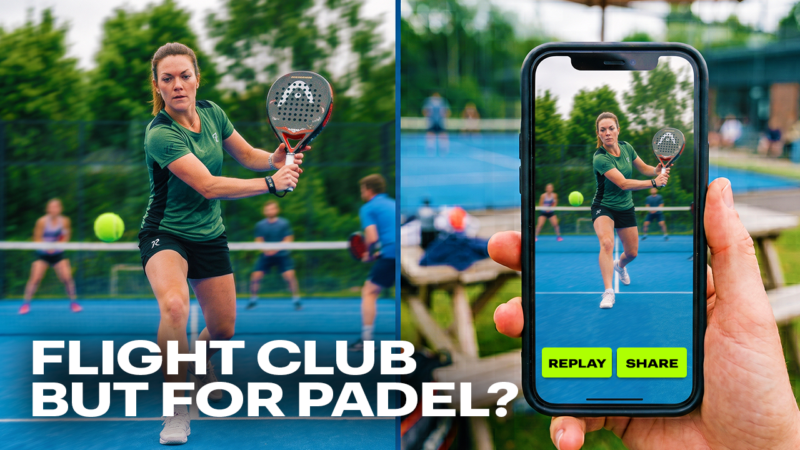
- How the PUSH IT System Turned Court-Side Highlights Into a Community Feature: UK Padel clubs have an on-court video system with a big red button. Play a great shot, run off court, hit the button, keep the clip. It’s an in-person experience, not an analytics tool. Roadmap includes a “laziness sensor” and “partner chemistry analysis.” Fun, not judgement.
- Why Padel’s Pro Game Is Still Trapped Behind the Paywall: Padel.TV sits behind a £9.99 subscription. Neil’s public thesis: the shop window is not always open. If the top end of the sport is meant to inspire the base, it has to be visible to it. Neil expects social clips will drive the first Premier Padel UK event in August 2026 more than the live stream itself.
- Why Nothing But Padel Might Be the UK Fan Destination Padel Needs: UK Padel’s YouTube channel isn’t called UK Padel. It’s Nothing But Padel, a distinct digital brand built to speak beyond the UK. 30 organic creators showed up unsolicited to the last major county championships. The digital destination for padel fandom in Britain is still an open market. Nothing But Padel is positioning for it.
Shownotes
Transcription
Ed (00:04.647)
Hello and welcome to this week’s edition of the Attention Shift podcast. If you’re enjoying the show, hit like and subscribe wherever you’re listening and watching and make sure you hit that notification bell to never miss an episode. It helps more than you know. So today we’re going to talk about paddle. Paddle is the fastest growing sport in the UK. One million people have played it.
Ed (01:03.013)
but another nine million people want to. I definitely need to play more than I have done. But it’s about more than participation. It’s about the harder challenge underneath it, turning millions of players into fans, building community through digital and live content and closing the gap between grassroots and the professional game. Joining us today is an old friend of mine, Neil Percival, CEO and co-founder of UK Paddle, who’s at the front of that very conversation. Neil, welcome to the show.
Neil Percival (01:28.642)
Hi, thanks for having me.
Ed (01:30.907)
So I think what would be useful, because there are, guess the paddle landscape is incredibly fragmented, right? I think it’d be useful for people to understand what UK paddle is, what your role is in that paddle ecosystem.
Neil Percival (01:45.295)
Yeah, sure. So I’m one of the co-founders and CEO of UK Paddle. And I guess in, I mean, it goes back to 2020 really, I became obsessed with the sport and what it could become and just couldn’t really put down the idea of paddle. Every time I looked at the growth numbers around paddle and the…
players and the courts that were being driven across the world and across Spain in particular, it became more and more interesting. you UK Paddle as an organisation, we opened our first two-court club, Home Green in Buckinghamshire, which was something like the 60th club in the UK at the end of 2021. But we soon realised that, you know, we have clubs, but we just weren’t building courts alone.
Ed (02:28.976)
Wow, yeah.
Neil Percival (02:39.662)
We wanted to go on a path to start building community. So we set out to create a nationwide kind of ecosystem of competitions and events that could help gradually lift this game up as awareness became a critical mass. So that combination of clubs and events really, as you said, is something that separates us in the market from other organizations.
Ed (03:02.342)
Yeah, it’s pretty unique.
Yeah, I mean, we tried a little bit about that off camera, didn’t we? Often you’ll find operators of clubs or operator of, I guess, championships as you are doing, but to be doing both of them, you know, I can see the benefit of the fact that you’re operating these clubs is like you are constantly in touch with the grassroots and understanding what people want.
Neil Percival (03:25.356)
Yeah, I mean, you what we think we’re hoping to do as an organization is build community. You know, as one of our leading paddle coaches said so well at our club over in the beautifully named Stoke Poges, paddle is the most competitive, uncompetitive sport that you’ll ever play. So people come for the sport, but then they end up staying for the people. you know, our nationwide event series that are played at
Ed (03:43.077)
Yeah.
Neil Percival (03:51.917)
all other operators clubs, we use the biggest clubs in the UK with 10, 12, 14 courts, indoor warehouses, fantastic venues for great competitions and events. But we’re putting together as compelling a national program as we can for competitors from schools under 13s to under 15s to under 18s to universities to then age group.
county cup, county championships events from open categories, which has the best players in the UK, over 40s, over 50s and 60s. So, you know, we are the operator on the one hand, but then, you know, on this other hand, building opportunities for the entire UK paddle market, we hope. You know, and we think our events, importantly, are, you know, are a shop window for paddle and for people trying to access the UK paddle market.
Ed (04:44.696)
Absolutely. And think I mean, I know that recently you announced a partnership with the LTA around the Paddle County Cup, you know, and I guess that brings governance promotion and I suppose what you’re trying to put in place is like player pathways, right? So what does having the LTA behind you at that scale actually unlock and what does it signal about Paddle’s place in the British sport ecosystem?
Neil Percival (05:08.014)
Yeah, we launched a county-based county championships in 2023. We turned this into the biggest paddle tournament series in the UK. So partnering with the UK, who are the governing body of paddle as well as tennis seemed like the obvious next step. And it’s really there to cement these competition series place in the paddle landscape.
Tennis County Cup has been in operation for 130 years. for me, the exciting bit isn’t really just about the announcement. It’s what it says. It says that people are starting to take paddles seriously at the higher end for competitions, but also what that will inevitably do, which is it will lift the whole game up and make awareness of it much larger.
Ed (05:46.043)
Yes.
Ed (05:58.759)
Yeah, look, the reality is, if the LTA have identified that what you are doing is worthy of them to get involved with, because look, you and I have worked in and around sports for a long, time, right? They don’t just go and work with anyone. They have got to be sure that you are the right organization to be able to be custodians of the game in a lot of ways, right? And I think that is a massive endorsement for the work that you have put in since you started. And I think, look, it’s interesting, right?
Starting from a single event in 2023, you’ve now got this ecosystem of 300 plus players in the 2025 Open. The registered players are now across the UK. think this is a figure of 12,000 registered players because most people just turn up and play. The thought of, why do I register? What is the point of doing those kind of things? Doesn’t often come into people’s minds when they’re just turning up to play, right? Why do they do that? Why do they register?
Neil Percival (06:53.206)
Yeah, it genuinely shows that paddle is moving from that niche curiosity point. And you need everyone to be curious to grow something. But it says that it’s on a fast track to being hopefully a central piece to one of Britain’s sporting organizations in the LTA. And that we all feel that this sport really, with some long term backing, can do an incredible amount and have an incredible community impact.
Ed (07:20.774)
And it feels like, and again, we talked about this off camera, like I go to a gym, right, and everyone, you know, in the gym, everyone’s obsessed about paddling. I do have massive FOMO. I’ve just not managed to find the time to actually join them. But also I think they play so much now and they’re having lessons as they’re playing at the same time as well. I feel like I’d be miles off the quality of play that they are. But it feels like it’s making that transition. And because of the fragmented nature of different stakeholders, the only way it progresses is if it starts to have this kind of structure.
Neil Percival (07:50.959)
Yeah, mean, Paddle feels like a movement, you know, at the moment. And this is where it gets really interesting is that you need lots of different people to pull that movement together. So, you know, we’re doing it with our nationwide competition ecosystem. People are getting, you know, 12, 14 appointment to view, appointment to attend competitions a year through all age groups. And we’re doing it through the events. And we’re doing it
by creating local community clubs as well. We’ve got four open at the moment. There’s a fifth on the way in Milton Keynes, which we’re enormously excited about. But these are overwhelmingly friendly and community places to be. There isn’t standout operators in the UK paddle market at the moment. There’s no one who’s basically trying to dominate the entire market. There’s the David Lloyds, which probably have the largest number of courts. There’s Game for Paddle, which
probably has the next amount of courts. But I think it’s something like two thirds of the paddle courts in the UK are in tennis clubs. So, you know, this whole ecosystem is really, really diverse and really varied and creating these community opportunities to bring like-minded groups together, people with the same passions at the same levels is enormously thrilling.
Ed (09:12.122)
Yeah, see, look, the reason we do this podcast, obviously the attention shift and reason we do this is because we are looking for things that are gaining attention essentially. And it feels like Paddle gains a disproportionate amount of attention for it standing in the professional sport and ecosystem. I think, but what’s made it interesting to me as well is when you talk about that community element and why people come together to do this, it’s like, but you’ve also said at the same time, there’s this feel good factor that exists at the moment.
won’t last forever, I guess what do you see that starts to come after that kind of like, because you can, I guess you like say you can only live off that feel good for a little while. How is UK Paddle helping to prepare, you know, the Paddle ecosystem to, to start put structure in place that’s not just about, great, I want to play it because everyone else is playing it.
Neil Percival (10:05.652)
We’re helping create a journey for people to play paddle and that’s really important for us. So a route for someone who’s never played before and picks up a racket for the first time or a route from someone who’s really trying to drive themselves to the highest level of the game. At some point, the conversation around paddle will inevitably become, it will move from have you tried paddle, right? To why should I keep
playing, you know, why should I keep participating in this? So I think giving people that sense of purpose as they come to the sport for the first time, giving them that sense of community that they might have lost from other sports, you know, through injury or just, you know, losing interest in that or whatever. But I think if you give people the community and you prepare that community and the rivalries between
the counties that we have at our county cup competitions or the rivalries that we have at our schools competitions or the community and rivalries that we bring in our pairs competitions across masters age groups and allow people to follow their friends online and have people watching as well as playing. I think we’re trying to build all of that so that when the inevitable comes, oversaturation, people…
losing their way with it a little bit, that we’ve got that kind of sense of belonging for people to attach to.
Ed (11:32.87)
Yeah, look, and I love this story as well. Like I said, like, you know, we’ve chatted a bit down the years since you’ve been doing this and obviously I’ve kept an eye on what you’ve been doing as well. And it has become really clear that how important community is to what you’re doing. Part of your mission as well is you’ve been thinking about how you use digital content as a way to drive that community too. And look, and you’ve got a long history in understanding how that works.
In practice, what do you the difference is between building the community that you’re building that’s not just physical, but also the participation? How are you layering that?
Neil Percival (12:09.602)
Yeah, I mean, you don’t.
Participants create bookings. Communities create loyalty and long-term value. We need participants to create bookings to fill up our local clubs. And then we need communities to create loyalty to support our nationwide series, to support our digital ecosystem. building participants is about getting people onto the courts. Building that community is about giving people reasons to care.
Ed (12:19.718)
Yes.
Neil Percival (12:42.082)
before and after they play. know, leaning into the content ever so slightly, the long tail of our content is people engage with these great moments that they’ve seen from an over 60s competition or a juniors competition, because actually they haven’t seen it anywhere else before.
Ed (13:01.08)
It makes it accessible as well, right? Because I guess it’s not necessarily… Look, I’m sure they’re good, but they’re not necessarily elite as you would see in other sports. So people feel like, well, if they can do it, I can do it.
Neil Percival (13:10.318)
Yeah, it absolutely connects experiences that would otherwise be isolated. You we get these wonderful moments on our Instagram feed where, you know, someone pops up from somewhere and says, wow, these grannies can play paddle. And then, know, 40 minutes later going, this is the best rally I’ve ever seen. you know, we very rarely have a negative start around any of our competitions and events. And generally, once people
Ed (13:25.393)
Ha
Neil Percival (13:38.424)
get on board into that kind of ecosystem, it becomes powerful and overwhelmingly positive.
Ed (13:43.826)
Yeah, I mean, it’s interesting, right? Like you said, we would have a bit of a chat about like, what does, what does, I guess, big look like? What does scale look like? And you’ve, you know, you’ve had 10,000 live viewers on live productions of county championship events, right? And they are county championship events. So to get those kinds of numbers watching these things is, is remarkable. What I really like about it is, and I didn’t know much about this, and I started looking into it, like this, this push it on-court video system that you’ve created.
And you’ve described this like fun fanatical exuberant place to be able to run off court and hit the red button to keep their eye lights light. Just explain a little bit what that is, because I’d really like the interconnectivity there between the physical that then becomes effectively digital afterwards.
Neil Percival (14:22.39)
Yeah, so paddle is one of the few sports where your biggest opponent is usually your own partner. Now, this has its wonderful challenges and just makes it an absolute joy. But the Push It system that we use is basically, it has live streaming capabilities so we can live stream direct to YouTube or direct to other channels. But really it’s USP is it’s there to capture those wonderful moments.
Ed (14:30.215)
That’s right.
Neil Percival (14:52.024)
So we’re having a rally, Ed, I hit you on the back of the head, you laugh, I run off, I hit the big red push it button, I share it to all of my friends on social media. The next time we play, you know, something else amazing happens. But what it’s capturing at this growth stage of the sport is genuinely the joy. So, you know, I’m not saying paddle is more joyful than any other sports per se, but this moment.
Ed (15:13.041)
Yes.
Neil Percival (15:20.758)
at moment is we’re having this rally, you do something that you think is otherworldly and you absolutely lose your mind, run off that court, we’re all high-fiving and we’re all talking about it in the sports bar afterwards or over a coffee or whatever. And of course that content is highly shareable and where it’s going, which I think is tremendous, is we’re not taking it in a…
Ed (15:34.535)
Yeah, yeah, yeah.
Neil Percival (15:47.545)
push it aren’t taking it in an overly analytical direction. So we’re not going to start showing to people how fast they hit a serve or, you know, where their heat map is on the court. We’re going to start showing people how little they’re moving, their laziness sensor. We’re going to start showing, we’re going to start showing their partner chemistry. So actually you start to build on this thing, which is actually, you’ve really got to work with this other person on this court with you and get through all of these different things. I think it’s a lovely direction for content.
Ed (15:53.916)
Yes.
Ed (16:00.463)
Yeah, yeah, yeah, I like that.
Ed (16:16.007)
It’s funny, like the way you described as well, think, I mean, the amount of times I’ve been to flight club, as I’m sure everyone else has been to flight club in the UK, where ultimately you get that replay of when you do something that’s shareable. It feels very, very similar to that, but also you’re in a bit more control over this too, that you’re, because you are actively deciding that you want to have that clip, you are probably more likely to then go share it with other people, which is gonna, like you say, it’s probably gonna expose it to…
Neil Percival (16:20.779)
Yeah, yeah.
Ed (16:44.163)
a wider audience than it would do normally by the very nature of the value exchange of how much effort you’re putting into it to decide you want to remember that moment.
Neil Percival (16:54.85)
Absolutely. So at our club, just outside High Wycombe, we home a green where we’ve got four courts. have pushing it on a big screen and it basically just replays back the day’s best moments as people are having a drink. you know, that’s quite, it’s quite cleverly thought through in terms of actually how you can engage people.
Ed (17:10.855)
It’s almost theme park-esque. When you go on the roller coaster and you see yourself afterwards, I can see the why of that, you would do that and how that sort of replays in people’s minds. And like you say, it’s a bit of fun, And the idea of you’re not going for the elite, you’re going for the laziest in the center or how you’re not working together.
Neil Percival (17:33.999)
Absolutely. The funny statistics part doesn’t necessarily be funny per se to make it important for me. What I really like is when people hit brilliant shots and then they watch it back and they go, my God, I’ve done this. But one of the key things about paddle is actually not making mistakes. It’s a very attritional, positional game. It’s tactical ahead of technical. So actually showing people these moments is a really good way to get them.
infused by what they can do, but also then as a kind of really important reminder of what the fundamental basics are. But yeah, touching on theme land, let’s not get too far into it because at one of our clubs, we’ve actually got two retractable roofs. So there’s a lot of entertainment park stuff going on at UK Paddle at the moment.
Ed (18:06.587)
Yeah.
Ed (18:18.277)
Yeah, yeah, yeah. No, look, it’s… I love the way you’re going with that. you’re effectively… Yes, it’s a game, but you’re putting gamification into the game as well. And the casual edge to a competitive environment as well. Because look, I know it does get very competitive. I’ve heard people talking in the gym about someone they played against. Like, he or was very, very intense. That was a tough game and I don’t want to play them again because they were too good or they were too bad. But this actually, I think…
desensitizes that a bit as well and like I said makes it more about ultimately what you’re doing less about that.
Neil Percival (18:51.766)
Yeah, we definitely don’t want technology and we don’t want Push It to judge someone’s game, right? We don’t want people being judged by it. But we want to absolutely give you another reason to talk about it. And that’s what the system and the 30-second clips do. People don’t need more statistics yet. They need better evidence for what they’re already enjoying and how they’re playing well or not playing well with that partner. So the underlying for me…
Ed (19:11.365)
Yeah.
Neil Percival (19:21.07)
idea for me with technology in paddle is about making it more enjoyable and push it is one of the things that’s helping us achieve that.
Ed (19:30.491)
No, I it does. It sounds great. And it feels like it is sort of really leaning into that community element. look, clearly you are building your edge with UK Paddle and that. actually, and I guess this is the challenge that’s now lurking in the background, right? So obviously that thing, feels like you’re nailing it. And I’m sure that other people will be taking learners from you across the facilities that you don’t operate. And you’ve written a lot about this publicly, right? The gap between grassroots and a professional game. So sort of digging into that a bit, like,
You you wrote a post on LinkedIn about this as well. You’ve written about how the shop window is not always open, that the elite game is fragmented, hidden behind paywalls. You know, what, I guess, what is the cost of that sport? Like, how do you connect the dots?
Neil Percival (20:15.182)
Yeah, I think it’s a really interesting area and an important area. You always want the top end to drive to drive the bottom end and the top end to drive awareness. But I don’t think the top end drives awareness in the UK at the moment. I think it’s the club operators and yeah.
Ed (20:28.039)
Yeah. Yeah, we don’t we don’t I mean, we don’t know who those I mean, those I guess those heroes those people that the people that the up and comes are going to follow. don’t I mean, I wouldn’t know they are you. You would have a better idea than me, obviously, but it’s not obvious.
Neil Percival (20:43.648)
Yeah, I think over the last 18 months, two years, there’s been various attempts to raise awareness of the higher end of paddle in the UK, but it’s generally been put behind a paywall. Organizations like Paddle TV, and I get that, there’s probably Paddle TV are possibly picking up the cost of the production and then trying to monetize it. But I remember feeling quite down when I was told about something that was really
Ed (20:57.094)
Yeah.
Neil Percival (21:13.356)
very good and I couldn’t access that stream without a 99 pound a year subscription. And I thought, that to me at this stage of the growth of Paddle felt like a missed opportunity, which is why, you know, after, you know, various different reflections on recast and other platforms for live streaming, it feels like YouTube and TikTok for clips and Instagram for clips and that public access piece is really, really the key place to drive engagement.
Ed (21:14.427)
Yeah.
Ed (21:24.325)
Yeah, I agree.
Neil Percival (21:43.181)
I think when someone’s got a really hot property, don’t get me wrong. think it would make sense to commercialize it. But I would imagine that viewing figures for the pro events in August will generally be driven around social. The pro game will be interesting to see how it’s adopted in the UK, we can’t name any of the… Most people wouldn’t be able to name any of the top 10 players in the world.
Most people wouldn’t be able to name their partners, but a lot of people, this kind of one million audience of people who regularly playing paddle now, I’m sure they’re going to love watching the best moments. Don’t get me wrong, it’s going to be enormously fun to watch. But actually how viable it is, is yeah, there’s a long way for it to grow and it might need to grow through social, through short form before life becomes adopted.
Ed (22:23.014)
Yes.
Ed (22:38.629)
I think you’re absolutely right. were chatting with, you know, we’ve spoke to a few guests recently as well. We were chatting with Tony Pastor from Goalhanger about this as well, that the work that he’s done around the rest is football has been on Netflix this summer, but also like the millions of people that found what they were doing through the social clips. And I guess the highlights, those platforms are marketing channels for you. And the reality is, you know, I talk about this a lot all the time, like,
You need people need to understand the thing exists before you can necessarily sell them the thing. And I think a lot of people don’t know what exists at a more elite level. So the likelihood is, is they’re not going to go and part with their cash to go and buy that thing because they don’t know what they don’t know what it is. They don’t know what it means. Like, yeah, they’ll have heard a paddle and they’ll see the good to the Calfland and see paddle rackets now paddle sections and all those kind of things. But they’re not connecting the dots between, like you said, that grassroots and the elite yet. So to get them to pay money to watch elite at scale.
I think is incredibly difficult and it’s not the only sport that has that challenge.
Neil Percival (23:37.647)
Yeah, I’m sure you’re right. If someone discovers Paddle tomorrow through something we’ve done, we want there to be an immediate connection for them to, if they live locally to any of our clubs in Buckinghamshire or in Cornwall, to come and be able to watch, come and be able to get on court for the first time, or then to support or engage with their communities around the county championships as a next step.
But really basically to have something that people then can immediately relate to. we move people onto a how to play paddle series, which is a very basic 10 part series that we point all of our new players to. We move people onto key pillars of paddle, what you should be looking to develop with. And this is kind of legacy content that we think will sit on the shelf beautifully for five, 10 years or whatever. It’s our fundamental principles of how we expect.
get people into the game and then what they can expect when they actually come to play for the first time.
Ed (24:40.657)
What is interesting as well, you’ve done is what it’s like, like we’ve been looking at sort of TikTok and YouTube, right, where you’ve slightly changed your brand and called it nothing but Paddle rather than UK Paddle. What was the logic behind that? Why did you feel like it needed to be called that rather than the, I guess the organisation name as a channel?
Neil Percival (25:00.502)
I didn’t want us to be limited by our name UK Paddle outside of the UK. So we have no ambitions outside of the UK in our clubs and in our competitions other than some great touring opportunities that we’ve got. But I just kept coming back to nothing but paddle, which is something that I feel strongly about and we feel strongly about that there’s nothing like paddle.
And we discovered this ourselves and we’ve been on our journey through this and people keep telling us in every event that we go to and every time someone comes and plays it for the first time, we experienced that there’s nothing but paddle feeling. So it just felt something that opened us up a little bit more. Whilst of course we heavily pushed the UK paddle brand to help promote our events and help engage communities in the way that we do. But it just felt…
felt compelling basically to step outside of that container and talk about why we’re ultimately doing this really.
Ed (26:06.823)
Yeah, I know we talked about the fragmentation earlier. Look, there’s clearly a gap in the market for a UK focused digital destination for paddle fans. it makes total sense that you would go with a brand name that’s nothing but paddle that’s not your company name to evolve and fill that gap.
Neil Percival (26:26.542)
Yeah, absolutely. And, you know, I think we’re about a year into that journey and the engagement with the live streams possibly we’ve been rewarded with that so far. The engagement with the short form content, you know, the fact that at our last major county championships as it was, county cup competition, we had 30 organic influencers or content creators who were creating their own content at those events. You know, I think that probably
Ed (26:52.327)
Yeah, yeah.
Neil Percival (26:56.642)
does go some way to say, open it up a little bit. Don’t restrict it by geography. So yeah, we’ll keep on pushing. We’re very much focused on the competitions and creating this competition ecosystem, making them as good as we can be, making them as commercial opportunities as they can be for other brands to come on board with them. But the community piece is the absolute linchpin of it. The best competitions that we can create.
the best engaged communities that we can bring to these events and just rinse and repeat and try and magnify its impact really.
Ed (27:33.809)
It’s interesting though, like you said, what is a relatively early stage, the fact that there are creators who are seeing the content opportunity and want to align themselves and tell their own story. mean, look, that’s what everyone wants, right? We do quite a lot of work in the creator space where we help to build creator networks for various different sporting properties. And the fact that they’re coming to you unsolicited.
suggest that there’s a story that they think needs to be told. I think you’re doing the right thing, right, to lean into that and make it accessible and let people… Sorry, you can leave the cat, don’t worry, I don’t get distracted.
Neil Percival (28:09.902)
I don’t want to be known as the Danny Murphy of paddles, so I’m just going to move Seve on.
Ed (28:14.651)
Well, I mean, that might be a social challenge itself. But it’s clear, look, that creators are leaning into this. like, and you can probably see a world where, and I guess this is what the next 12 to 24 months look like, where with the help of those creators’ influences, that potentially talent, personality start to come out of this around the game and the community in itself.
Neil Percival (28:19.051)
Haha
Neil Percival (28:39.95)
mean, there’s talent and there’s personalities in it absolutely everywhere already. I think I’ve shared with you in the past, we had this overwhelming kind of response to an over 40s county championship event last year where we realized that we had 10,000 people watching the stream across the event. And I was thinking, well, hang on a second, that feels like a really…
really big and meaningful number. But then when you kind of put it next to, well, actually, there’s a million people playing the sport, you start to realize actually there’s a really huge growth opportunity and awareness opportunity for what we do. And the people who are coming to us and saying, you we want to help you promote your business or we want to show engaging content, we’re enormously responsive to.
Ed (29:19.772)
Definitely.
Neil Percival (29:33.719)
to those areas, but we’re also just acutely aware that actually we’re driving a lot of this ourselves by making simple decisions to capture content, to capture live streams, to build communities, to have co-commentators from the counties, co-commentators as the team captain. This is not new stuff, know, fan zones have been done for, what, 30 years or whatever, but it is basically raising that awareness, taking it back to local areas and hopefully starting to build a
Ed (29:39.419)
Yeah. Yeah.
Ed (29:56.433)
Absolutely.
Neil Percival (30:03.638)
a meaningful and powerful kind of appointment to view or appointment to attend these competitions.
Ed (30:08.967)
Yeah. And in terms of UK paddling in general, what does the next 12 to 24 months look like for you? Like I you’ve got a new facility opening soon. Obviously you’ve done this relationship with LTA. How are those things going to play into the plans for you for the next couple of years?
Neil Percival (30:24.888)
I think the clubs are enormously important to us. They are an absolute joy. They’re obviously intensive to run, open seven days a week, majority of the day and the evening. So with Milton Keynes opening in October, which is in a wonderful position in the centre of Milton Keynes at Willan Lake, where they have a million visitors a year through this park. So we’re seeing this as a fantastic opportunity to raise the awareness of the game.
We’ll be pushing to open more clubs as well, but then really to cement the competition framework that we’ve laid out to build it, to drive the engagement with it and not to commercialize it more per se, but to really show people who are circling Paddle from around Europe, the growth market of UK with 2000 courts, a million participants, research showing that that
could be nine million in the coming years, just to really show what a dynamic ecosystem UK Paddle have got and how the UK is on the way with Paddle, really.
Ed (31:27.025)
Yeah, yeah.
Ed (31:34.919)
Now you can see that. Look, Neil, this has been fascinating. I really enjoyed catching up with you about this as well. And I said we’ve not had a catch up for a while. So to hear the progress you’ve made and that since the last time we talked about this, where can people find more about UK Paddle, nothing but paddle. And if they want to sponsor what you’re doing, how can they connect with you?
Neil Percival (31:55.0)
Good plug in, thank you. Come find us at ukpaddle.org. Come find me, Neil, at ukpaddle.org. Take a look at our brand partnerships page. Take a look at our impacts on social. Take a look at the communities we’re engaging with. Come to one of our clubs in Buckinghamshire. Have a brilliant weekend at the Seaspace Hotel, UK Paddle New Quay. Pick up a racket, talk to us. Just get yourselves going on the paddle front, I would say.
Ed (31:56.497)
Thank you.
Ed (32:20.903)
Fantastic. What we will do as well is on our pod page on our website, we will put the links to all of these things as well. So they’ll be in the show notes so anyone can go there, click on those. Thank you so much for today, Neil. Really, really appreciate the catch up. And I’m sure we’ll catch up again soon. And for anyone else who’s been watching and listening, if you enjoyed this, like, subscribe, like I said, hit the notification bell so you’re alerted every time we’ve got a new episode out. If you’ve got any questions, if you’ve got any feedback, if you want to feature as a guest, if you want me to forward an email to Neil.
Email us at helloattentionshift.media. I’ve been Ed Abbas. This has been Neil Percival. Thank you for your time.

- Tags: Brands & Agencies, Creators, Media Networks, Sports