

Fan Engagement > Podcasts > Netflix’s Sports Playbook, TNT’s Commonwealth Takeover & The Future of YouTube
Summary
- Why Netflix Just Built a Live Show Around Beating Luke Littler: Netflix, the PDC and Banijay’s Workerbee are producing Beat Luke Littler, a live show on 30 October where amateurs get one leg to beat the 19-year-old world champion for £501,000. This isn’t a rights play, it’s a fan-participation format. Does darts work because it’s uniquely amateur-accessible, or would any sport with a big enough personality work?
- Why TNT Sports Just Ended the BBC’s 72-Year Commonwealth Games Run: HBO Max is now the exclusive UK home for the Games, running 600 live hours versus the BBC’s 300. Plans start at £4.99 a month with no free tier. Live free-to-air coverage in English drops to zero. WBD calls it “fan-first.” The trade-off is real: deeper coverage for the paying, less discovery for everyone else.
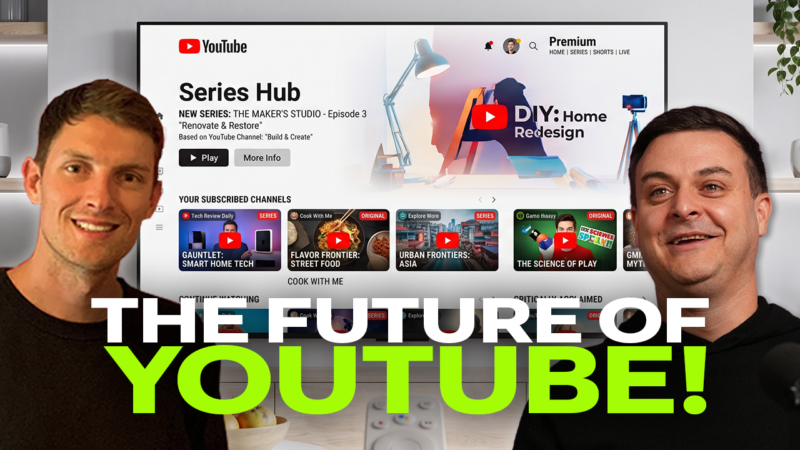
- Why YouTube Is Now Calling Creators the New Studios: Neal Mohan told advertisers at Brandcast that creator content is no longer UGC. It’s shows built by creators who greenlight themselves. YouTube then shipped Shows, a product that turns any playlist into a serialised season. If the content is TV-grade, why isn’t the ad rate?
- Why the Green Bay Packers Just Built Their Own Live Production Studio: A 2,600 sq ft content studio inside Lambeau Field runs full live production in-house. Premier League clubs have been doing this for years. American franchises couldn’t at team level because of how the league-controlled rights market worked. That’s changing, and the Packers just proved it.
- Why Inter Milan’s TikTok Campaign Just Hit 856,000 Real-World Impressions: Inter’s TikTok Out of Phone activation converted digital-only fan content into physical outdoor screens across Milan. Ad recall jumped 23%. Brand interest rose 38 points. The insight isn’t just the numbers, it’s that as digital becomes easier, physical validation becomes more valuable.
- Every Story This Week Is About Someone Trying to Own the Fan Relationship: Netflix goes direct to Littler with a bespoke format. TNT bets fans will pay for deeper coverage. YouTube tells creators they’re now studios. Green Bay owns its own production. Inter turns TikTok content into physical proof. The middleman just had a very bad week.
Shownotes
Transcription
Ed (00:27.244)
Hello and welcome to this week’s edition of the Attention Shift Podcast. As ever, I’m joined by Andy Marston. Andy, good to ya.
Andy Marston (00:32.581)
Yeah, great to see you, Ed, from the lovely Lake Comer.
Ed (00:34.648)
Cool. Exactly, yeah. That lovely storm backdrop. Definitely better than my my shelving. right, I’m gonna jump straight in. So, hot off the press, because it broke today as we recorded. Netflix have announced that they’re doing a show with Luke Littler. So basically, you can beat Luke Littler. They’re gonna do open casting around Manchester and London in September. The plan is to select 20 contestants from the public.
Interestingly, I don’t think it’s Netflix trying to compete for live darts right here, they’re trying to create something new and it was I saw the video as well, it was great how they did it where Luke Littler’s looking through loads of tweets basically ’cause people are always doing it, saying that they could beat him. So he’s giving everyone the chance now to have a crack at him.
Andy Marston (01:16.005)
Yeah, I quite like it. I quite like it from that perspective. There was also that question that kind of went viral probably a couple months back where it was like Mo Fara and Luke Littler, if they had to run like a marathon but throw a five one every mile, like who would win? so he’s like, Yeah, it’s cool that he’s leaning into it. It’s interesting that Netflix are partnering with an athlete. I guess looking at it from a sports industry perspective, the worry would be that they’ve basically gone
round the official organizers and just partnered with the superstar athlete. and so yeah, is there like what does that mean for the PDC? What does that mean for World Darts if they can just go direct to the end athlete and create the content directly with them?
Ed (02:01.985)
Yeah, I suppose there’s a flip side to as well, right? And I look and I don’t know what the viewership is darts is in the Netflix world, but I guess what it is doing is it’s opening up to a world outside of the norm across Netflix who potentially get exposed to darts that might not have been exposed to darts as well. So but there is there’s a little bit of both without a doubt. and and but what I do like about it is I mean look, first off they’re giving away five hundred and one thousand pounds, so there’s an odd s sort of five one, but I think
Of any sport, I think the average person on the street will go, Yeah, I can have a crack at that. I can I can have a crack at beating him. There’s many that try it, I know quite a few in our office wa are regularly trying to trying to have a go at at you know, improving their averages. But I think there’s lots of people out there who are confident enough to think they could probably take him on. Probably stupidly, but yeah, they will think they can have a go at it.
Andy Marston (02:47.49)
Yeah, yeah, it definitely leans into kind of like the game show style that obviously works pretty well on TV and Netflix would already be pretty confident of that. And actually like it’s kind of a throwback to an old game show, right? Of bullseye, where you have like contestants throwing throwing darts and answering quiz questions. I know there’s no quiz questions here, but like it’s kind of already a proven concept to some degree of like punters taking on prose.
Ed (03:15.937)
Yeah, that’s why I mean that’s why it works. It’s one of those sports that definitely is is it’s one of the one one of the easiest sports and and some argue sometimes it’s not a sport as well, right? But one of the eagl easiest sports where you can just pick up the dots and have a crack at it. And everyone fancies their chances of of making it and trying to qualify. The realities is not that easy. But you can see that that b because of its roots very much grounded in in working class life, a lot of people feel very, very connected to it.
And it’s an interesting one for Netflix to dip the toe in the water and to see how well it goes. They’ve already done a documentary, if I’m not wrong, as with Luke Little, I think, on Netflix as well. So to take it one step further. clearly trying to bring his his personality out as well as part of this as well, to see how that plays out. yeah, when I like I said, when I saw my timeline today and they saw many you you sent it to me, someone else has sent it to me as well. It i it it’s got it certainly caught the imagination of people pretty quickly.
Andy Marston (04:11.896)
Yeah. Yeah, no, I think it’s great. I think there’s so much opportunity for Netflix to do more in sport. Like, on the one side I think it’s great for darts because it will give them access to a new audience that wouldn’t otherwise see it, but then you could also argue that from a media rights perspective it’s another kind of point towards like
shoulder content versus owning like the traditional media rights of tournaments or actual footage of matches, et cetera. So we’ll kinda go both ways on it.
Ed (04:45.751)
Yeah, absolutely. But a new way of thinking about it, I guess. And I think that’s what what I you know, certainly what I find interesting about it. Cool. Okay, first one. So second story, right. So TNT have ended if anyone knows the Commonwealth games are currently running, so they’ve ended the BBC’s seventy two year run of being the the the main coverage in the UK.
HBO Max is now going to be the exclusive destination and they’re going to stream every live event, which means that HBO Max now is going to do six hundred hours of live compared to what the BBC would normally have done with about 300 hours. But the flip side is now that if you want to watch the Commonwealth Games, certainly in the UK, you can only do it via subscription, which I think is potentially challenging for the Commonwealth games, and we were talking about it a little bit off camera, that if you’re, I think, someone at the younger end growing up now that might not understand the history of Commonwealth
Andy Marston (05:31.952)
Yeah, I’m trying to.
Ed (05:36.947)
Does it start to disappear from the mindset of a a and a major sporting event that happens?
Andy Marston (05:42.449)
Yeah, it’s almost the flip side of the of the first story, right? Because I think by putting it onto HBO Max or TNT Sports, which requires an HBO Max subscription, you’re you’re probably benefiting the at the fans that really care about the sport and that want to watch a lot of it because there’s more hours, there’s more channels that you can put it across. unlike BBC, where they have to be, I guess, selective on which bits they bother to broadcast.
they’ve said we’re gonna commit to showing pretty much all of it. So for those fans that really, really care, it probably is a win for those that are willing to pay for it. But then at the same on the same like the opposite side of the of the coin, you’re probably gonna have less people kind of like ad hoc coming across a sport and being like, I’m now in love with that sport or I’m now interested in taking up I don’t know, athletics or javelin or whatever it is, because I saw it on the T V during the Olympics, which is kind of what you get.
with the Olympic Games. So it’s probably to the negative effect of of the sports from a participation and awareness perspective, because really outside the Olympics, they don’t get much coverage on free to air TV channels. But I could also see why if you were a massive cycling fan, for instance, and probably therefore already have a Eurosport subscription through HBO, like this is maybe a win for you. So again, like it’s kind of
Sadly one part the market, but maybe excluding some of the broader kind of ad hoc fans that maybe just come across it while channels switching.
Ed (07:14.721)
Yeah and the TN TNT have got the digital ecosystem as well. I’ve got you social web and app similar to to the BBC as well. And obviously because of the wider Warner Buzz Discovery family now as well, there are different touch points that you can have. And, you know, they are trying to innovate with different fan first experiences as well. Like it it was only I mean, I was in almost I was looking forward to seeing the Commonwealth games and I hadn’t even realized that it wasn’t on the BBC and I was searching everywhere for it.
I’m not one of those that’s gonna go and subscribe to watch it. and I think what I’ve always found interesting about the Commonwealth games as well is it’s one of those unique major multi sports events where actually United Kingdom actually competes as individual nations, England, Scotland, Wales, Northern Ireland, where’s y so so I’m not gonna get to watch that now. So I suppose that was a little bit of my disappointment. But I do know that, like you say, it you know
TNT is that home where I think for these kind of sports they do go deep and they do do a great job of doing the coverage. I think if you are if that’s the kind of s you know, multi sport event that you love, I think you’re probably gonna get bet better coverage essentially.
Andy Marston (08:20.014)
Yeah. There’s I guess both the investment from a from a media rights perspective, but there’s also the investment of time and effort into actually telling the stories of the athletes and the and the sports. And ultimately if it’s behind a paywall and they’re committing to it, then I guess the Commonwealth Games have made a a call that that’s worth it for them. but I guess there might also be an angle of sports like the Commonwealth Games needing to maybe justify
themselves from a revenue perspective a bit more than maybe they have in the past. And so like maybe there’s probably greater pressure on them to get direct revenue as a result of media rights and things that maybe they haven’t had to concern themselves with when hosts were more willingly available to kind of pay for the games and to put it on.
Ed (09:09.611)
Yeah, that’s I think that’s the challenge, isn’t of the Commonwealth games as well, because obviously the the nature of there’s just so much going on now from an event perspective, and certainly this summer as well, obviously what we’ve had going on as well, that it’s diffic i I I guess it’s fighting all the time to find its own window in the sporting calendar and to stay relevant because of obviously what the Commonwealth movement was back in the day. It’s not quite the same anymore as well, and you know, yes, nations still take part in it.
they have to find a way to ultimately sustain themselves moving forward and ensure that they are are reaching the people that they need to reach w with the coverage. So look, and it’s not like Warner Buters Discovery as well, haven’t got experience. They’ve been doing the last few Olympics as well as part of their overarching European deal as well. So they’ve they’ve certainly got the chops in house to be able to do a good job of of coverage over this as well.
Andy Marston (09:58.991)
Yeah, final point I’d make probably is just like I guess you could call it a win that they’re deemed a property that you would pay to take the rights for and therefore they are getting, you know, some level of media rights from
T N T or HBO, in order to show it there. which I guess is a a signal that, you know, they must have done their calculations and figured it was worthwhile hosting because it either helps retain existing subscribers on the platform that already care about those sports or they think it’s gonna drive new subscribers. So I guess it’s a compliment to the weight of the of the tournament that
And it can demand that of at least a certain number of subscribers in their kind of rights calculations.
Ed (10:46.925)
Yeah, definitely. Cool. Okay, third story. So it’s obviously we can’t have a we can’t have a a tension shift pod without a story about YouTube. so YouTube have just done brand casts. So their CEO No Neil Mohan said creator content is no longer UG She U G C. It shows built by creators a green light themselves. So he’s very much making the point now that creators are the new studios and he’s saying that the it’s it’s you know that
shows all the product that that are making this true. So the quality of content that’s being produced on YouTube now is long past the the days there was dogs, cats and and food porn is the phrase I often use. people now are really, really investing in making high quality content. And for many, YouTube is effectively T V. That’s where they get their high quality content. And the nature in in terms of how how you how Discovery works on YouTube as well is if you like something then it’ll show you
similar kinds as well. So it’s interesting that that this this this constant, I guess, drive that the CEO there is pushing towards making sure that YouTube is seen as premium because ultimately that is ad money, right?
Andy Marston (11:59.461)
Yeah, that’s what I was gonna ask you actually, was like in terms of the motivations behind a quote like that. Cause I think it’s pretty clear that there’s a lot of well funded and resourced content on YouTube. But in terms of the incentive to say something like that or to be pushing that messaging, do you think that comes down to wanting to just emphasize to advertisers that this is a platform the same as a broadcast pl partner where you should be paying a similar rate per view?
I don’t actually know what the numbers are like. I don’t know if you have an idea of what the numbers are like in terms of YouTube per view versus versus like a T V channel per view or per user.
Ed (12:35.777)
Yeah, I don’t know th off the top of my head I don’t know the numbers, but I do know that they’re significantly less on YouTube than they are on TV, because TV always has, or or traditional media always has this this viewpoint that it’s brand safe compared to YouTube, ’cause it ’cause it has to go through the trials and tribulations of the content being approved, because if the content has not been approved, s something can make something on TV, but if the general public complaining about it, it can be taken down and then potentially you can lose your licence. The same doesn’t naturally occur on YouTube, and the argument always is, is
you’re paying a premium for that. I’m not sure if I agree with it. Well, I don’t agree with it. But I think that has always been the narrative. So yes, it is significantly less the C PM on YouTube than it is on TV, but I couldn’t tell you an exact figure.
Andy Marston (13:07.386)
Yeah, but
Andy Marston (13:17.176)
Yeah. Yes it’s probably an argument that he’s trying to make in order to push up the C PM for YouTube. which is probably a fair argument to be trying to make. but I guess, yeah, it comes down to it comes down to I guess being able to push that higher quality content or I guess creating those safeguards for certain brands that they’re only they’re only appearing next to videos of a certain quality or a certain caliber, which is maybe what they want maybe what they’re aiming for with this kind of like branded show element.
Ed (13:48.59)
Absolutely. I think you know, we obviously we we talked to I’ve certainly talked to Paula about it from BuzzMar videos, I’m sure you have too, where you know, she talks a lot about the creative things you can do with archive that wouldn’t necessarily work in the similar kind of way across a traditional media distribution, I guess. that you can find new homes to that kind of content and that people do seek that out. It doesn’t always have to be new content, it doesn’t always have to necessarily be rights based either. A lot of the
The things that have been successful around the World Cup this summer have been very much about personalities. you know, Trevor Noah’s been doing watch alongs, but and for the last one he did it actually out of one of the stadiums, but he’s been doing watch alongs friends of his and give been given a different perspective. So you get the comedia angle to Trevor Noah and the people he brings along, but ultimately he’s incredibly knowledgeable about the football too. And again, people tune in for the personalities, tune in for the knowledge, tune in for you know, hopefully laughing a joke and and feel like they’re part of that.
that watch and experience and it which is very different. And also you’re not I guess when you’re on YouTube as well, you’re not bound by a schedule, right? You you go live when you want to go live, you finish when you want to finish. You can be on for as long as you need to be as well. it gives you a a unique perspective in that sense. it allows you to effectively run a a channel of sorts at a fraction of the cost of trying to have a a channel license for you know an EPG.
Andy Marston (15:11.384)
Yeah, yeah, and there’s actually a really good argument that was made by Prof. So he has a podcast called Prof. Markets, and he got asked a question about the Stephen Colbert show, which is like the late show. It’s like a late night TV show in the in the US. I think it got cancelled. There was some pressure around Stephen Colbert from the US administration. And so it got cancelled, but he was basically saying he’ll come back as a podcast with, you know.
five percent of the production cost of putting on the late night TV show, probably end up earning the same, if not more, personally, through advertising and endorsement deals. but there’s just like yeah, and there’s just way less cost of production versus trying to do a TV show. So I mean if the if you’re basically yeah, you’re squeezing the production costs, but you’re also able to to make similar amounts, if not more money.
Ed (15:53.167)
And then n and then Netflix will buy it. Yeah.
Andy Marston (16:07.29)
pushing across YouTube and then clipping it and sharing across all the other social platforms. it’s a very good episode, which is worth seeking out because he says it much more eloquently than I’ve just described it. But we can move on to the next
Ed (16:21.986)
Yeah, we’ll get that link. We’ll get yeah, we’ll get that link on you and we’ll move we’ll put it into the show notes if anyone wants to and wants to listen or watch that ’cause yeah, it i you know, it it is interesting. I think there’s been a lot of talk about that. And I think everyone’s waiting to see what Stephen Colbert’s gonna do next. But I imagine he’s definitely gonna do what you’ve just described, ’cause it does make total sense and he his he is big enough that people will wanna watch his content, without a doubt. Okay, cool. So story four then. So the Green Bay Packers
are now they’re they’re making the next step into own club media. They’ve just built a 2,600 square foot content student inside Lambeau Field running full live production in-house. look it’s the same model that we’ve been seeing at Premier League clubs. we work with about a quarter of the Premier League as well already who are doing pre-match, postmatch, midweek live shows. They’ve been investing those formats for years. In a lot of ways, the NFL and certainly US sports franchises
Have not been able to do that on a club by club basis because of the different restrictions around how media rights are traded in North America. but I think there’s been this push where they’re saying, look, we want to be able to create new formats because ultimately it’s an opportunity for us to monetize. And the reality is, NFL, you want us to monetize, right? And this is the way we do it through content. so the Premier League have proved this work, and now it’s going to be interesting to see what the US franchises do at scale with this as well. Because again, it comes back to you can do this a lot.
more cheaply than you would do if you were a a traditional media broadcaster.
Andy Marston (17:47.311)
Yeah, it’s actually really similar to the to the previous story in terms of just like green lighting your own stuff, not necessarily needing approval from broadcasters from
From a franchise’s perspective, they can control the narrative a lot more if they own the content distribution directly versus having pundits basically say what they think about the franchise. So it gives them more control. That then allows them to sell probably more sponsorship and media assets against it because again, there’s that element of safety. They can bring in a partner, they can make sure that the content’s gonna be positively associated with the Green Bay Packers.
And it becomes yeah, new inventory for them to sell or additional ways to upsell partners. They can create content formats that work around the narratives of the partners. So if they’ve got, I don’t know, logistics provider, then they can talk about, you know, they can have a show on passing yards and traveling or whatever, and they can attach it somehow like in a clever way to to that narrative or to that story hook. So I think it makes a lot of sense in terms of just owning the content.
Ed (18:41.411)
Yeah.
Andy Marston (18:49.184)
owning the messaging, it but cre it creating new assets and to the point around podcasts as well, I think one of the big parts of this production is they’re gonna have their own podcast studio. So I guess that will become part of it too.
Ed (19:01.134)
Yeah, it gives you an opportunity to you can do that live but also then you’ve got the opportunity that comes from it for it becoming VOD straight after as well. And like you said, like creating these formats, you’re not bound by the tradition of how content needs to be made and ultimately depending on where you’re distributing it to, you can create on screen inventory that ultimately you can you can control. and the c it can be non standard. So there’s a little bit of a blend there between
I guess digital advertising and also then how you’re implementing that in video and we we often talk about it and we call it higher tension non-skippable because it’s baked in to the video itself. the reality is you’re not turning away from it, it’s appearing on screen in a similar kind of way, like we’ve got graphics on screen right now, as people are consuming the content and it allows you to tie that into also the the guest you’ve got on screen as well and ultimately do things which is much stickier from a sponsor p sponsorship perspective. So I think a lot of this
will be driven by that as well. Those those are the real commercial opportunities with it. and again it’s it it surprised me almost that it’s taken this long in the US for it to happen. but again I think that was largely because it was it was what was coming from league level rather than team level.
Andy Marston (20:11.384)
Yeah, yeah, I was gonna ask you. I mean, from your conversations with rights holders globally, like I guess there is probably a more c sort of concentrated effort among the leagues to own processes within the league and then distribute them out to all the teams, versus European model of every club kind of acts for themselves and yes, they’re part of a league entity, but there’s a lot less control from the league in terms of
the processes of like how a team should go about acting in a certain way or which technology they should use or what processes they should be implementing. It feels like there’s more of a kind of top-down approach in the US of like here’s best practice. Now now you go all do this in the way that we’ve kind of tested across multiple teams.
Ed (21:01.214)
Yeah, certainly when it came to YouTube, ’cause a lot I think a lot of the teams on on X and on Insta for a long time have been doing or TikTok have been doing very creative things, but YouTube has almost been the place that that they came to last. And think it was because NFL, NBA were were trying to hold that relationship at a league level, such w is the power of of the platform and they’ve now lifted those restrictions more so they can actually start to be creative. I think also this was driven as well by the regional sport networks collapse of the market essentially as well, where
You know, you were given your different markets that you ultimately distributed your content through. So I guess in a lot of ways they looked at video distribution like that, certainly live and long form, as the domain of the regional sport network rather than the domain of YouTube. And they were happy to go that way with it, ’cause some of those regional sport network deals that the franchise has had were huge numbers, right? That they couldn’t replicate in a YouTube world. Now needs must, they’ve had to cut their cloth accordingly, which was we started to see it.
Interestingly, the the value of the markets obviously when you get to North America are much, much bigger than the markets when you’re talking about here in Europe from a sports team perspective. So I think there’s much more opportunity to make money out of it from a from a US sports franchise perspective.
Andy Marston (22:14.648)
Yeah, and YouTube has a TV broadcast deal with the NFL, right? So there’s probably already naturally NFL bands on YouTube watching YouTube or watching NFL related content or going to YouTube for NFL related content. Last thing I wanted to ask you on this one before we go on to the final topic was just like in your opinion
Ed (22:19.32)
That’s right. Yeah.
Ed (22:30.371)
Yeah, yeah.
Andy Marston (22:36.962)
Like how have you found the difference between sort of club or franchise owned podcasts or content series versus obviously YouTube probably already has no shortage of Green Bay Packers fan content, whether it’s, you know, podcasts from super fans or podcasts from ex players. Like what do you think they need to do in order to actually create a sizeable audience and retained audience as it relates to a kind of an in-house podcast?
Ed (23:03.054)
I think often I f I feel like they’re almost too polished, trying to be too broadcaster esque. I think they almost need to be a bit more relaxed, a l a little bit more like like like the creators would create the content themselves. And I think there’s the one thing that they have that often the creators don’t have is access. I think I I always think about when I used to work in football years ago, I always used to marvel what it was like to go into even the laundry room, right, and to see who was floating around and the players coming in and out.
That kind of access that no one ever sees, that only the club themselves can do is the kind of stuff that that I know from my perspective when I was around it, I I I knew that I would want to see that. And I think these there’s much more that the clubs could be doing to go behind the scenes and to create whether it’s live, whether it’s long form content, within within the bowels of their facilities that fans never see. Because the idea of, you know, doing a pod at the corner of a pitch, everyone with suits on, like
We see that all the time by traditional media. And I’m not saying that’s wrong for traditional media to do that. I just don’t think we necessarily need to see it from the from the clubs because I don’t think it’s a point of difference. I don’t think it shows anything different from what a media company would do when they’ve got infinite opportunity to go and be in the stands or be anywhere else for that matter and create a different kind of programming with with infinite access.
Andy Marston (24:19.896)
Yeah. Yeah, one club that’s done it quite well in the UK is Chelsea’s women’s team. They basically take it in turns to have the players host the podcast, which I think is quite a smart way of doing it. But
Ed (24:28.236)
Yeah. Yeah, I like that, I like that. And Arsenal Arsenal have done their N five show as well, where where they’ve tried to make it less they’ve tried to make it more of a like it is more of a community conversation. They bring fan fans in in it as well. Like there’s no like it’s relaxed in terms of how people are dressed. y look, yes, it’s organized and yes there’s there’s a script to it as well, but it feels much more relaxed that the way they’ve created the content as well. I that’s been working really well for as well.
Cool. So last one. So actually staying in football, so into Milan of I’ve just I’ve released some numbers around their TikTok out of phone campaign. So obviously clever play on words there. So it’s obviously TikTok connecting to out of home. so they ran a campaign where people could share content from within TikTok and there was various different filters. and what they were doing is ultimately trying to have that link between digital and physical. so what they’ve done there, they’ve they’ve been getting lots and lots of stories from fans
And then they’ve been showing it more in the physical environment on screens in and around Milan. they said that it created 856,000 real world impressions from a phone campaign. it’d be interesting how they did that. And look, it clearly worked. they were using an AR AI filter to drive some kind of fan experience. But I guess what it shows again is that link between both that people, yeah, want to do that TikTok thing, but ultimately want that physical experience as well.
Andy Marston (25:52.335)
Yeah, I think it’s just like because it’s so easy to create things digitally, anything in the physical world has like immense value and validation. So realistically, you know, anyone can create a I don’t know, thirty second clip about
into Milan, but if you then see it up on the billboard in the center of Milan, that’s going to create a lot of validation for fans. So it probably helps drive a lot more engagement in terms of fan created content. I imagine this week wasn’t a coincidence. It probably aligns with the start of a preseason tour when there would usually be a dip in maybe interest.
in the club because they’re not playing as much. But there’s probably also like the front of shirt partner has probably just either renewed or been announced. I’m not sure sure exactly, but it would be the right sort of timing. I know Como amount at the moment they just announced their new front of shirt. So like from a timing perspective, it’s probably a great time to be getting people to push a load of content because it means week one of a new partnership, you can just point to some insane numbers around metrics and fan fan-driven content.
Ed (26:43.171)
Yeah.
Yeah, yeah.
Ed (26:58.638)
Yeah, it doesn’t do any harm.
Andy Marston (27:00.554)
but yeah, I think it’s that physical digital thing that you pointed to, like as everything becomes so
easy to create online. The th the thing that creates the the barrier or the barrier is the physical, right? So as the as the club, as TikTok, how do you give the fans access to something that they can’t otherwise do, which is appear on a billboard in the center. And then funnily enough, there’s probably then impressions on impressions, right? Because there’s impressions of that content on the screen, and then there’s people filming the content on the screen and then posting it back to TikTok to say, look, my thing’s on the screen.
Ed (27:26.509)
Yes.
Ed (27:34.809)
Yeah. They were saying that ad recall increased by twenty three percent as well. Because look, I don’t re I suppose the reality is with that is is they’ve because they made it more memorable, it was sticky and ultimately they’re more likely to remember it, right? Which is I guess the one on one really is when you’re gonna create a campaign trying to make it memorable in some way, shape or form. And the real like you said, the reality is the people who are finding it on TikTok anyway are probably gonna find it there anyway. But the people who are seeing it on the out of home screens, that’s potentially gonna drive them to go to TikTok to take part in this as well.
So it does r reach potentially a more diverse and a wider audience than it would do if it just stayed where it was. and look, right, you know, if you’re doing that in the centre of Milan as well, I’m sure they love the idea that it was annoying ACM Milan fans as well at the same time.
Andy Marston (28:14.96)
Yeah, I mean they’re used to sharing facilities, so can share the billboard.
Ed (28:19.936)
Absolutely. cool. Before we finish off Andy, so you’ve been in Como. We touched it a little bit last week, didn’t we, while you’re out there, but do you wanna do a bit of an update of what you know, what you’ve been up to and what the weekend’s been like?
Andy Marston (28:30.936)
Yeah, I mean, so we’re midway through the events from my perspective. So we did a hackathon, which was Como nineteen seven hosted a hackathon in a villa. quite a ridiculous place to host a hackathon, to be honest. There’s like a giant chandelier hanging hanging over your head, and a view of a lake as you look out the window. So I mean, personally didn’t spend too much time looking at a screen.
Ed (28:42.904)
Nice.
Andy Marston (28:53.06)
But thankfully the the guys who were in charge of of hacking were still able to get a lot done. The productivity was pretty high. The results from from Como and Google DeepMind, who were supporting the events perspective, they were really happy with what came out of it. yeah, two days really of just kind of activating and amplifying the work that Como’s doing to
push innovation forwards both in Italy but also across Europe as well. And we were there just to kind of help facilitate and amplify these kind of events. And we made the introduction initially to DeepMind. but yeah, Como deserve a lot of the credit ’cause it’s their hard work that made it actually happen.
Ed (29:19.906)
Yeah, yeah.
Ed (29:36.792)
No, it’s cool. Look, I’ve I’ve seen quite a lot about, you know, again across my social media this weekend about Como and what they you know, what they did with the kit campaign as well, and how they went out in the streets and they just seem to be doing one thing after another at the moment to to stay in the cultural mindset of football fans in general, not just Como fans. so I’m sure it was amazing to be around all of that this weekend with everything going off as well. I’m sure are you gonna write about more about this in the newsletter as well in the next edition?
Andy Marston (30:01.124)
I’ll probably touch on it, yeah. I always try to spread the line carefully between just like overt self promotion and providing stuff that’s genuinely interesting and valuable and insightful to people. So yeah, definitely we’ll cover it again, but we’ll see we’ll see when I when I get around to that.
Ed (30:18.872)
Perfect. Well look, enjoy the rest of the time in Como. we’ve been the Attention Shift pod. If you want to get in touch with you can email us at hello attention shift dot media. other than that, I’ve been Ad Abyss, it’s been Andy Marson. We’ll you again.

- Tags: Brands & Agencies, Creators, Media Networks, Sports