

Fan Engagement > Podcasts > YouTube Banks $11bn from the World Cup, The Prem’s U.S. Push & Juve Streams Friendlies in a Video Game?
Summary
- Why NBC and Disney Just Handed YouTube the Keys to American Live Sport: NBCUniversal is bundling Peacock Premium into YouTube Premium from early 2027, covering NFL, NBA, MLB, Premier League and WNBA. In the same week, YouTube TV users can now access ESPN Unlimited inside the ESPN app. Two legacy networks just made YouTube the front door for live sport in America.
- How YouTube Just Won the World Cup Without Owning a Single Right: Alphabet’s Q2 earnings pinned an $11 billion YouTube ad revenue quarter, up 13% year on year, to the World Cup. 1.7 billion unique viewers watched World Cup content on YouTube, 550 million via connected TV. iShowSpeed, Trevor Noah and creators drew audiences from the tournament without holding a single broadcast right.
- Why the Premier League Is Using Ed Sheeran to Build Permanent US Fandom: The Premier League’s first nationwide US activation, Coast to Coast, spans all 20 clubs across 15 cities from 21 to 24 August. Ed Sheeran fronts the campaign the same summer Ipswich Town returns to the Premier League. An 11-question quiz assigns new fans to a club and captures their data.
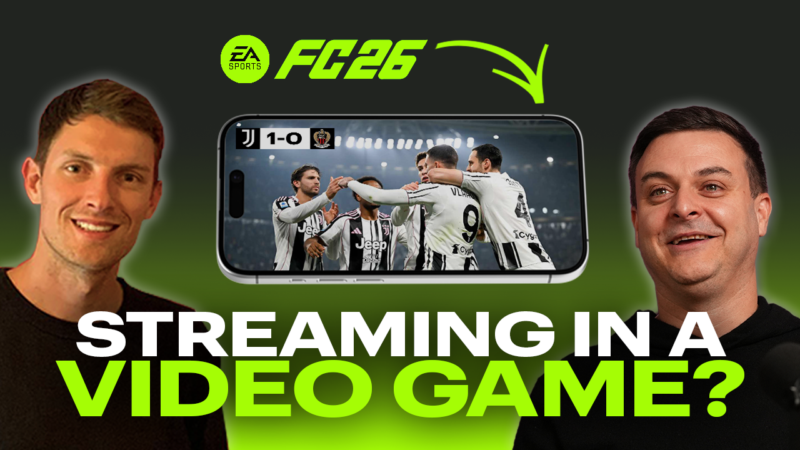
- Why Juventus Just Became the First European Club to Broadcast Inside a Video Game: Juventus is bringing two pre-season friendlies inside EA Sports FC Mobile via an in-game portal called FCM TV, free for anyone in the app. EA Sports FC Mobile already broadcast four MLS matches in 2025, but this is the first time a European club has stepped into that model. Not a licensing deal, a live distribution channel.
- Why the PGA Tour Just Cut Commentary Out of Its Broadcast: PGA TOUR Studios is piloting Marquee Group: Quiet Please, an announcer-free stream leaning on natural course audio, player-caddie conversations and real-time stats. Two-thirds of the Fan Council backed the format. Is silence the point, or is this what younger fans already want?
- Every Story This Week Is About the Definition of a Sports Broadcaster Being Torn Up: NBC hands YouTube the keys, Google banks $11 billion without rights, EA Sports becomes a broadcaster, and the PGA Tour drops commentary. If the definition of a sports broadcaster is now this flexible, what’s the moat for anyone still doing it the old way?
Shownotes
Transcription
Ed (00:12.706)
Hello and welcome to this week’s edition of the Attention Shift Podcast. As ever, I’m joined by Andy Marston, still in the lovely Como. How’s your week been Andy?
Andy Marston (00:30.123)
Yeah, it’s been a fun week. lots of networking, social battery at zero, but otherwise very good.
Ed (00:35.896)
Well, thank you so much for finding the time to do this then when you are did literally running on reserve. Really appreciate it. So cool. Let’s dive straight in. So interestingly, this week there’s been an announcement around NBC Universal and YouTube where they’ve announced a global partnership. Peacock Premium Bundles are now going to be available as part of YouTube Premium in the US from early 2027. It will be Peacock’s biggest wholesale distribution deal yet, and it covers NFL, MBA, MLB, Premier League, W NBA.
Plus SNL, Love An US, a whole host of premium content. In the same week, YouTube TV users can now link accounts for ESPN and limited access inside the ESPN app as well. So you can see there’s a real play here. You know, YouTube is quietly becoming the default home for live sports, certainly, in North America. And NBC Universal and Disney have just handed them the keys to sort of up that game. So I suppose the question I’ve got here is.
Is going where the audience already is now is the only strategy left that’s left for legacy networks?
Andy Marston (01:39.391)
I mean it looks like it needs to at least be a large part of the strategy, right? you need to be where the audience are. I think there’s a probably a higher proliferation in the US as well of like people watching using YouTube basically as just T V.
Ed (01:55.919)
Yeah, ’cause it is more of a T V experience in the US, isn’t it?
Andy Marston (02:00.319)
Yeah, and NFL, I think, specifically on YouTube TV in the US means that there’s probably a much wider adoption of people using YouTube basically as their t as their TV when it comes to that market. I think I think YouTube also announced like pay like pay for channels within within certain markets. I’m not sure exactly which markets, but what I would imagine is you almost have the entire thing live within YouTube, so there’s
free-to-wear, essentially free to wear content on YouTube. And then you’re watching it on a channel that also has a paid bit and so you start paying for it on YouTube. So essentially YouTube is replacing the infrastructure of the T V networks and becomes just kind of like the underlying framework beneath all of it.
Ed (02:50.082)
You go yeah, you go to application to ultimately consume whatever content you want to assume ’cause if it’s all in one place you don’t have to go anywhere else for it, so it makes it easy.
Andy Marston (02:57.439)
Yeah, yeah. I mean, you probably are closer to it than me. I have you seen much on that sort of YouTube channel or paid channel site?
Ed (03:06.562)
I th well look I mean and then US it the y like you said there, like the US is very different because YouTube in in the US is YouTube T V and it does get consumed through whatever set top box mode of viewing people are used to you seeing it almost have a T V channel with scheduling, so they are definitely more set up to do that in the US in that in that sense. It’s not the same when you get outside of the US.
Look, interestingly as well, like Peacock had got forty eight million subscribers, so it’s not like it’s tiny, but I suppose when you start comparing that to the size of YouTube in the US and I don’t have the numbers to hand in terms of how many premium subscribers YouTube has got. I’m guessing it’s bigger, potentially, but it I guess it comes back to this thing, right? It’s not I think it’s not the only strategy, but it’s probably the easiest and more impactful in a short space of time.
And we’ve look, we’ve seen it in other territories as well, like, you know, some of the stuff the BBC have been doing in the in the UK as well. Like they’ve all realised that the reality is they can’t keep fighting it. They’ve got to try and work out how do we ensure that we are reaching that audience. I think the interesting thing for me would be as well though, that now that’s getting bundled like that, how much data does NBC Peacock get of the ones who decide to do the YouTube premium subscription? Or does it remain anonymous like it does for everyone else who’s using YouTube?
Andy Marston (04:28.927)
Yeah. And also like I think you talked about it last week, right, with Neil Mohan saying about the ad rates for YouTube should be considered the same way that premium TV is, right? So this helps from that from YouTube’s perspective, but from NBC Peacock’s perspective, are they getting a lower are they getting a lower ad rate by being on YouTube than they would be getting if they were on their own channel?
Ed (04:40.14)
This helps, right? Yeah.
Ed (04:55.426)
Well yeah, and I don’t I didn’t see anything. I I was having to read something through in a few different sources through to the stories ’cause obviously what we have got in there’s a number of territories now around the world where YouTube are allowing media organizations to co sell YouTube advertising on YouTube, which is driving that C PM up, whereas normally the C PM you might get on YouTube content is god, like six dollars. Somewhat like Global now or Sky Media who are selling ads on YouTube themselves
Because of the access that they have to to premium advertisers, they’re going and selling anywhere up to sort of forty-five, fifty dollars CPM. I imagine that that NBC and their advertising juggernaut have done something similar with YouTube in the US too. So yeah, the they’re already selling advertising around their own content, right? But it potentially it’s another avenue. Because there’s so much of that ad money has shifted over.
to that YouTube space, is this a way for them as well to say, look, you know, however we cut the cake when it comes to subscriptions is not the primary play here. It’s actually how we’re making sure we’re we’re accessing this ad money that currently right now we are not there and actually we can start to and also drive up the value so both YouTube and Peacock benefit from that.
Andy Marston (06:09.599)
Yeah. Yeah.
Ed (06:12.992)
It should be a win win. Like the only like I said, the only thing for me is Glenn, like and it might not matter to them, is YouTube know who the subscriber is. Does Peacock get to know who the subscriber is when it’s coming through YouTube too? because the reality is then if they don’t, that that end user YouTube will always own it. So that balance doesn’t feel centred.
Andy Marston (06:33.653)
Yeah. Yeah, I guess maybe there’s other ways that they feel like they can collect that or it’s worth the trade for now. But
Ed (06:40.588)
Yeah. No, it’s an interesting one. And again, it’s like it’s it’s certainly a development that I didn’t see coming anytime soon that they’ve that they’ve jumped into that. So again, one of those to watch this space. Okay, cool. So next story. So still in Google World. so Alphabet announced their Q two earnings and their YouTube ad revenue hit eleven billion, which is up thirteen percent year on year.
So it it beat expectations. Look, and they largely accredited that around the World Cup. And we talked we talked in previous weeks about how much stuff was actually going on on YouTube around the World Cup that wasn’t necessarily related to rights, but in and around the events themselves. So they reckoned that 1.7 billion unique viewers watch World Cup related YouTube videos, and five hundred and fifty million of those were via connected TV sets. That’s about like just less than sort of thirty percent. what was interesting for me is like creators like
you know, I Show Speed and Trevor Noah and people like that who were doing live from the World Cup, you know, IRL streams that drew huge audiences without owning a single broadcast right. in the UK we saw that YouTube streamed the first ten minutes of every World Cup match for free. In Brazil they did the deals with Kazet TV. So it look it was a rich tapestry of different approaches in different markets, which you know, if you’re a marketer it’s the one on one of right right message, right place, right time.
So I guess the question here is if YouTube can win the conversation without ever ever having to necessarily pay for rights, should winning rights even be a priority anymore? We touched on a little bit last week, didn’t we? Or is it a mix and do you need a bit of the mix to actually make it all work?
Andy Marston (08:07.959)
Mm-hmm.
Andy Marston (08:13.58)
Yeah.
Andy Marston (08:19.829)
Yeah, I mean I think it would be a concern because I think a lot of the media rights conversations that are happening at the moment, the conversation or the the counter argument and the thing that’s able to push the rights up is either a fragmentation of rights where you’re selling across multiple broadcasters or streamers. And actually the new players have been the streamers, right? Whether it’s Amazon Prime, whether it’s Apple T V, whether it’s YouTube. they’ve been kind of the
the thing that rights holders are speaking to or pointing to when trying to get bigger and bigger fees. so if YouTube and also Netflix to a large degree, which I think might have been what we dis discussed last week, with the with the Luke Litter stuff and the fact that they have the the rest is football and they didn’t necessarily need the rights for either of those things.
if they start to kind of change their strategy to be like actually we’re quite happy to own the three hours before the game and the three hours after the game and we’re all right losing them for the for the ninety minutes in between. Or maybe they’re even leaving us on in the background with someone and using it as like kind of like almost like a companion.
Ed (09:35.074)
Yeah, we see we seem like we know that happens with someone like Mark Golbergie, we’ve done a lot of work with, that people will watch the game on Sky, but they might decide to mute that commentary, sync with Mark and actually listen to him doing the commentary on the Man United game or whatever other club he’s talking about. So they’re using both. So it’s not there’s no cannibalisation there, like they sit side by side.
Andy Marston (09:53.92)
Yeah, I guess the only cannibalization’s the advertisers and like if you’re yeah, if you’re watching both and ads start playing on Sky, you just completely turn your attention away and start watching in more attention the the Goldbridge stream.
Ed (10:10.53)
Yeah. And to your point as well, when you were talking obviously you mentioned Resty’s football there as well. Obviously YouTube has said there they did one point seven billion unique viewers. Tony said that the social content that they produced, outside of obviously what was going on on Netflix, did four four hundred million video views during the course of the World Cup, which, you know, he said he said, Look, yes, they monetised that content, but they saw that as a largely a marketing promotion to drive towards the long form.
Andy Marston (10:29.399)
Mm-hmm.
Ed (10:40.812)
And they reconcile that that actually that’s exactly what they want. And Netflix said they they saw a huge share of voice around the World Cup, like you said there, with yes, there was an investment into Restis football to do that, but it’s not the kind of investment they’d be making if they were going in for actual rights. It’s a fraction when you when you look at it.
Andy Marston (11:02.869)
Yeah. Yeah, I guess the the implication of that though is then if there if there’s less kind of buyers in the market for the rights, what does that do to the rights? And how do how do the rights holders which hold up the entire kind of shoulder content ecosystem still receive some of the uplift? Because I guess the only issue I would have with it is like I don’t know, if
Ed (11:14.286)
Yeah.
Andy Marston (11:31.168)
No one’s gonna feel bad for FIFA right now in terms of whether they’re making money or not. But if if for example iShowSpeed is making loads of money off of the World Cup because he’s able to sell his show to to YouTube or he’s able to make a load of money on YouTube doing this thing where he’s got no permissions or licensing or agreement in place and the rights were to completely drop off a cliff, you could have a situation where there’s like
people that are around it with no official affiliation making all the money and the actual thing itself not making anything. And I guess that’s where you need to there needs to be some sort of counterbalance. because you need that you need that strong ecosystem centrally in terms of the club. And maybe FIFA’s the wrong example, but in general you need that strong ecosystem in the middle that the creators are able to latch onto. So it can’t be all all of one or all of the other.
Ed (12:10.166)
I I I agree. Yeah.
Ed (12:26.028)
No, I agree. And I think I think if we I mean, not like going too we’re not gonna go deep on FIFA today, ’cause I think plenty of other people have done that in lots of other places and but I think like no again, what I was gonna say is no one’s crying for the amount of money that FIFA’s making at the moment, but as you say there, if the rights start to diminish and start to diminish too much, which impacts the quality of the product in itself, does the ecosystem around it then have less interest in the product in itself and does the whole thing fall away? So you like you said, you need equilibrium
Look, whether we’re we’ve got equilibrium right now remains to be seen, but but you’ve got to be really, really careful that the thing that everyone is interested in does not get diminished or does not get into so much that everything else around it they just decide to move on to something else because that’s not the thing anymore that they’re really interested in. I think the quality of that, the product, is the thing that brings everything else.
Andy Marston (13:17.023)
Yeah, exactly, exactly. So it’s yeah, one one can’t live without the other, right? But I think both bene both can
amplify each other. Like if there’s really great creative content happening around something, that can then drive more interest in the rights because people now are more interested in watching a game that maybe they would have otherwise passed on. Right? Like Sidemen doing the I think we spoke about it a few weeks back when Sideman did the live stream for I think Germany versus Ecuador or something. It may be a game that wouldn’t have otherwise been of interest to some of the people in that audience. So it can work both ways. Definitely can work both ways. But it’s just
Ed (13:41.592)
Yeah. With the BBC, yeah.
Andy Marston (13:54.708)
Just, I guess, something to be cautious of is like rights holders need to figure out what their strategy is of like how they’re going to capitalize on that.
Ed (14:02.956)
Yeah, look, I I had a conversation with with Yannick from the ILC which is coming out I think next week, a a long form interview with him. And he runs all of their digital partnerships and you know he talked quite quite at length about about the the the the balance of the ecosystem and all the different players within it, the platforms, the media partners, the creators and exactly what you’ve just said there. It’s about balance, it’s about ensuring that all those pieces work together.
Because the reality is what they want to make sure is in a lot of ways that if they manage it properly, there’s an element of always on and then consumer, dependent on their background, their location, can choose to interact wherever they want, but they’re getting the experience that the property wants.
Andy Marston (14:49.783)
Mm-hmm. Yeah, I’d agree.
Ed (14:51.99)
Cool. All right, and so that interesting that brings us on to obviously one of the people that is certainly always trailblazing when it comes to how are they managing their rights, which is the Premier League. So the Premier League have announced Coast to Coast, which is their first ever nationwide US activation where all twenty clubs across fifteen cities along an open the and the opening weekend on the twenty w twenty first to twenty fourth of August. Now interesting, I went out to Tampa to do to see their Premier League weekend recently when obviously we were together,
in in Miami a few days later. And and it was amazing to see that, you know, there was lots of British expats there, but it was amazing to see a lot of American football fans really, really leaning into what the Premier League is. So interestingly with this one, they’ve really like they’ve stepped that up. They’ve tried to take it one step further out. They’ve got Ed Shearin to front this campaign. he’s a ma obviously we Ed Sheeran’s a minority shareholder. Don’t worry, Andy, I’ll keep talking while you sort out your lights. Ed Shearin’s a minority shareholder in Ipswich Town and he’s their most famous supporter
Andy Marston (15:36.779)
One sec.
Ed (15:48.999)
and the same summer his club’s returning to the Premier League as well. So it it works out well. And this is sitting alongside a find your match, an eleven question quiz. assigning new fans to a club based on their personality. which look look right. I mean, I don’t suppose you could get any more American way of looking at it. How do we how do I pick my team? Well, I just do this quiz and it’ll it’ll pick it for you. so look, complete the quiz makes
you know, I guess Premier League gets data from it, right? And there will be more and more US fans who don’t know how to pick a club, I guess. So I guess what they’re trying to say here, the Premier League is like, we’ll make it really, really easy for you. I So look, we can talk about that in a sec. So well actually look, let’s start with that then. So like what do you think of that then? That this idea that that, you know, this quiz can help you to something that we grew up we you know, in in you know, you’re a Spurs fan, I’m a Burnley fan and we’ll have our different reasons for why we support the teams that we support.
Ed (16:49.752)
For me, it’s that’s the area I grew up in. Hometown team. I you know, I f I believe strongly that that you should support your hometown team, but other teams are available and other people have different views on that, right? I I don’t know what how you start to sport Spurs. In this instance, right, they don’t have this emotional attachment necessarily. It’s kinda like it’s gonna go like based on how you think and what you wear, we’re gonna tell you what club’s yours. How do you feel about that?
Andy Marston (17:12.971)
Yeah, I mean so I support Spurs because my dad’s a Spurs fan. So I grew up in Portsmouth, so it was basically a I had two choices, right? I could either be a Pompey fan or I could be a Tottenham fan. At the time I made the decision, it was a bit more fifty fifty than it is now, ’cause they were both in the same league. Pompey actually knocked Spurs out the FA Cup semifinal in two thousand and eight on their way to winning it. so
Ed (17:26.178)
Yeah. Yes.
Ed (17:33.91)
I went to that. A good friend of mine’s a Portsmouth fan. I was in the Portsmouth then, sorry about that.
Andy Marston (17:37.288)
Okay. So when people are like, you picked the the the glory club, I mean I would push back, but there hasn’t been much glory and it was a harder decision at the point in time when I was making the decision. but no, I picked it because my dad’s a Spurs fan and I think a lot of people will will either be like yourself, they either support the hometown team or they support the team their parents support.
Ed (18:02.784)
Or there’s a family lineage that that hands it down, absolutely.
Andy Marston (18:05.813)
Yeah, or they’ve got like a big friendship group maybe that all support the same team and so they lean in lean into it. I think internationally it probably goes more towards performance on the pitch and success on the pitch and players that you’ve played with in FIFA and things like that. So a lot of foreign like in a lot of foreign countries, a lot of the younger
kids are Man City fans, for example, now because they’ve had like the last decade they’ve had all the best players and everyone wants to play with them on FIFA and see them win the Premier League or the Champions League or whatever it is, right? So but I do think this is kind of interesting ’cause I I would actually it reminds me of a skit from a Ted Lasso ad before it became the show. So like before it was a show it was an advert for NBC. and he was the coach of the Tottenham Hot Spurs and the
Ed (18:50.582)
Yeah. It was, yes. Yeah.
Andy Marston (18:58.207)
I emphasize the ’cause Americans love to put the in front of the in front of the names. but there’s a bit where he’s like rehearsing who all the teams are and then it’s like comparing the teams to their NFL equivalent, right? So like Tottenham always get compared to the New York Jets ’cause they’re in a big market but they don’t win very often, or like Man United are the Dallas Cowboys ’cause they’ve got a huge fan base and everyone kinda loves to hate them if they’re not a fan of that team.
And so like I do think that kind of works because there is an element of like find something that they are a fan of and then attach your thing to it. So like you’re seeing more and more NFL teams, for example, now having official relationships with European football clubs like the Pittsburgh Steelers, for example, have a relationship with Barisha Dortmund because they’ve got like working class culture in common. They’ve got like really passionate.
fans that come from a similar kind of like lineage and heritage that might maybe kind of resonate with one another. And I think the same
Ed (19:57.741)
Rob McAllenny’s talked about the similarities between Philadelphia ’cause he’s the he’s a big Eagles fan and Wrexham. Again, like coming back to that, you know, that that working class. So yeah, yeah, th I’ve I’ve seen that a few times.
Andy Marston (20:09.815)
So I think it is kind of I mean the personality quiz is a little bit gimmicky, but I kinda like the idea that, you know, you’ve got all these people and I think they’re Premier in the US there are a lot of people that are just like Premier League fans, like they’re fans of the league rather than a specific team. So like they would go they would go to a Bournemouth West Ham game, even if they’re not a fan of either team, if they were coming over to the US because they would just see it as like a Premier League international match rather than a Bournemouth match.
and I think that’s hard for maybe a pr pr like someone l living in the UK to get their head around. But I would also go to an NFL game where I’m not necessarily a fan of either team, right? But I’m just there for the NFL experience. So it does kind of work both ways. And so if you can then convert people to be a little bit more interested in one team, even if it’s like, a personality quiz said I should really support Fulham or I should really support Brighton, it just gives you an extra
touch points like, maybe they maybe they should be my team, maybe I should lean into that
Ed (21:08.118)
It is I’ve I’ve had conversations with a few, yeah, I’ve had a conversation with a few US, you know, who who maybe have an L S even have an L S team but couldn’t quite decide what English team to pick and they they picked it on those kind of things that we’ve just talked about there, like, you know, w where’s the town or city? You know, what’s the history look like? a v variety of things that happened that they think, Yeah, I can align with that for those reasons ’cause I guess we’re all looking to
in ver in various different ways a l a align with things. What how does that align with me? So look, it makes I think it makes total sense. We need to move on to next story now ’cause I’m already getting told by our producer, Dan. Like Move on, move on. You spoke too long. cool. All right then. So that’s an interesting one. I was one to keep an eye on. Like I said, having been to the one in Tampa and now they’re expanding that, you can see they’ve been building this over a period of time. So anyway
Moving on, so and obviously you were talking about this in the sports pundit group, I know, the other day as well and you fired this over to us. So for the first time ever, EA Sports FC Mom will gonna are gonna broadcast a live football match to Juventus preseason friendlies street inside the game itself. So they’re playing against Nice, at Juventus Training Centre and also Juventus next gen, which is probably not gonna be quite as exciting, but you never know. but I suppose for EA game fans though who see up and coming players, maybe it is.
So both matchs will be streamed worldwide through an in game portal, FCM TV, and it’s going to be free to anyone in the app. with just the niece games gonna be geo blocked in France, I’m assuming, because of broadcast rights. So you’ve enter framing this as long standing partnership, which means I’m into into a new phrase. And I guess the question here is is this is this a genuine distribution play or a user acqui acquisition funnel dressed up as a broadcast? Like, is this a way to get people into the FC mobile?
app that perhaps don’t already under the guise of watching Juventus.
Andy Marston (22:55.861)
Yeah, I mean I think it’s been interesting actually ’cause like pre season’s pretty much the only time where the clubs own the rights to the streaming or to the to the games that they’re playing. So you get like a lot of creative solutions, right? You see some clubs putting it behind paywalls, some clubs putting it free to air on YouTube, obviously Juve using it to activate with a partner that they’ve had for a while, which is EA Sports, obviously partner with a lot of teams, but they’ve been quite
close for a number of years now and Mike Armstrong was C E O at Juve when he left it was actually to join EA sports so I have no idea if he’s involved but to me it seems quite a coincidence that that he would surprise me
Ed (23:38.722)
Yeah, Mark or who’s then taken on the role who worked with Mike, like look, they’ll be close, right? So it makes makes total sense.
Andy Marston (23:43.402)
Yeah, it’s some surprising to me if they’re not if they haven’t spoken about it at least. and I know that the the Juventus n and versus Juventus next gen is like an annual thing they always do at the stadium. next gen is slightly is slightly elevated above just the normal academy. So like if you’re it’s not quite the same as if Tottenham were playing Tottenham Academy. because next gen do play in the professional league in Italy. They play in Syria Chi. So they are a professional team.
Ed (23:54.188)
Yes. Cheese.
Ed (24:10.456)
Did they do? Yes, of course.
Andy Marston (24:12.501)
So there is an element of like there is a yeah, there’s an element more of of sort of competition and I guess the best players from next gen, the Juve fans want to see them because they’re the pipeline into the first team. and they were really creative last year. They did a last year they did it as they had multiple creators around the stadium streaming it from different angles.
Ed (24:15.894)
It’s competitive. Yeah.
Andy Marston (24:40.127)
And then all streaming it to their own channels. So like they have constantly used this as like a experimental like broadcast experiment basically. But I think going back to the EA thing, they bought TrackAb maybe a year ago now. And like there was a lot of talk at the time when they bought TrackAbb that that was gonna be their move into live streaming. And a like a major reason for them buying that was streaming. They launched a mobile app where they added in live scores and things as well. So they’re trying to become like a holistic place where like you’re there
play EAFC. But also if you want to watch a game, you can stay in the app. If you want to check scores, you can stay in the app. They essentially want it to become like a one stop shop for foot for football fans, right? And you never have to leave.
Ed (25:24.066)
What’s interesting about it as well is I guess from their perspective as well, you know, everybody who’s in there is is identifiable as well. So, you know, it’s it’s you know, you could argue it’s it’s the closer thing to addressable broadcasting as well. There’s and they’re doing lots of things in there because the interesting thing about that everyone who’s in there as well is probably of the mindset of well of spending when they’re in there. and used to doing that. Whereas, you know, like look, don’t get me wrong, like when you go into YouTube and you watch something, y you can make purchases, but I guess when you go into
Andy Marston (25:45.335)
Mm-hmm.
Ed (25:53.113)
the EA mobile app, you’re already going in with that mindset. That you’re not having to train anyone to to buy. They’re already doing it.
Andy Marston (25:59.904)
Yeah. And I don’t think there would be a massive user acquisition element to this because I think a lot of people are already on EAFC. I think it’s probably more a behavioural thing. It’s like teaching people that this exists. It’s making people aware that’s like watching a game inside the app can happen. And it’s probably like a test for both sides to be like, Okay, how many people stick around and watch the whole game? How many people click in for thirty seconds and go, that’s good.
Ed (26:14.914)
Mm-hmm.
Andy Marston (26:28.945)
Juve playing. Actually, I’m gonna come back out and I’m gonna play my own game. I’m gonna maybe they start playing as Juve on on the app or sorry, on the game themselves, and decide they don’t want to watch it. But yeah, I think there’s a lot of experimentation happening and I would imagine that the main reason for this is to get some data on on user behaviour and how and how kind of natural it is for people to watch a whole a fully streamed live live game.
Ed (26:37.528)
Yeah, yeah.
Ed (26:59.17)
And you whether people want to do it in that environment or is that environment for the other stuff they do and not necessarily for that. Like, you know, how how many things can you bring together in one space before people reject it or don’t? There’s there’s definitely learning there.
Cool. Last story then. I don’t know if you’ve got got chance to see this, but PGA Tour this week announced that they were piloting an announcer free stream called the Marquee Group. Quiet please. it debuted yesterday, the Rocket Classic in Detroit on PGA’s Tour Live live channel on ESPN Plus. Effectively you or you’re watching the golf with no commentary.
And the feed leans into the natural course audio. So you’re hearing player caddy conversations and crowd reactions and you are seeing the you know the storytelling that’s coming on through various different enhanced graphics and real time stats and virtual lie. But I was watching it a bit yesterday and I I I always love these kind of things ’cause I always feel like you get stories behind the stories. And as much as a very, very esteemed ex golfer and you could you can apply this any sport can give you their expert opinion on what the player
And the caddy thinking. They’re still not the player in the caddy. But when you hear that conversation and the little nuances of what they’re talking about and how they’re saying stuff to each other and what that dynamic is like between the two of them, like I said, I watched a bit yesterday and I was captivated by it. I loved it. so it’s so I guess silence is even though they’re saying silence, silence is not really the point here. That I guess they’re trying to make it feel more raw so people are potentially closer to it, right?
Andy Marston (28:35.839)
Yeah, I mean I think if it’s if it’s a case of like you’re just taking away the commentary and not giving anything else back, then it’s a bit of a strange move. But if they’re able to actually add something in terms of like the golfers or caddies are mic’d up or you’re able to hear exactly what they’re saying, then there’s probably an element of there’s probably a lot of people that watch golf that also play golf that are thinking, I would love to know the mindset of
Ed (28:52.802)
Yeah, you can hear exactly what they’re saying. Yeah, yeah.
Andy Marston (29:05.399)
how they go about preparing for a shot from the bunker or preparing for a shot from the trees, which is where I’m often at if I’m playing golf. and then and then yeah, probably like a curiosity around like, okay, like if you had a caddy, what would you actually even say to a caddy? In my opinion, I wouldn’t I wouldn’t even know what to say. But I’m sure there’s like a an element of curiosity among different levels of golfer.
Ed (29:15.598)
I don’t even get that far.
Andy Marston (29:33.42)
That are all interested in hearing like what how does a professional set themselves up? And I guess there’s a natural conversation there that there wouldn’t be in a lot of other sports. Like if you if you mic’d up footballers, it probably wouldn’t be as as interesting because it’s probably just a lot of like shouting for the ball or shouting man on, and there probably isn’t much like nuance to it because of like the kind of the pace of the action. so I do think
It works, but it might not work for other sports. It’s probably it might be for something that’s like very specific to golf in the way that they’ve gone about it.
Ed (30:12.14)
It could be, yeah. And and like I said, it’s i I think it’s interesting for people who are really, really into golf to see if they get an insight from how a caddy’s advising a golfer or a golfer’s discussing things with a with a caddy around how they play the game. But I think also for people who are not experts in golf, which I am certainly not, to be able to hear hear the dynamic between them. ‘Cause I think I think y I I guess you hear the word caddy and you think, that that person just carry around the clubs. The reality is caddies are not doing that right. They are part of
the whole planning process of how a golfer plays golf. The golfer trusts them implicitly. When that relationship doesn’t work, often a golfer struggles and y th that’s happened a lot down the years where there have been changes. And it’s a similar dynamic, I guess, to a t a professional tennis player and their coach, right? We saw like Andy Murray retire then going working with Djokovic for a period of time and I’m not saying it didn’t work, but that there’s a dynamic there that has to work. so in certain sports I think it would work
Andy Marston (31:02.007)
Yeah.
Ed (31:06.478)
In more than others. What what was interesting as well is look, yeah, they’ve taken the comms away and they have used more graphics to storytell where the commentator’s not doing and they’ve brought in interactive layers to this as well. So they were doing things like trivia and predictions, which you can choose to do or not to do, right? But so yes, they’ve dressed this up as yeah, the commentator’s gone, but they’re using it as a way to trial a lot of other things, which I think if they’d have just said, we’re gonna do an interactive stream, people would have gone, that’s a bit gimmicky.
Andy Marston (31:06.743)
Yeah.
Ed (31:33.794)
But because they’ve gone, we’re gonna take the commentary away and people that’s and I think they’ve used it as a way to actually bring other things in they would have liked to have brought in probably on the main feed, but might not have got away with.
Andy Marston (31:33.825)
Yeah.
Andy Marston (31:44.608)
Yeah. I mean I think the other bit to it is like th a few years back when they launched the game, which was kind of like a like a head to head thing and it it started I think as Tiger Woods versus Mickelson and now this seems to be just done between like NFL players instead ’cause they realise that they’re probably more kind of up for the competition element of it. But they I remember at the time they were like we’re gonna mic them up and they’re gonna trash talk each other and it like golfers don’t really do that, so it just didn’t really work. It was like very inauthentic to the characteristics of a golfer.
Ed (32:09.046)
Yeah. No
Andy Marston (32:14.869)
Which is why they’ve gone down the kind of like I think I think Pat Mahomes does it now, or has done it in the more recent seasons with other people. And it kind of fits the the characteristics and the personality types of the of the NFL guys more than it does the golfers. So I like that they haven’t tried to force the players to do anything different. Like they probab it doesn’t sound like they’ve told the caddies or the players they need to be more animated in their conversation, right?
Ed (32:40.622)
Yeah. Have some personality.
Andy Marston (32:43.637)
I think it’s I think it’s more interesting to be like, Well, I actually just want to see how they actually are. And they probably forget that they’re even mic’d up because they’re not being forced to say anything at any specific time. And then yeah, on the data side, I guess like any of the data I I love what Golf’s done with I was talking to someone about this yesterday, with with Whoop, where like you could see the the data around like for for example Rory McElroy’s like stress levels when he’s like preparing to win them up, like
Ed (33:09.677)
Yes.
Andy Marston (33:11.839)
on his way to win the Masters, right? And you can see how it is when he’s about to take the part and things like that. So I think elements like that, I don’t know James, James Hay is a good friend of Sports Pundit and I think of Display as well. with data works, like the stuff they’re doing with the PTO and in Triathlon to kind of like tell the stories. Cause sometimes it y you just lose you lose all kind of comprehension of like how quickly they’re running or how
Ed (33:23.544)
Yeah. Yeah, definitely.
Ed (33:38.051)
Yeah.
Andy Marston (33:39.595)
how fast they’re going, ’cause they all are running so quickly, you’re like, they’re just jogging and then you realise they’re running like twenty miles an hour or something and they’ve already done a, you know, a hundred kilometer cycle ride before it. so it’s like
Ed (33:51.501)
Yeah, I’ve spoken to J James and Lou a lot about this as well, where, you know, the and the good example they gave was in triathlon, whereby obviously by using heart rate monitors, whilst one person might be leading another person, when you start looking at where the heart rate is, you can say, actually, that person’s leading, but then in the red zone, the person behind’s actually only going at such and such a capacity. So with the distance that’s left and based on previous performance, you could probably work out that that person who’s trailing probably has a better chance of winning it.
Which you wouldn’t know without that data storytelling. So there’s there’s definitely more infinite stories that you can tell with with that kind of data.
Andy Marston (34:30.795)
Yeah, I think it’s true of F one to a degree as well. Like I find if you’re I’ve only ever been to one F1 race and I was in I was in the general admission bit on a grass bank with no phone signal and no access to a screen and I was like, this is actually really hard to watch because I don’t know who’s I don’t know who’s pitted, I don’t know who’s done what. And actually when you’re watching it on TV, one thing that F1’s done well for quite while is like it gives you all the information you need to be able to go like.
Ed (34:46.339)
Yes.
Andy Marston (34:57.115)
okay, that guy might be in fourth right now, but he’s already changed his tires. So he’ll he’ll actually be first once everyone else pits or this person’s doing this strategy and this other person’s doing this other strategy. And if it rains at th three PM like it’s supposed to, then this guy’s gonna be in a better position. and it’s hard to get that if you’re if you’re not kind of completely locked in on it.
Ed (35:13.399)
I agree.
Ed (35:16.95)
Yeah, certain sports you definitely need that. Right, we’ve gone massively over and Danny’s giving us pelters in the background, You’re over, you’re over. Thanks, Andy, for doing this just before you leave Como. I hope you get a nice rest this weekend. No one’s gonna be crying for you, but I understand the pain of having to network all week. so I’m there’s people now listening and watching this going, What are you on about? That’s not hard. so next week we’re gonna have a break, ’cause it’s the summer. I’m on holiday and you’re on holiday. so we’ll be back in a few weeks’ time. so
In the meantime, we will have some live interview episodes coming out as well, so you will not miss us completely. if you would like to get in touch, if you’re interested in joining us as a guest, you can email us at hello at attention shift.media. If you’ve got anything interesting that you think we should pick up a story, you can message me or Andy on LinkedIn. I’ve been Ad Abyss, this has been Andy Marston, and this has been the Attention Shift Podcast.

- Tags: Brands & Agencies, Creators, Media Networks, Sports