

Fan Engagement > Podcasts > How the Olympics Actually Builds Its Digital Partnerships | Yannick Amram
Summary
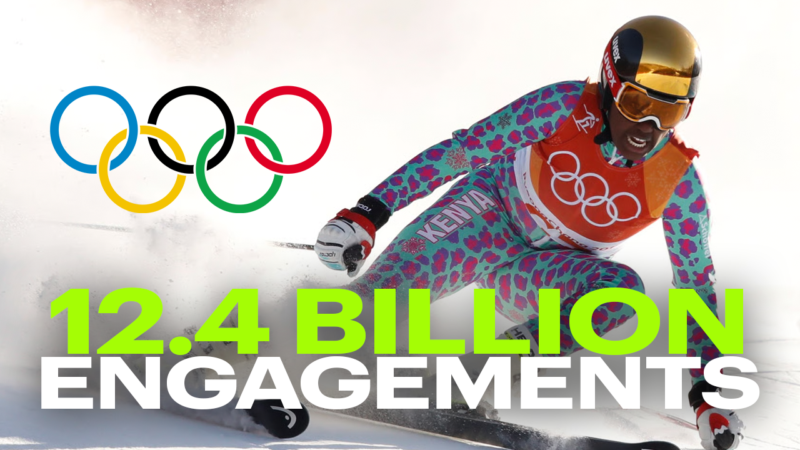
- Why Milano Delivered 4x the Engagement of Beijing (Without a Magic Number): The Milano Cortina 2026 Final Report clocked 12.7 billion Olympic engagements, up from 3.2 billion at Beijing. That growth isn’t down to any single launch. It’s the flame-to-flame strategy the IOC now runs between Games, working with athletes, platforms and media rights holders to stay culturally relevant when there’s no Olympic event on the calendar.
- How the Olympic Creator Programme Delivered 1.3 Billion Engagements on Its Own: The programme was first tested at the Olympic Esports Week in Singapore in 2023, then formalised for Paris 2024, and turned into a named line item at Milano. No accreditation, no field-of-play access, no scripts. Just authentic creator storytelling inside venues, sanctioned by both the IOC and the platforms.
- Why Athletes Drove 4.9 Billion Engagements Themselves: The IOC changed its guidelines to let athletes create content in venue up to one hour before sessions, and made them the only content creators allowed in the athlete village. Athletes are now the IOC’s real creators, telling their own Olympic journey in a way no rights holder can.
- Why the IOC Stopped Giving Its Content Away for Free: For years, the model was put content up and hope it goes viral. Yannick pushed a shift: everything the IOC provides platforms has a value. The platforms are multi-billion dollar companies. If they’re doing it, they’re benefiting from it. The IOC now negotiates every partnership on that principle.
- Why the Olympics Renegotiates Almost Every Platform Deal, Almost Every Year: Unlike traditional media rights or sponsorship, Olympic digital partnerships are short and have to keep up with what’s available now. TikTok search wasn’t a serious commercial category two years ago. Now it is. The Olympics evolves each deal alongside the platform, running 10 to 15 in every 20-day Games.
- Why LA28 Isn’t Just Being Built to Be Bigger, It’s Being Built to Be Different: The Olympics is heading to Los Angeles in 2028. Google is a Local Partner. Milano already showed a 93% US viewership jump versus Beijing, and Winter isn’t even the US’s strongest Games. The ambition: quality over quantity, purpose over gimmicks.
Shownotes
Transcription
Ed (00:38.264)
Hello and welcome to this week’s edition of the Attention Shift Podcast. If you’re enjoying the show, remember to like, subscribe, wherever you’re listening or watching to us. So this week, we’re going to go inside the digital engine behind one of the most famous, historic, and prestigious sporting competitions anywhere in the world. The Winter Olympics in Milano this year delivered four times the digital engagement of Beijing. LA 28 is being built to be bigger again, and the man leading the partnerships behind all of this is with us today.
Ed (01:05.982)
Yannick Amram, Head of Digital Partnership at the IOC. Yannick, welcome to the show. And would you mind giving us an introduction?
yannick (01:08.238)
Yeah, quite good.
Yes, thank you very much for having me in the podcast. I appreciate the word leading. Sometimes it’s it’s it’s not so easy to explain that you’re leading, but I try to at least. This is what my LinkedIn says. So I guess I guess I’m trying to lead on this. so so yes, I’ve been working in sports organization for the past 20 years. the IUC has been the the the one main
Ed (01:17.742)
Our pleasure.
Yeah.
Ed (01:29.486)
I know what you mean, I try to.
yannick (01:43.181)
goal in my career, should I say, but that doesn’t mean that the other organizations I work with were not important as well. I I once specifically meant want to mention the Amaurice Pa organization, ISO, which is famous for having done the Tour de France, Marathon de Paris, the car rally. they have about 70 events per year. So this also is a bit of a of a shock between having 70 different events to deliver
per year to once every two year. and yeah, I joined the IOC around February twenty-one. So during the COVID period, quite a peculiar moment to join. and I joined as a senior manager and then it was not until early twenty six that I became head of. and today yeah I’m leading digital partnerships. We’re a team of three to four sometimes depends on on the situation. And really
our our focus is within TMS so TMS is the structure that is within the IOC which is called television marketing services which is where we make the revenues so where we sell the media rights the sponsorship licensing everything that is revenues is within TMS and I sit within the media team my direct manager being the VP of media Jerome Palmentier
Ed (03:07.768)
Fantastic. Okay, then so you mentioned you’ve been there five years and interestingly, when you were at Maori before, like I said, as much as you did all of those events over a long period of time, now what you have is one big event when all of those events are in the in a short window, I guess. So it’s a very different approach to it. we’ll start I guess almost at the end now, or or most recently, where you’ve taken over as the head of that unit, leading that unit. What did that I guess having been there the previous three, four years before that, what change did that bring?
yannick (03:08.686)
Okay.
yannick (03:23.032)
Logical.
Basically what you should.
Ed (03:38.016)
for you in terms of how you are going to operate, obviously going into a major event not long afterwards.
yannick (03:43.823)
the reality is that it all comes down, I think, to the size of the team because ultimately the operational part is still very present on a day-to-day. Because we’re not such a big team, despite I I would assume people thinking that the Olympics is such a big organization, it is not. It comes down to just a couple of teams with a couple of resources.
Ed (04:06.584)
Yeah.
yannick (04:10.742)
trying to maximize and and to bring the ambitions of the Olympic Games. Of course, with the organizing committee the OCOG we we love acronyms so Paris 24 Milano 26 LA 28 so we try to work as much as possible with them but like I said because of the operational part the reality is that
I still feel sometimes like I’m an intern or a senior manager and then ahead of when it comes.
Ed (04:45.602)
And and is that is that because the organisation’s been aro is that because the organisation’s been around for so long almost, that you’re the custodian in a relatively short period, but the thing itself has been so big and so vast and so established globally for so long?
yannick (05:01.614)
I mean the the the one specificity that I would call out is that our team would be known as the innovation team, sort of say, in a world or an environment that is moving very slowly. So we would be the team that really are trying to make a difference with
innovative aspects such as the creator program, such as working on content hubs, such as working on features with platforms who consistently change and and ask different things out of you. So this this is what I mean by I’m also an intern because I keep on learning as well. I keep on being very operational. I do think that I have the strategy at hand but ultimately
Ed (05:51.96)
Yeah, yeah.
yannick (06:01.57)
Being the head of just allows me to be able to speak to some people of my seniority so that I can propose some of the projects and hopefully gain some time. But ultimately the IUC is actually a very open organization that allows at every level to bring new projects and new activations. But to gain some time, the level of seniority is important. And then obviously, what head of means is that I’m responsible in case.
something bad happened. So that’s an easy one to figure.
Ed (06:35.0)
Now it’s interesting the way you described that as well. He said, like that, you know, you’ve you know, you’ve got a hand on the strategy, the strategy always there. But ultimately, day to day, the world outside keeps on turning, things change. So you have to have to actively activate tactically, and but still with that strategy in mind. We I had a similar conversation with some of my colleagues yesterday where we were talking, and we talked openly about like sometimes it feels like
yannick (06:45.294)
Thanks, Jack.
yannick (06:52.43)
It’s still open up stuff.
Ed (06:59.798)
as a business we’re we’re pivoting from one thing to another. Like no, we w it’s not that we’re pivoting one thing to another. It’s still with the overarching, guiding light, the the strategy thing we want to achieve. But even though we might want something to be a certain kind of way, outside things are changing all the time and we have to pivot accordingly to make sure that we are reaching the people we need to reach.
yannick (07:07.899)
Even though we have all this options we are saying.
yannick (07:18.572)
Absolutely, absolutely. And and and the reality also is that as we get close to games time, the roles become so operational, but also so so clearly defined that like I said, everyone is there to make sure that your colleagues’ activation works out. It’s it’s it’s not just your program. It’s not just your strategy, it’s everyone’s strategy, specifically when it comes to digital, because
As much as we want to say, here is the person in charge of the digital, that’s not true. Digital is part of every remit. It’s how can you make sure that it’s coherent for everyone? How to make sure that the the the strategy that you want to develop benefits for everyone. It’s not going to be your side project or your side gig on working specifically with the platform because it’s going to impact everyone.
Ed (08:19.096)
Yeah, I imagine that’s what that’s probably what what I I the look is I think it’s a challenge for everyone probably over the last five, ten years, where I think digital was always put almost like as a digital’s a thing on its own. It’s kinda like no digital’s just everywhere now and it’s actually part of everything we do and it needs to be interlinked to everything. Like it’s almost like the fact that we’re even calling it that anymore. It’s just ultimately how we create content, how we communicate, how we connect. It’s just ultimately fundamentally integrated into everything.
yannick (08:40.046)
Absolutely.
yannick (08:44.334)
Absolutely. And and which is why the the relation with the platforms is key. before you you could think about the strategy around digital as an added piece to the rest. Now it’s not. Now it’s it’s one of the main components and the relation that I try to develop with the platforms are key and they cannot happen at the last minute. and especially having such a mega event as the Olympics.
Ed (09:02.126)
Yes.
yannick (09:13.644)
Because again, I think no organization likes surprises. But if there’s one specifically that doesn’t like surprises, it’s ours. And and we don’t have practice time. We don’t have tests, period. Unlike other organizations that have like events every day, every week, or a couple of months, we have one every two years. And they last 20 days. So those 20 days must be perfect. And as you can imagine, they aren’t.
And and again, what we be the fun of of being on the ground if everything was perfect, but it actually becomes the fun part. And and this is this is where everyone, as I mentioned, during game time actually becomes an intern because we do specifically things that are almost that are not part of your remit. I think almost 30% of the work I do during game has nothing to do.
with my daily job.
Ed (10:14.552)
Yeah. But the reality is you you pitch in, right? ‘Cause everyone needs to pitch in to be able to get the job done ’cause like you know, like I said, I guess short window, the clock’s ticking, it just needs doing and it can’t not get done, so you have to pitch in and do it, which makes sense, right? Clearly clearly there’s a mindset there in the organisation that everyone has to pitch in and help each other and s sometimes you have to dig out your colleagues, right, when they need a hand.
yannick (10:35.646)
Of course, of course, of course. with the digital team, we work very closely with our social media team. Nothing that we could do would work without having a solid social team. They’re the ones who are delivering the content, they’re the ones who are following the trends, making sure that everything we do makes sense, drives engagement and reach, but most notably they’re the ones who make sure that
we keep on having value on top of the IP assets and whatnot. It’s it’s it’s on top of it games time and outside of games time. Those those are really we we talk a lot about games time, but the what do we call flame to flame, which is between games time, is as key if you want to deliver a successful games.
Ed (11:22.04)
Yes.
Ed (11:27.842)
No, I look, I I I was lucky enough to go to the the Paris Olympics. I went to some of the table tennis, some the rowing. I was just in and around the city and and and it was an amazing experience. But interestingly, what I wanted to do is I go wanted to go back to when you started at the ILC, which is 2020, right, Tokyo, which was a very different Olympics because we were in you know, we were constrained by COVID. So no spectators, no venue access for creators, which we’re gonna come on to later on in this. Like, what’s fundamentally changed? I guess what what learnings did you almost get from
yannick (11:47.822)
Yes.
Ed (11:57.103)
from that experience, is there anything that he accelerated that you could then take forward? ‘Cause I guess in adversity like that, yes it’s difficult, but there are always things that come out of it that makes you think and function perhaps in a different way.
yannick (12:04.802)
Yes, it’s difficult.
yannick (12:11.636)
I think that one of the things that have really changed between Tokyo twenty twenty and and now is really how before we were really focused on delivering IOC only KPIs, which would be new revenues, engagement and reach on our handles. And the way it evolved was because of the
evolution of the importance of the digital strategy within our stakeholders, whether media right holders or sponsors. This meant that we had to now think about how to support them as much as we could and make sure that those partnerships did take into account the wider Olympic movement and not just the Olympics. This means a quick example it meant for instance facilitating features that were only accessible to the IOC.
But to the rest of the stakeholders. We’re thinking about geo gating features, we’re talking about content hubs. It’s not just about serving the IOC, is how can we serve our stakeholders and make sure that they benefit from whatever we can negotiate? This doesn’t mean that they don’t negotiate, and we encourage obviously our our MRHs and and our tops to have their own deals with the platforms, but with the strength of the rings.
It clearly allows us to have a a better negotiation with them so that everyone can benefit from whichever deal we come with. So that that would be the main difference is really the evolution of how we we saw the importance of digital partnerships from a very internal perspective to a more supporting strategy.
Ed (14:00.225)
And were you interesting, so we’re obviously Tokyo King played how it played out. Were at that point, were you able almost like I’m sure it was already in the mindset of of ultimately like the idea of how are we going to lean more into digital? And also we’re going back to 2020, right? So six years ago. Did it did it enable you, did it force you then to be able to do things that perhaps you weren’t quite ready for as the IOC, but you realised there was an opportunity to start leaning more into digital as a means to connect with the
yannick (14:16.396)
Back to twenty twenty, that’s what six years ago.
You then should be able to do things that aren’t we should work better than
Ed (14:30.062)
You know, the global audience.
yannick (14:33.118)
twenty twenty was six years ago already, and and at the time platforms weren’t as mature as today. So there was a lot of education that hap had to happen internally on how we had to work with them. I think you have to remember that it was a time where I’m not confident a lot of organizations actually did contracts with platforms. They just benefited from the
Ed (14:39.096)
Yeah.
yannick (15:02.294)
the audience and the engagement and they just put content hoping that somebody would buzz. It was not as structured as you would want to be, but one thing that was very clear from our standpoint was that we wanted to start providing value to our assets. We wanted to break a little bit the chain of put it for free and hope that it’s gonna buzz and and everyone’s gonna benefit from it. To really understanding, hold on.
Ed (15:10.466)
Yeah, true.
yannick (15:30.477)
There is a value to what we’re providing the platforms with, whether it is a word mark, whether it is a logo, whether it is content commitment. If we’re having such strong commitments with our stakeholders, and those companies are multi-billion commercial companies. So they’re not new to this game. And you have to understand that if they’re doing it, they’re benefiting from it. So how do we leverage
our value with what they want to do and steer away from that, we’re giving you our audience and just enjoy and just put your content there. This is this is where the evolution also happened. We we knew that we might potentially risk not working with the platform who didn’t agree with what we thought, but it also meant that we wanted to make clear that though this is the way that we want things to evolve.
We want to continuously show that whatever we put on social or elsewhere has a value.
Ed (16:30.264)
Yeah.
Ed (16:38.136)
Yeah, absolutely. And interestingly, within your within your remit, you’re covering platforms, social, entertainment and content, and also search as well. So it’s quite quite a broad remit, I guess, of different stakeholders and partners. I imagine that’s changed massively f compared to like like I say, even in the last six years. how are you know, how how did you navigate that? Like you said, they might be a platform doesn’t want to lean into the way that you want to work. And look, and I guess
yannick (16:46.178)
Mm-hmm.
yannick (16:54.166)
Yeah.
yannick (16:59.032)
Yes.
Ed (17:06.114)
The IOC are famous as well for how it manages access around the Olympics, how it works with its partners, but also how it makes sure that people who are not part of the the partnership, I guess, are not impinging on anyone else’s as rights as well. Like, how easy hard is it to manage those relationships?
yannick (17:28.728)
I mean, this to be honest is is is always an evolving piece as the digital partnerships keep on involving themselves. Today, they are much more mature as you would guess, as two or four years ago. And I mean by that that we’re able to project ourselves and what we do with them beyond a six month period. And this is critical. unlike our media rights deal or sponsorship deals, the one that we do with platforms are really short in time and they need to make sense.
With what is available now. So there isn’t a model that was applicable two years ago that is applicable now. It’s really always being renegotiated almost on a yearly basis. to give you an example, during GameSign, we do around 10 to 15 deals, which encompasses around 20 different platforms. all that to say that all of them at one point incorporate a specificity that was not their primary trait when we first worked with them.
One would be for instance, the search, Google search and TikTok search. If you told me that two years ago I would be working on how to create better discoverability on TikTok search, I would not have thought of that because that was not their primary focus, which was really about content, content, content. And now it’s also trying to lint in strategies within strategies from other platforms.
Of course the experience is very different, but in the end the outcome remains for search discoverability, whether it’s content, results, or simply news. So they really remain very different from one another and and there isn’t one that looks like another from one year to the next. So it’s it’s really making sure that you keep on with the trend. And I mentioned a bit earlier, but the relation with the platform is key.
You cannot just expect things to fall down in the last couple of months because if you not have a a strategy that is based on how the platform is evolving, it’s gonna be much, much less successful for sure.
Ed (19:37.208)
Absolutely. So so Milano was your first games as the head of of the department and and interestingly, what what you’ve just done, you’ve just published a report, right? Which is basically the final report for Milano, which is some fascinating reading. And what we will do is that when we publish this out, we’ll put the link to it in the show notes so people can go and download and read it for themselves. But but you know, a fascinating reading. It gives you a bit of a sense of of the work that the IRC is doing, which is vast, to try and ensure that that
yannick (19:43.598)
Yeah.
yannick (19:50.902)
That’s
Ed (20:05.881)
There are touch points literally everywhere, right? For for however you are consuming content, wherever you are consuming content from, however you want to support your athlete or your nation, there is a way and a means, like like I guess talk me through a little bit like the process of bringing that together and ultimately what you get out of doing that and sharing that.
yannick (20:29.812)
yannick (20:33.868)
Do you mind being a bit more specific on the question if that’s okay? ‘Cause I can talk about a lot of things.
Ed (20:37.655)
Yeah, look, I’ll I’ll I’ll I’ll that’s fine. Yeah, I’ll g I’ll go what I’ll do I’ll go into the next question while I’ll so specifics on the numbers. And just go straight to that.
yannick (20:43.734)
Yeah, I I can talk about what I can talk about is is that the numbers that we have and that you have on the report, they look they are impressive. Don’t get me wrong. They’re really impressive. When when you see 12.7 billion engagement, it’s an impressive number. But this is the result of making sure we stay relevant outside of games time. we’re we’re really focused on the game’s time period, but
Staying relevant outside of game’s time is the hardest bit that we have to work on as part of the digital strategy. This means making sure that we also we have a a solid flame to flame strategy. And and again, kudos to our social team who are the best at making our content relevant throughout that period, but sustaining our number of followers outside of game’s time is is so complex.
Ed (21:35.758)
Outside, yeah, yeah, exactly. Well what Okay, what I’ll do is I’ll I’ll rephrase that question, but I’ll I will go into the numbers to allow you to explain that the numbers are the headline, but actually it’s the the way they’re going. Will, Wilts, if you set a mark just to take out that bit there that we did, and I’ll go again with that with the original question, but I’ll link it into then the next question about the numbers. Okay. Yeah, he’s just replied to me, he’s done now. That’s fine. He’s already made a mark of that. Cool, right, I will go into that again and then I’ll come to the next thing. Okay, here we go.
yannick (21:43.2)
Yes, yes, yes.
Ed (22:02.711)
Okay, so Milano was your first games as as the head of the department and the IOC’s just published the final report, which gives a great summary of everything, all the work that the IOC did around the Olympics, and there are some really impressive numbers in there, like twelve point seven billion engagements, four times what what Beijing generated, and they are truly impressive, because it’s like a four times jump. But I guess it’s the story behind the numbers, like what the IOC are doing differently to unlock that, because you do have big gaps between major events.
yannick (22:35.298)
Yes, yes, this this is correct. And and and yeah, the number is is really impressive. twelve point seven billion engagement sometimes. the the the numbers that we we tell internally they’re they’re massive and it feels like it it loses a bit of its value because they’re so big. But this is not a magic number. This is really the result of a strategy that started way before Games time. This is the work that we do on the flame to flame because
staying relevant outside of game’s time is the hardest bit of it all. making sure that the audience and and sustaining the number of followers that we have during game’s time so they stay on our handles and continue continue watching our content and understanding how we where we’re evolving is key. equally one of the things that have evolved and allows us to have such a big number on top of that flame to flame is having
much more geolocalized content so that we have we can speak to our fans about what they want to see and how it directly connects with them. And and again then there is a natural evolution of how athletes themselves are generating much more engagement and reach than before which with new features allow us to combine content from our handles with their handles. Ultimately it’s just not
our engagement that grew exponentially because you mentioned the 12.7. But if you look at the bigger picture, the number got much bigger as well for the media right owners. They got much bigger for the sponsors. And they got much, much bigger for the athletes who are becoming much more agile and genuine on how they do their content. Not during games time only, but outside. And we often talk about how creators promoting the the games are important. But in the end,
As individuals, our athletes are our main creators. Of course, media right owners are obviously the main source of content creation because they do have those rights. But don’t get me wrong, but as individuals telling their Olympic journey, athletes and Olympians should be our main creators. And this is where we see that the growth and engagement happen massively for the wider Olympic movement.
Ed (24:58.351)
Absolutely proof points like you said there, like when when when your mobile app is the number one sports app in seventy five different territories, that is unusual for a sports rights holder, a league or a team, because it’s it’s it’s usually other the other people, the media rights owners whose apps are the most you know, who are top of those charts. I think that that proves ultimately how how you are interconnecting and you you are maintaining that that interest from flame to flame. And I think
yannick (25:17.976)
You who the top most trust you can prove to
Ed (25:26.701)
Like I said, it is interesting to come onto that creator programme because you are obviously you like you say, you’ve got athlete creators and you’ve got creator creators, like those people who have become, you know, perhaps started as niche but then become experts in their own p particular subject matters. So obviously what you did you I you’ve done a lot of stuff with creators, but around that Olympics for Milano, you did the Olympic Create the Olympic Creator programme. And I know that like I said, I was aware of what MBC did around
Paris as well and obviously we all known about Snoop Dogg who came in as a creator as well, which is probably the one that most people saw. but you very much lent into creators for for Milano. So you know what I guess triggered from your perspective that you were gonna do that rather than obviously expect sort of media owners or look, we know that Unileav are spending so much now of their global marketing budget on influencing creators, but you’ve come at it from your own perspective. What
triggered that thought that you need to try and almost own that process.
yannick (26:27.138)
So this is going to be a bit of a lengthy answer, but at least you’ll understand the context and and what it comes down to. Actually, the Paris twenty four creator program wasn’t the first program. We talked about it, how it’s hard to test such initiatives outside of games time, but in 2023, you might not remember, but we had the Olympic Esports Week in Singapore. And there we tested the first for the first time, esports creator program.
By bringing a couple of creators sanctioned by both the IOC and the platforms, and we collaborated to promote the Sports Week. It was successful. And we also saw how time consuming and operationally heavy this can turn out to be. So this was a really interesting activation that existed and that we wanted to apply to Paris. Now, we then had to convince internally that adopting the creator program for Games Time.
was responding to one of our imperatives, which is to promote the games to a younger audience, but equally to a different audience. Now, once the education is done internally and that everyone is aligned, which is to be transparent, 90% of the work, we had to have a clear alignment with the platforms on what it was that we expected out of that program. We didn’t want to create a a new category of media rights to be clear. there was no accreditation. There’s no possibility to film
within the field of play. we had to be very open on also what they wanted to create. working with creators was making sure that we benefited from the authenticity of the content they did and their audience, which is why there was no script. We wanted to be as authentic as possible. And whenever we could have them partner with our handles or athletes’ handles, we would do it. But the narrative remained at the creator’s hand. And
Partnering with the platforms also made it much more simpler, to be honest. As everyone had a stake in this and making a success versus us reaching out to an agency calling and saying, we would like to work with that creator and have those number of pieces of content. This was absolutely not the idea. And again, this is what the power of the rings allows you to do. It’s to unlock activations that no other organization would be able to. And I’m talking about through experience.
yannick (28:54.65)
or maybe I wasn’t good enough to sell those programs in my other positions, but for sure, the creative program was was a hard. Yes. Yes. Yeah, exactly.
Ed (29:00.353)
It was a different time. I I think it was a different time. Yeah, yeah. Yeah.
I think we’d like we we see like we’ve been do I and I d I can profess t to the like the the work that needs to go in as well, ’cause we’ve been doing some work with creators at the moment around some live propositions and many of the creators in this particular sport that we spoke to, yes, already did content around that particular competition, but weren’t necessarily live stream, watch on stuff like that. So
yannick (29:16.846)
Next.
Ed (29:30.916)
Not only do we have have to identify them, we had to almost like educate them in terms of how do you do this, how do you create live experiences, how are you going to create a value exchange for them, for the rights holder, but also for the fans that ultimately you want to engage with them when you know they’ll be watching the game that’s occurring on one screen, but then they want to connect with their favourite creator on another screen. And that’s in a very specific live remit, but like I said.
yannick (29:37.482)
I don’t know.
Ed (29:56.312)
I know for a fact from the work we’ve done that that it’s not just it’s not just a badging exercise. You’ve got to really lean into these people and understand what they’re getting out of it too, but not tell them what to do. Just give them the framework.
yannick (30:09.474)
Exactly. Exactly.
Ed (30:12.739)
so interestingly, out of those twelve point seven billion engagements, obviously we like the cr the the creator program did one point three billion, right, which is a sizable number. Athletes, right, four point nine billion engagements. So you’re getting close to half of that. And I think that’s certainly a space now where you’re seeing more and more. Like even recently, right? I don’t know if like, you the Murray brothers have just launched their own YouTube channel and you’ve got Kevin Peterson doing it in cricket with the Switch.
I think athletes now are starting to understand their worth as almost like that conduit. There’s an authenticity, and and we try not to use that word too much because everyone uses it, but there’s an authenticity of of the athlete being the one communicating their experience to the fans of them or the nation. how how have you found that that
partnership with them as well because obviously it’s not their primary goal, right, to be making content. They want to go and win a gold medal or a silver or a bronze. so they’re doing it in and around all of their training. How does that compare to working with creators who need to make great content for their audiences?
yannick (31:05.558)
‘Cause I don’t really know right.
For sure. Absolutely.
yannick (31:20.258)
Sure. so th those are are very different types of of of people for us, obviously. The the creators, when it comes to the creators, we’re trying to make sure that the guidelines for the creators are again are as clear as possible so that ideally that kind of program can also be implemented for other stakeholders, such as our our MRHs, because the last thing we want in the end is is to to have a competition.
This is absolutely not the purpose. The value is to exactly the the value is to initiate a way to democratize that kind of program so that everyone decides to onboard in it. For the platforms, I believe the added value is to have content that is done and that they can talk about it and make sure that their creators benefit from the right experiences. So they so the the the leaning in from the platforms is is is an easier one, but
Ed (31:52.323)
Yeah, it’s got to be complementary. Yeah, yeah.
yannick (32:18.92)
the the harder the hardest part is really to make sure that internally it’s aligned so we don’t see it as a competition. Now when it comes to the athletes, this is another thing because with athletes we also have different social guidelines. And obviously the gener the more we’re advancing the more athletes are gonna become organic to the platforms. It’s not whether they have a handle. It’s
How are they using that handle? We’re getting more into more into that creator economy where athletes are telling their story and it’s part of their journey and it’s a way for them to to to bring value and and to potentially find some some financial outcome. And we have to enable them to do this. And we had recent changes to our guidelines, which for instance allows them to create content in venue up to one hour before the sessions.
So this has been a big change because then they’re able in venue to show to their fans how they’re living it from the training bit. Equally, they are the only ones who can shoot content in the village. so the athlete village is that mythical place where you have all athletes together and we don’t have broadcasters doing content there. We only have athletes. This is where they decide if they want to share their intimacy in a way that they can only do it.
Then platforms come in with dedicated tools such as content hubs, which are as you can imagine, content aggregators providing visibility to whitelisted content. And in that case, we make sure that the content hub surfaces and promotes Olympian’s account. So that number is also due to the
Ed (33:54.425)
Yeah. Yeah.
Ed (34:01.763)
Yeah, the v the visibility. Yeah, the visibility of the content. ‘Cause there’s so much content right that actually you need that curation to help people find it. Yeah.
yannick (34:05.57)
Exactly. Exactly. Yes. Yes. Absolutely. It is exactly it. we we we want to make sure that the all athletes, if they post content and it’s surfaced, get as much visibility as any other athletes. It’s not just about the top one percent that gets to have visibility. It’s a hundred percent of the athletes who decide to create content get to have the same opportunity.
of having visibility and whatever flows with with that engagement and reach that comes with it. this is why for instance you have creators such as the the muffin man who are able to become popular because they’re surfaced outside of just their sports elements and then they’re surfaced by the platforms and then the platforms understand the value of the content they’re providing and they’re
surfacing as much as possible to create a a a rather how can I say diversified visibility of content so yet you don’t just end up having sports content.
Ed (35:17.763)
Yeah, it it you can see like obviously the athlete is the behind the scenes access that like I said only they can provide, but by it by them only doing it up to a a tight period before the event itself, it gives the event window time to breathe. So those rights holders are able to to do what they do best. And then with the creators around that too, in a lot of ways they’re just they’re holding it all together in between and giving you a fan perspective, but
ultimately a fan perspective is someone who knows how to speak to a wider audience, who knows how to create content in such a way that it feels real and authentic, but good enough that people actually want to watch it.
yannick (35:56.821)
Exactly. Exactly. And again, to be clear, creators are not even able to post field of play content. So they have to find other types of content to create. And and and we’ve had to work on on what kind of content they could do that would not be competitive to right owners. This had to be very clearly understood by everyone. And and we would have not done again this kind of program.
Ed (36:05.667)
Yeah. Otherwise.
Ed (36:18.009)
Yeah. Yeah.
yannick (36:25.0)
If our white owners expressly were against it, it’s also about embracing the evolution of content creation and trying to make sure of how to make the best of it versus always blocking it because of the fear of the outcome. And because we’re such a protective organization, we could have leaned in that situation very easily. Actually, it did take a couple of months to validate the program and and
Ed (36:29.156)
Yeah, yeah.
yannick (36:51.534)
Many times we’re very close to actually not doing it because of the the fear of not being able to control what what they do. But you have to have a little bit of faith and trust on the people you work with to have the right kind of content. Because you’re not you’re never gonna be able to control everything either way.
Ed (36:57.529)
Yeah, yeah.
Ed (37:11.983)
I can only imagine the size of the content content matrixes that you had to try and work out what fits where. And like I said, you’re a team of four, right? So it’s not you know it’s not twenties and thirties of forty people. There’s a there’s a lot to think about here in the lead up during post and and to to be able to get it right. And I think I think like I said, like I you know, I was very much aware just just as a just as a just as a fan of of things that were going on. I think I wanted to what I wanted to come on to as well, is obviously you talked a lot about flame to flame there, right as well, and that obviously that space in between and
You have lent heavily into long form entertainment content as well, like Netflix documentaries, obviously Olympic channel now that’s been around for a few years, where you’ve done a lot of co-productions there as well. So you’ve you make sure that the IOC have got a hand in there to make sure it’s represented in the right manner, but still obviously working on something like Netflix to make sure that you are getting the breadth and reach and there’s an entertainment angle to it. it’s it’s a completely different animal, right, to create and short form content. So what role does that play?
yannick (37:48.878)
Mm-hmm.
Yeah,
Ed (38:09.503)
V you know, for for the IOC in the greater mix of everything we’ve just talked about.
yannick (38:15.966)
So for sure it has a much bigger role than before. And to be clear, this is thanks to the team that David Heron that I work with works on. So he’s the head of original content. And he’s the one that completely changed the way we create and sell our original content. For a long time.
we created content and it was available on the Olympic channel and the the the streaming platforms weren’t as popular and they were always seen as competitors to our broadcasters. So there was a a natural be careful on who you work with, but with the evolution of of the democratization of this kind of of of content, we we had to make sure to embrace the evolution of the storytelling.
So that it actually becomes complementary to our media-right owner storytelling. We’re not trying to put our stakeholders in competition again or facing a already decided situation where the movie is ready and then you show it to the broadcasters and they have no say in this. Everything is being discussed so that it actually benefits the Olympic Games and the stakeholders in the mid and long run. So this is very well thought.
And it’s not just a one off, it’s a clear strategy that David is working on and has been working on for the past two years and will continue. So
Ed (39:51.81)
It you know, it it c it comes a it comes across from everything you’re explaining here that that you all think very, very deeply about the reality is look, you’ve got lots of different platform media partners that ultimately invest in into your organisation, the events as well, but at the same time, y you know, your remit is to try and get to everyone in the world in some way, shape or form and you’re constantly trying to balance the two to make sure that that that that you you’re you’re
yannick (40:05.662)
Yeah.
yannick (40:10.124)
You know, your remit needs to try and get to everyone.
Ed (40:20.025)
You know, the reach, the engagement ultimately, getting people to lean in is the best they can possibly at that moment in time based on what you know. But at the same time those media partners are taking along on a journey and don’t feel like they’re being forgotten about as you’re doing all of these things.
yannick (40:33.206)
Yeah. That that’s that’s correct. You don’t you don’t want to put them in the situation where they suddenly feel in that they can only tell part of the story, want to involve them as much as they can, but we also want to take advantage of other platforms who are providing you with more tactical opportunities that in the long run benefit to everyone.
Ed (40:45.721)
Yeah.
Ed (40:55.095)
Okay, so I just wanted to get onto sort of the last sort of pillar of of of what you’re working on now as well, which is you know, search and and AI, and obviously now and AI is becoming search too, right? So that’s evolving before our very eyes as well. So that’s the third third leg of your remit, and I can see you smiling now, so I’m sure you’re thinking about this all of the time now and how this is playing out. what role did search actually play in Milano? But also like, is it are you even able to have a vision of what it’s gonna look like in
twenty twenty eight in LA because of the nature of how it’s evolved. Even Google coming out themselves saying like search is not what it was anymore. We you know, we’re moving towards a a a an AI search world.
yannick (41:35.391)
And and the way to position the question would be to assume that there is one central AI source of truth, which is not the case at all. And and and although a partnership with search platforms is in my remit, we have colleagues optimizing the search area and the deals we do. And AI is just unfortunately not one category. And it’s it and if anything, we try to actually be very careful with it.
Ed (41:44.545)
Exactly, yeah. True.
yannick (42:05.646)
we work with tools that allows us to create and generate and identify content through AI detection. we have very interesting programs in which we want to use AI to find future athlete detection and and work with NOCs and federation on trying to figure out is there a way AI can help provide tomorrow’s athletes. but
Ed (42:05.699)
Yeah, yeah.
yannick (42:34.712)
For LA, everything is not defined yet. Yes, Google is a a a local important partner of LA twenty-eight. And yes, AI is Gen AI is something that is clearly in the remit, but we’re also trying to be careful on how it’s being used so that we don’t go into it too fast because there’s no coming back from it. I think this is also one of the things that it’s it’s hard to appreciate is
What do we do? What it what impact will it have? And are we able then to go back to a a another situation? And this is where we were very careful on on the use for search. Clearly we’re trying to to understand how this can be beneficial so that discoverability is here, whether it is content, whether it is dot com or our apps, but
Ed (43:26.895)
Yes.
yannick (43:33.46)
we’re trying this we’re trying to work on this which as much trying to be as careful as possible because the implications again can be huge not only for us but for the whole movement.
Ed (43:49.69)
Yeah, it’s interesting. I think like and if we think about it through the lens of like say search and certainly AI, yes, you are doing commercial deals with these partners, but at the same time, you want to ensure that that the IOC and the Olympic events are discoverable in all forms of search and AI as well. So it’s trying to find that balance. I think that brings us on, I guess, the next question. Like, you know, the central point of digital partnerships, and you’ve described this is all you know how
yannick (43:50.35)
Yeah, same thing.
yannick (44:03.374)
The only thing I have to find is the only one stretch and not see.
Ed (44:16.855)
It’s about delivering new revenues, extracting value from digital offerings. So you can see sort of where I’m coming from from that question. Like, when you sit down with a platform partner in whatever type of platform we’re talking about there, like, how you know, what are you trying to build and how do you try and find the balance between like ensuring that you are visible, because whether you’ve got a a a commercial relationship with them or not, but also making sure you’re driving that that opportunity to drive revenues to the Olympic movement.
yannick (44:32.583)
ensuring it’s all visible because it’s my problem.
yannick (44:44.574)
we try to incorporate as much as we can in every deal, whether it’s revenue, reach, engagement, features, promotion. we it’s a bit of it all, but ultimately it’s making sure that we’re not doing the same thing with every bus. we’re trying to build consistency in the way our assets are valued.
And that’s key. So the the the value bit is key regardless of the platform. And yes, we want to work with as many platforms as possible, but we’re not forced to as well. If there isn’t a proper value exchange, we’re fine not working with them. it’s it’s not just a value exchange for the IC, but for the wider movement as well. So we try to make sure that this makes sense with
the platforms we work with, and because of also the limited resources that we have, we can’t work with every platform. for instance, one and I thought was really interesting is that NBC worked with Reddit. We didn’t necessarily work with Reddit. because again we had to focus on the platforms that provided us with the immediate KPIs that we we value. And it’s a tough one. So yeah.
Consistency in the value of our assets, but also leaning in on what makes a a specific platform its authenticity so as to not replicate every deal, which takes more time. It would be much easier to say, let’s apply the same logic to everyone. Here’s the deal. You take it, you don’t. Thank you. We want this revenue, disengagement, and that’s it. But we try to avoid this model because again.
Ultimately every platform is is is I believe very different from one another.
Ed (46:41.305)
Yeah, absolutely. And and look, like you see, just like you said, you didn’t necessarily work with Reddit directly yourself, but I’m sure there’s learnings that you saw based on what NBC did with Reddit as well, that then goes into the mix, right? And I think it’s similar to what you said there. You tested stuff out in Singapore for the esports Olympics, which then allowed you to go, Okay, we can formulate something here for Milano, which then becomes a proof part about how you’ve done things. And I’m sure you’ve come out of that now you’re thinking there’s loads of things we would tweak, change, add, do differently. So
yannick (47:05.838)
What tweak change adds?
Ed (47:09.123)
Going into LA 28, right? Because that’s gonna be the next. I’m sure that there’ll be things in between, right? I know you’ve got other things that are always going on as well, which allows you to test and learn. where so where is the mindset now towards LA twenty eight, right? Look, so Paris 24 was was in a lot of ways a breakout for the creator economy stuff. Then you’ve gone into Milano and you’ve done what you’ve done at Milano. Yeah, what did what have those unlocked now as you’re looking towards LA twenty eight? What are the things you’re thinking? Yeah.
yannick (47:10.99)
Yeah,
yannick (47:27.182)
So the creator can’t be awful.
Ed (47:36.227)
We knew more of that or or we actually that you know, that’s not something that we need to do now because the world has changed.
yannick (47:43.835)
some of the evolutions that that happened between Paris twenty four and la twenty-eight is is what I think is important is how the perception of the platforms also changed in the in the way MRHers are are seeing it. meaning that there is not necessarily as much competition as there was before. when I mentioned earlier about their maturity.
The relation also matured. It feels less of a threat to have content online as before. We were very wary of what we would do. Everything was very contained. Of course, we made making sure that whatever we do benefits for a majority of stakeholders. But for the creator program, for instance, what we wanted to do is making sure it was not only for us to do this kind of program, but enabling others to do it.
Ed (48:22.574)
Yeah.
yannick (48:43.4)
And and hopefully this pushed our MRHs and tops to engage differently. Now for LA28, one thing that I would love to do is to think about creators differently. It’s gonna be it’s gonna be Lala Land, and there’s gonna be massive creators. And the one thing I would hate for us is to become a a caricature of what the creator program might be in LA and and especially.
As we’re leaning in a creator athlete transversal, which is becoming clearer and clearer, maybe it’s not so much about the novelty of the program, but more what value lies behind it, the purpose of it. Before it was a lot of let’s do it because we it feels we need to do it. Now is why are we doing it? What’s the purpose behind? Who are we serving?
Are we allowing the broadcasters to be more visible? Are we allowing the the athletes to to be more famous or discoverable at much easier rates than before? What is the purpose of those programs? Making sure that quality overtakes quantity. This clearly is gonna be one of the directions.
Ed (50:02.913)
I yeah, I agree. I always try and think about it. I always try and think about it from almost like a s storytelling perspective or stories. Like if we work with this particular group of people, what stories that they can they tell that can’t be told elsewhere to ultimately then fill that gap. And look and we know like offlets obviously have that that access that no one else has. So that’s an obvious. And and when you start looking at creators as well, there are like I said, lots of creators have very niche understandings of very niche things, but they serve a purpose in a certain remit.
So it then becomes obvious that actually you can tie them to that story. And I think when you start thinking about it like that from a storyteller perspective, it actually makes it more interesting to think about it as well and how you piece it all together. Because there are infinite stories, right? And you can’t tell them all. So then it comes down to actually what are the ones that you I guess can pick and realise that I guess all of these things are a bet, right? And you’re hoping that when you start planning two years out in two years’ time, the things that you’ve planned for are still gonna be
yannick (50:36.481)
Stop thinking that.
Ed (50:58.723)
the things that are right at that particular time and you’ll be pivoting as well as you get closer as well, I’m sure.
yannick (51:03.83)
Yes, yes. And and and what’s really interesting is that from what I’ve seen the couple of of years I’ve been here is that we’ve also evolved in the way that we present ourselves. for a long time we’re in a sports and more than sports, which which was very directed out outside of games and and and and what the IUC meant.
to now with with the new strategy a much more focus on really the Olympics and the IUC is sports. It’s we’re we’re here to talk about the games, the athletes, what they represent, and and this is a much bigger focus than before, which is what the shift is happening, how, how can we also service those stakeholders?
the athletes and and and having more coherent guidelines so that they are there are an added value as well on the promotion of the games. this is one of the things where we’re really evolving for LA twenty eight too like you say creating a storytelling more than just make big numbers. I I I I I really
Ed (52:26.393)
Yeah, yeah.
yannick (52:29.356)
I I like big numbers, obviously. Everyone likes big numbers, but they have to have meaning behind. They have to have purpose.
Ed (52:34.553)
Yeah, yeah, of course.
course. so I look I imagine as well that the mix of partners that you’re working with is shifting all the time as well. And you’ll be thinking now about what are those partnerships you’re going to have for LA. And look, and they don’t it’s not like they just come alive right then because you’re going you’re working torch to torch all the time anyway, but there’ll be new categories coming along. And I I know this might not necessarily fit for for the Olympic Mira, but prediction markets now that are blown up massively line we’ve we’ve seen it’s been all over the the the World Cup that’s going on as we record this, like
Are there new categories that start to show themselves to you right now, or do you envisage new categories? Because I imagine pretty probably people are coming to you out with things that we’re not even seeing necessarily as consumers as obvious categories right now. And and yeah, I guess you’re trying to sort of work out like which are the ones that we should go after and which are the ones do we leave alone? Because you I guess you want to innovate, but at the same time as well, you don’t have to jump on everything.
yannick (53:30.414)
Well, and this is an an interesting thing. we are a nonprofit organization, and this I didn’t understand it at first when I arrived. It took me a couple of months to understand what it meant. It meant that we don’t need to do everything. I came from Amolispol, which is a very commercially
driven organization to one where yes we need to make the revenues because we provide 90 percent of the revenues that we make to the Olympic movement, but we are beyond just a a a simple sports event. We repres we want to make sure that
the values we provide outside of the Olympics and within the the remit of of sports in itself stay coherent, which is why topics such as prediction or betting or anything that has to do with this is still very sensitive internally and and and and I I I understand from all organizations their point of views on why they’re doing it. But for ours, maybe it makes less sense that for for for some others. Now
you were talking about the evolution of of what is happening is is what’s interesting is that we’re seeing new models arise like the fifa preferred platform this is an interesting one to look at because it’s not something that we’ve done before and it’s something that shows that the
platforms are at a level again of maturity where they might want to have more visibility, more stake in this and just don’t want to be the medium that they for so long claim to be just the interface of the content. Maybe they want to be more so that’s one worth investigating.
Ed (55:42.564)
No, it it is interesting, actually you you po y I was about to ask you actually that obviously with the World Cup going on in the US at the moment, obviously the Olympics being in the US, I’d imagine this it gives you, I guess, s you there’ll be signals that are probably coming out of that about how things are playing out in that specific territory, which is the same territory, right? About where the Olympics might go or how things might play out. I’m not even gonna go down the road of talk about politics by the way, let’s stay clear of that.
I’m I’m thinking more about are there things that you were are you are able to learn from that? Like, are you in contact with with FIFA as well? You know, is there a share of knowledge there around putting on these major events and things you can learn from each other when obviously there is a territory you’re both going to be activated within a very short space of time?
yannick (56:11.384)
Think you’ve all that thing to you how we’ll be as well.
yannick (56:30.142)
for sure. between organizations I think it’s important to to to keep in contact to understand how they evolve. We also share how we try to work. I mean it’s it’s it’s part of every every ecosystem to be able to to want to work together if if you have the same purpose which is to amplify the brand.
promote the event and and obviously we have so many common points that that we we know we discuss between each other and we it doesn’t mean that we necessarily want to do the same things, but talking to each other is is key. especially when we’re dealing with the same type of of organization. and and it doesn’t mean that we talk on a weekly basis or even a monthly, but
understanding if it also was a success for them, understanding if the the activations that they did, what were the complexities around this, is this something we should think about. because we we ultimately those federations are part as well of the Olympic movement and and we want to make sure that all of this is coherent for everyone. but I do see a lot of enthusiasm coming from
the the the platforms on what they did for the World Cup. So clearly there is a momentum that will have to be seized. And I think LA 28, without even getting to politics, is going to be a a a a big moment. And the platforms having most of their headquarters in LA is going to be interesting as well. I’m sure that they all will want to have something in in in to to show.
because it’s their home turf.
Ed (58:26.575)
Yeah, absolutely. This has been fascinating, Yannick. And we obviously though I I did have a load of other questions as well, but also mindful of your time as well. So to not keep you too long, because we’ve been talking for close to an hour now. Before we wrap up on this, like, is there anything on the horizon other than obviously LA twenty eight? But as part of your process in planning for that that that you you you’re excited about that perhaps we haven’t touched on, I haven’t asked any questions. Is it is there something in this next couple of years that you’re thinking,
yannick (58:27.49)
Yeah, so it does a reference to that.
yannick (58:45.762)
your process and planning for that. But the
Ed (58:54.285)
That’s a one particular that’s one particular area of interest that really excites me as I lead up to that.
yannick (59:00.726)
I think it’s about what excites me is that as I mentioned a couple of of seconds ago, it it it does feel like working with with platforms now, they want to be more present than before. Like I said before, they were making sure that the content was there and they were a conduit. This is how most of the time they want to be perceived as conduit. Now they’re they want to be more than just conduit.
They want to be at the front of innovation and they want to be able to tell the story with the Olympics or with FIFA or whichever organization they’re going to be working with. And and having that coming from them is really exciting because then you feel like you can do much more and you’re not trying to convince everyone because again, the education being the hardest part and the one taking the most time is going to be.
less time consuming so that you can spend more time actually working on what could be with them.
Ed (01:00:08.409)
Yeah, yeah. No, I understand. Yannix, thank you so much for this. I know we we talked off camera, you said that the as the IOC you you don’t do a lot of these things because you you tend to to show your work through your actions, not necessarily talking about it. So I do appreciate that you’ve taken an hour to talk about the things that that you’re working on. the report that we’ve talked about and we’ve touched on is available at Olympics.com, but we will put a link on our on our page as well.
yannick (01:00:20.28)
We don’t want to do it, we should think this we don’t have to find.
Ed (01:00:35.137)
Yannick, I know you do talk on LinkedIn about some of the things you do as well. So we will put a link there to your profile as well if anyone wants to follow you and and see the journey over the next few years all the way to to LA twenty eight. As ever, if anyone’s got any questions or any feedback, or if anyone wants to join us as a guest, you can email us at hello attention shift.media. You can DM me. But Yannick, thank you so much for your time and good luck as you prepare for LA twenty eight and beyond. It sounds like it’s gonna be fascinating.
yannick (01:00:56.846)
Thank you. Thank you so much. Thank you so much for having me and and glad I could provide a little bit of of how things work here because indeed we don’t talk a lot at the IUC or or we’d rather let our our main partners do the talk for us. But like I said, happy, happy to provide some of the insights.
Ed (01:01:22.991)
Thank you so much.
yannick (01:01:24.633)
Thank you so much. Thank you so much.

- Tags: Brands & Agencies, Creators, Media Networks, Sports