

Fan Engagement > Podcasts > The Real Reason Red Bull Built a Padel Game, Brands Skip Broadcast for Creators & TikTok Goes Local!
Summary
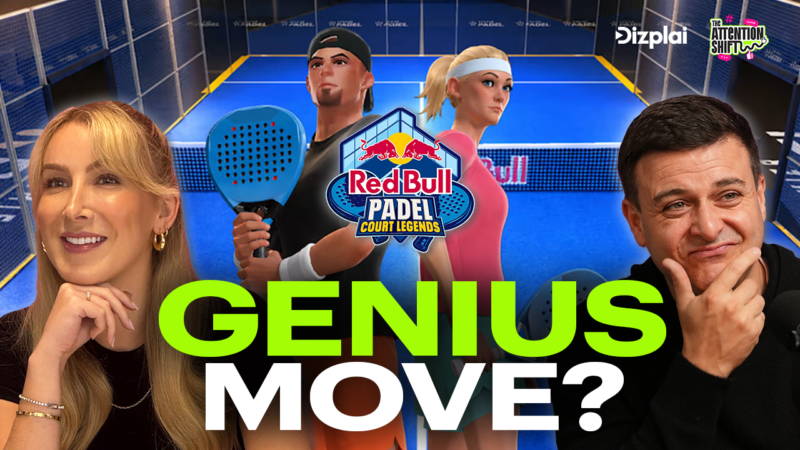
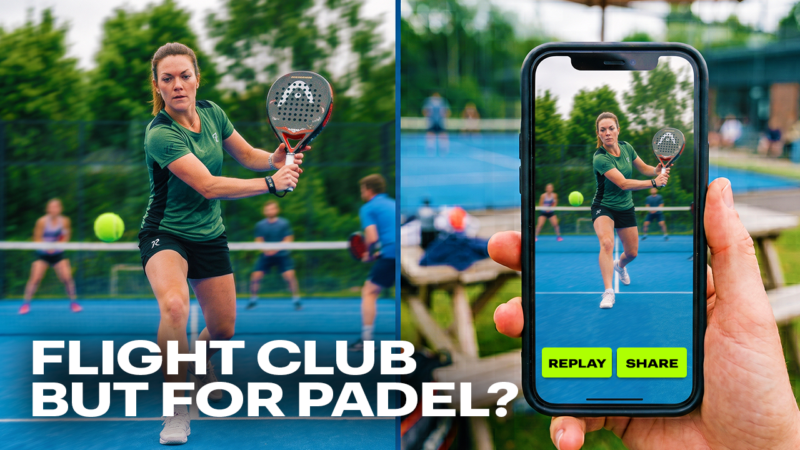
- The Real Reason Red Bull Built a Padel Game: Premier Padel and Red Bull launched Red Bull Padel: Court Legends, a free mobile game worldwide. Real pros appear as in-game coaches. Not a sponsorship, a fan-building product designed to fix padel’s pro circuit awareness problem at scale.
- How Kings League Makes Millions Without Media Rights: Less than 5% of Kings League’s revenue comes from media rights, with sponsorships, creators and live experiences carrying the rest. 85% of the audience is under 35. DAZN just took global rights for 2026 and is distributing free everywhere except France.
- The Biggest Sports Media Deal of 2026 Didn’t Go to ESPN: PrizePicks just became presenting partner across HMA’s network of 200+ local and regional YouTube sports shows. The largest partnership in HMA’s history. Brands picking 200 niche creators over one national broadcaster is the signal worth watching.
- TikTok Goes Local: TikTok is rolling out a Local Feed in the US, surfacing content from nearby creators and community-based accounts. A direct shot at local newspapers, local TV and community Facebook groups. The platform that knew everything about you now wants to know your postcode.
- Why Unilever Bet Half Its Budget on Creators for the World Cup: Unilever’s biggest-ever sports activation, with 35+ brands across 120 markets. CEO Fernando Fernandez moved 50% of marketing investment from TV to creators. The Locker Room is a 24/7 social hub. The biggest test of FMCG’s creator pivot yet.
- Brands Are Skipping Broadcast for Direct Access to Fans: Five stories, five different ways of reaching audiences without traditional broadcast. Mobile games, creator platforms, local YouTube networks, algorithmic discovery and real-time creator content. The new sports media stack is being built in public, and the broadcasters aren’t in it.
Transcription
Ed (00:00.812)
Right then. You ready? Let’s do it. Hello and welcome to this week’s episode of the Attention Shift. This week I’ve got another special guest, Ellie Walter from Display. Ellie, welcome to the pod.
Ellie (00:03.318)
Ready?
Ellie (00:13.282)
Hello Ed, thank you very much for having me. I’ve only been asking for the last six months.
Ed (00:18.018)
Well, now I’m g I this is gonna be chock full of Ellie opinions, I’m hoping. So I’m gonna dive straight in to the first story. So Premier Paddle and Red Bull have just released a game, Court Legends. So the fastest growing sport in the world has got a problem that no one’s talking about, and you’re gonna tell me what that is in a second. They’ve just launched a mobile game, they think that’s the way of solving it. So Premier Paddle and Red Bull launched Red Bull Paddle. it’s a Court Legends, a free-to-play mobile game available worldwide via iOS and Android.
Ellie (00:29.294)
Mm-hmm.
Ed (00:47.752)
launched about two weeks ago and players progressed through Friend League P two P one all the way up to the majors and it mirrors the Premier Paddle tour. So you can see what they’re trying to do there. And you’ve got real players play appearing in it as game coaches. So my pronunciation’s gonna be massively off here. So Alejandro Galan, Beya Gonzalez and Juan LeBron. I thought was all right. so the twenty twenty six Premier Paddle season covers twenty five tournaments across seventeen different countries and it has stops in the UK in South Africa.
Ellie (01:08.79)
Okay.
Ed (01:16.662)
And Red Bull have co-developed this game rather than a traditional sponsorship. So they are using this as an activation. They’re not just trying to badge the sport, which is we what we love to hear. What do you think?
Ellie (01:30.68)
Great start. I think it’s a great start in terms of getting people into the sport. Like I was saying to you beforehand, like I love playing wee tennis, and that was like another maneuver, me getting into tennis when I couldn’t go to the tennis courts. But really, like, do we need is it an awareness problem that Paddle is is facing? Not necessarily. I can count all of my friends who go and play paddle, and it’s a heck of a lot, myself included.
Do we not shut up about paddle? No. If you play paddle, you talk about it a haircut a lot. But if I asked you, Ed, you’re telling me you’re playing paddle tomorrow, who’s on the pro circuit right now and when’s the next event? Would you know?
Ed (02:10.808)
Well, other than Alejandro Galanda I just know I no I didn’t know any of those three three pre participants. And similarly, like I you know, I go to the gym and I’ve got you know people I go to the gym with, personal trainer, and they do nothing but talk about paddle. But similarly I don’t ever see that leap from participation to elite. I wouldn’t know who any of the elite players are. Honestly, I didn’t even know that Red Bull had partnered with Premier Paddle to be part of the tour. It just wasn’t on my radar.
Ellie (02:40.362)
I mean they’d be p been partnered with them for two years and it was one of the biggest strategic partnerships in Premier Paddle history. And I think that is an issue in itself because if it’s been going on for two years, and I think, you know, it’s in over two hundred territories now on Red Bull TV, you know, that is a fundamental issue because it’s like, right, you’re in all these different territories, a lot of people are aware of Paddle.
Ed (02:42.468)
Right, okay.
Ellie (03:02.562)
But now how can we really get them involved in the professional circuit? And I do, this is why I think the game is a good start, but it’s not the end game. It’s not gonna sort the issue entirely. It will help people get there, understand the players, et cetera. But another thing, how are people downloading that? Where’s the appointment to view to get them to the app? You know.
Is it just paddle fans on the Premier Paddle Tour? Like what is the strategy to get people to download? And that’s the one that I’m most interested in. Like where are they going to find those new fans who want to take part in the game?
Ed (03:36.687)
Yeah, I guess as well what they’re trying to do there with the game as well is just trying to get people a little bit earlier in the years and start to try trying to get them to go through the gears at an early age, ’cause I think most people who are playing paddle competitively are probably gonna be I’m trying to think how I say this now, yeah. Plus thirty, let’s say. Is that fair? All right. Mid mid tw mid twenties onwards Ellie.
Ellie (03:52.17)
Be careful.
Ellie (03:57.164)
Yeah, mm wrong man. Yeah, thank you.
Ed (04:01.56)
They’re trying they’re trying to get young because ultimately they know that it’s going to be a life cycle, that they’re not going to build an elite recognition of players in the space of five or ten years. It’s probably going to take time. They’re thinking, can we start getting them at a younger age interested in the sport? Try and get the people coming through that pipeline to become elite players. And, you know, a game might have a a resonance, a much wider scale than
trying to find where you watch it ’cause if obviously it’s like you say it’s on the Red Bull it’s on Red Bull T V but ultimately Red Bull TV is fast channels, you’ve got to go and seek it out. It’s not part of any schedule. It’s it would be hard to find to watch it. And again, similarly I’m I’m not sure what distribution look likes when you look at social and video channels as well, like the likes of YouTube, but sounds like you’ve got to go and seek out the content. So it’s not necessarily a front and centre. Whereas a game might be easier to find, I guess.
Ellie (05:00.288)
It’s easier to find, but I think this is where like it’s a good strategy to s like as a starting point because you’ve got to think every single organization needs to think like a large-scale media company and have all the different touch points. So it’s like, what’s your distribution strategy? What’s your gamification strategy? What’s your you know your sponsorship strategy? Everything needs to be interlinked into one, and they need to build this whole ecosystem, which I think is something that Red Bull is so good at. So, like the merging of Red Bull.
Ed (05:23.864)
Absolutely.
Ellie (05:25.098)
And Premier Paddle is like it’s only two years in now. You know, it’s the early stages of a long strategic partnership, which I think is.
Ed (05:32.274)
they’ll be looking at a f they’ll be looking at a five to ten year d yeah.
Ellie (05:35.667)
Exactly, which is why I say it’s a good start because, you know
You can’t just turn up and expect it to change like that. It’s a long process. Red Bull have been in the game long enough to know this, and they’re being intelligent. Like, I’ve looked at the game itself. It’s really interesting to see where the different like courts are. So you’re getting a feel of where the locations are of the players. So you’re getting that storytelling element of who the players are on tour. They’re speaking with you, like making sure like right shots, etc. So you’re kind of getting that excitement and that investment in those players. So you’re like, hey, okay, I’m involved in this game now.
Out, I like this player. When’s their next, you know, tournament? So it’s like a good kind of like drip feed into the next thing, which is getting more people from playing the game or playing on the paddle courts of wherever you are, that’s if you can get a booking, into the kind of premier paddle ecosystem at an event, buying tickets, buying merchandise, understanding their players and being with them on their journey as they grow.
Ed (06:35.095)
Yeah, that makes sense. Okay, good. Right then. Next story. So Kings League. every traditional sports league is desperate to reach fans under thirty-five. We hear this all the time. Kings League already has them. and it’s interesting what they’ve given up to get there. So, Kings League, as as peop most people will probably know, were founded by Gerard Pique, ex Barcelona, and it’s a creator led seven aside football league. There are lots of legendary players that play in it, but also lots of creators too.
Ellie (06:39.927)
Yes.
Ellie (06:44.728)
The tools?
Ed (07:04.471)
But it derives less than five percent of its income from media rights. So ultimately they’ve decided not to go after that. versus fifty to eighty percent that you would find for traditional football leagues. eighty-five percent of Kingsleeve audience is under 35, and they’ve built that on Twitch, YouTube, and TikTok from day one. they’re the world’s leading creator-led sports brand. they’re running seven major markets now, plus they’ve got two World Cup tournaments. I think they were in Paris recently for their world finals.
And they’ve been profitable since day one, as per what Pique said. Be interesting to sort of if we get in get into those numbers to understand actually what that means. so Dzone have acquired global broadcast rights for the 2026 competition and they’ve distributed it free except in France. So what can people learn about the way that Gerard, PK, and Kingsley have gone compared to what we find from traditional sports leagues?
Ellie (07:56.014)
I think one of the big like points that we need to look at is it’s effectively piracy free because they’re going where the fans are on social platforms.
On your streaming platforms and they’re finding fans where they are. We always say, like, go where the fish are, fish where the fish are, should I say. And that’s what they’re doing. You know, we’ve only got to look at the Champions League the other week, where, as per The Guardian, in the UK alone, there were over 16 million illegal stream views because that was behind a paywall. And that is a fundamental issue for the traditional media rights model. and also the advertising sitting alongside that. So this is where I think Kingsleave have been really clever because it’s a new sports property.
Ed (08:10.519)
Yeah. Yeah.
Ellie (08:34.714)
You can’t expect people to come to your sport just because you’re new and it’s exciting, especially if it’s behind a paywall. So, you know, they’ve gone, they’ve gone to where their fans are, they’ve gone to lots of creator channels, streamers on social first. And now, you know, I think most of their revenue comes from sponsorship deals. I their chief exec said it was something like 65 to 70% comes from sponsorship deals with the likes of ANDAS. So they’re getting those bumper deals. And I think.
Ed (08:56.311)
Yeah.
Ellie (09:03.628)
That’s really exciting at the beginning, but where more conversations will come is after like further iterations is okay, you do not have the traditional media rights model where you are generating like lar like large sums in broadcast fees, media rights fees. So how long does that sponsorship model sustain itself? Because are you understanding your fan? Like you’ve got all these amazing audiences, all these numbers, you know, PK’s spoken about like sometimes
Kings League gets more more audience than La Liga on some matches, but it’s like longer term, who are those fans? Do you know those fans?
And how can you retarget them? So when you are selling to brands, they understand who they are because you’ve got the fan engagement data behind it. And you know, we know from our own research at Display, company plug here, but you know, more and more brands, a significant high percentage of brands, are demanding fan engagement data to back up their spend with a rights holder.
Ed (10:06.231)
Yeah, so it’s interesting. So I I actually picked out a quote when I was reading through s some of the research that we found that he’d said that this generation they are not consuming the image of a brand. They want interaction and involvement. And I’ve found that myself, that that the history of what’s come before, the generation doesn’t really worry about about that. It’s not a a selling point to them, but that ability to be able to interact with the content that they are consuming, whether that being personal or digital, to
have their voice heard and that’s not necessarily individuals right, because if thousands and thousands of people do, you can’t you can’t put you can’t bring everyone’s views into it, but you can start to aggregate together and use that opinion and that involvement to drive the narrative. And look, King’s League have done that from the start where they’ve let the audience actively decide the direction that the game’s going. You would imagine and you would hope that if people are interacting that way, they have got processes in place where they’re ultimately able to identify
who their fans are rather than doing all of this on platforms they don’t own and effectively r renting that reach or that engagement.
Ellie (11:11.448)
For sure, and it’s something the chief execut has spoken about, like wanting to get more into
Betting, you know, how does the data back that up as well? Because it’s all of these different alternative revenue streams. Because, you know, the model is great right now, but you know, they are a very, very clever bunch there. They know longer term that this, you know, this model might last for X amount of time, but how do you keep on iterating? And the best sports properties now are the ones that are constantly iterating because you have to move with the times. We’re in a we’re in a issue right now where it’s like the media rights model, the traditional one, is broken. Everybody’s speaking about it. So if you are new there, you’ve got to think intelligently.
You’ve got to think outside the box. You’ve got to think, right, it might work this year, but it might not work in the next couple of years. So it’s that constant like thinking of change, which is really, really clever play. And I’m really excited to see what comes this year.
Ed (11:58.285)
Cool, me too. Right, next story. So HMA and Prize Pick. So interesting, the biggest brand deal in independent sports media this year didn’t go to an ESPN or Fox or a Sky. It went to a 200 YouTube show collective that most people have probably never heard of. So HMAR, the commercial engine behind the largest sports network on YouTube right now, and on the announced they announced on the first of June they’ve done a landmark partnership with PrizePicks, which is a U US sports entertainment operator.
Ellie (12:01.452)
Mm-hmm. Yeah.
Ed (12:26.89)
making prize picks their presented partner across HMA’s full network of like I said, two hundred plus local and regional shows. So they’re describing it as the largest partnership in their history and one of the most significant brand investments that they’ve seen in independent sports media. They’ve already got fifteen shows already live with ten more launches about to come. And they’re effectively doing hyperlocal distribution at a national scale, using this partnership with price picks across the look and feel of all of these different shows and integrating it in
Ellie (12:40.973)
Yeah.
Ed (12:56.406)
to the video experience that they’re creating. So it’s it’s something that I know we’ve talked about a lot internally, haven’t we, in terms of like where we feel like I guess creator distribution’s going and how brands should be thinking about leaning into these types of experiences, I guess.
Ellie (13:13.132)
Yeah, I think it’s really of it’s really brilliant to see, you know, and I think we look at the likes of Mark Goldbridge earlier this year where the overlap, you know, acquired two of his YouTube channels and like from, you know, that Global acquired like
a stake in the overlap itself. And it’s like these creators have worked really, really, really hard to get a seat at the table. Let’s not forget about that. You know, the likes of Mark have been working for 10 years solid, going live every single day to build his audience, to understand his audience. You know, people scoffed at him. Even Gary Neville called them those bloody YouTubers, you know, but they were insistent. They stuck with the plan and they are now reaping the rewards, and good for them. So I think this is, you know, really exciting.
Ed (13:36.375)
yeah, absolutely.
Ellie (13:56.128)
To see because as I touched upon in the last point, you know, traditional broadcast is changing. You know, where sponsors are getting involved, they’re getting involved with creators much more than your traditional networks. And that’s because creators speak with their audiences, not at their audiences. They understand.
Who they are, and I think this is you’re gonna see more and more of this. Like the conversations that I’m having is far more like creator-based. How can we get creators involved in the conversation? You know, we want them to spread the message of what we are talking about and like the value exchange there. And like those conversations were very hard to have, you know, a year or two ago, and now people are waking up to be like, This is a huge opportunity, and I’m really excited to see where that goes. And this is just a signal.
of the times and this is just one of many that will happen in the coming year, especially with the World Cup and like what happens after that as well.
Ed (14:54.134)
Absolutely. I look and and I think it it I always find with these like these special interests and they they often get called niche channels right, but the reality is like they’re not, you know, they’re they are bigger than most local media outlets i in many ways. And I think what they are I think there was always this worry from brands before about, but is it brand safe? And it’s kinda like, Yeah, but if you want authenticity and you want real cut through to an audience that actually cares about the content that you are associated with
Ellie (15:08.277)
Yeah.
Ed (15:24.034)
You’re gonna have to accept as well that opinion and real opinion is central to that and the audience feel like they can have an opinion too. Cause if you want it to be brand safe, no one’s tuning in.
Ellie (15:34.934)
Also, like you do not want to hold the creator hostage. Like they want to be their authentic self. And you’re gonna get the best content and the best engagement with their audience if they are authentic. They will sniff out immediately immediately the audience.
Ed (15:39.435)
Yeah.
Ellie (15:50.346)
if it’s you know an agenda it’s fake or it’s kind of PR blur but has been written for the sake of you know said partnership. Be authentic, show up, speak to the audience that you have built and you know so well and you know and let that brand, you know, weave its way into it, and that’s when it will work. But it has to be, you know, it has to be relatable. You know, you don’t want it’s interesting to see some creator partnerships where you’re like, that hasn’t quite worked out.
And there’s a reason for that. It’s because the brand doesn’t speak to the audience of that creator.
And it’s kind of putting, you know, a square peg and a round hole. You’ve got to make sure it works. And that’s like the duty of like the creative partnerships manager and, you know, those working on the brand side, but also like the creator itself to know when to say no. And it’s very hard when you know money is coming your way for brand deals, but it’s it’s also to be like, I know my audience and this won’t sit with them, because ultimately, like, think of the longer-term game rather than the shorter-term one.
Ed (16:50.08)
Yeah, it it it it is really interesting. I think and I think this this takes on to the next story as well, ’cause obviously what we’re talking about there is how they’re doing that sort of hyperlocal targeting and TikTok are now rolling out a local feed in the US. So I’m sure we’ll start to see it elsewhere too, where they are surfacing content from creators that are near ba nearby to you, community based accounts, and they’re giving users geographically specific discovery layers within the app.
Ellie (17:01.646)
Yeah.
Ed (17:15.51)
So ultimately this is like this is then finding creating local areas that are then starting to become competitors to local media, to newspapers, to local T V. And I always remember years ago as well about, you know, community journalists as the phrase was used. And you would have had that probably you would have heard that a number of times in your time back at Sky, right? And it it’s never really cut through.
Ellie (17:32.971)
Well, I still
I started off my journalism life writing for a local paper. Being at the local marathon in Ealing, interviewing runners, you know, being one of them, or being on the street on Friday asking about building projects. What do you think? You know, that’s the hyper-local kind of journalism there. But what we’re seeing now is unfortunately, like local journalism is under, you know, extreme threat. It’s closing at a rapid rate, which is really, really sad to see. And
Ed (17:40.481)
There we go.
Ed (18:02.827)
Yeah, it is.
Ellie (18:04.876)
You know, I wish it wasn’t happening. I really wish, and I really wish there was a way for me to personally stop that. But, you know, I am just I just don’t have the power, sadly, to do that. But I think this is a really interesting move from TikTok. And I think it’s a clever move because it’s replacing where you would normally go to your paper to see what’s like happening around. But it’s actually meeting people where they are right now, which is
on your phone a lot of the time. If I’m new to an area, let’s say I’m going to the US this summer for the World Cup, I have no idea what’s happening in the area. Let me go onto TikTok. Let me see what the best restaurants are. Let me see, you know, what’s happening in the area. It’s a great like discoverability tool. And I’m really
Ed (18:42.761)
It totally look it t sorry, it totally is. Like in like here in Manchester we’ve got something called Manchester Confidential, which which ultimately started out as this socially driven recommender of great places to go. And as it’s grown and grown and grown now, Matty who basically fronts it goes along to restaurants and venues and samples their their experience. These these these local venues are paying Matty to come in and do it and then and and then but give what what always feels like an authentic
view of of whether you should go to that venue. And I know clearly always says that should go to that venue. TikTok are doing the exact same thing. They’re thinking if we can really tap into local creators who really resonate with a local audience, then we can tap into local brands. And that’s cash that we can pull away from traditional me loc local media outlets into our environment. And that’s more money that we can generate. It comes down to advertising cash at the end of the day.
Ellie (19:38.806)
Yeah, it comes down to advertising cash. But I also think, you know, at the same time, like not just advertising, it’s great for local communities because if we look at the hospitality industry using the UK as an example, it’s under severe threat right now with the tax rates that are put on businesses. And we are seeing, you know, independent hospitality closing at a horrifying rate, you know.
Ed (19:46.219)
Yeah, yeah.
Ed (19:54.752)
Yeah.
Ellie (20:02.142)
my favourite local restaurant, gone under. You know, I was reading another one has gone under. And, you know, the guys at Top Jaw, I don’t know if you follow on Instagram, but they are brilliant with their London recommendations and not just London of where to eat. But they, you know, did something a couple of days ago which was help out local hospitality. It’s in big trouble. So people want discoverability and if they know that there are places to go where you can visit and it’s been like rated by locals, it’s in your area, you know, the traditional kind
Ed (20:18.581)
Yeah.
Ellie (20:32.046)
Of search on Google might be replaced by you know something like TikTok, people are gonna use it. And I can only think this is a good thing for like local businesses, you know, and local communities. I mean, there is the issue of you know, it’s gotta be compliant, you can toggle on and off because a lot of people are like, I don’t want you to know my location if I’m an individual user. You know, it’s that, but in terms of Yeah.
Ed (20:51.179)
Yeah, yeah. I think part part of it could be that, ’cause most people do toggle it off and now in theory, if they get this right, people start toggling it on and it’s just more information that that they have better use. Yeah.
Ellie (21:00.942)
Exactly. Exactly. It’s again, it’s a really clever day to play. Like for me, I’m a I’m a toggle off. You know, people are like, find my friends. I’m like, you ain’t finding me, you know, kind of kind of thing. I’m like, no, mysterious girl. but it’s I was just thinking play Peter Andre. No, don’t do that. but it’s one of those things where it’s like, I want
Ed (21:12.053)
Ha ha.
Ed (21:22.111)
Yeah, I mean yeah, yeah.
Ellie (21:28.32)
Right now, I could turn on my phone and be like, I want a good a good restaurant in London in this location. I’m gonna toggle it on. Instead of me like searching through like aimless pages of like restaurants, I could find it on TikTok. So I can only like congratulate the team on, you know, thinking local. And I think it’s a great opportunity for local businesses, local advertisement, and even like let’s put it back into a sport lens. If you’re a local
football team, you know, if you’re a non-league football team playing, let’s say, I’ll use I’ll use E-Ling, where I’m I’m from originally, as as the example. But if you’re a local football club like Hanwell Town in that area, all of a sudden you can toggle on much more like advertising potential, because if you’re doing hyper-localized campaigns through it, it’s like the opportunity there is potentially vast.
Ed (22:15.275)
Yeah, now it makes sense. Right, cool. Final story. So Unilever, one obviously one of the biggest brands in the world. They’ve got thirty-five brands under them. So I I talked about this on LinkedIn a while ago and we’ve talked about Unilever before, but they’re the biggest FMCG company and they’ve moved half of their marketing budget to create a marketing. World Cup starts in a couple of days as we’re recording this. so we’re about to find out if their strategy has worked. So they’ve launched their their biggest sports parts of activation.
in their history, they said, in for the World Cup. Fernando Fernandez publicly comment committed in 2025 to moving 50% of of their marketing investment, and they’ve done that now. They’re creating things like the House of Fresh, which is like a fan experience in whole cities, Mexico City, New York, Miami. They’ve got the locker room, which are 24-7 real-time social content hub on YouTube and TikTok. And they are looking to respond to those live World Cup moments through the different creators. So, in a lot of ways.
And I’ve talked about this with Joe Redfern and Leon the Pod before, stuff that the NBA’s been doing, stuff that the NFL’s been doing, Unilever, I have have been involved, they’ve done stuff around the Olympics as well from memory. They’re now bringing this into this for their biggest activation ever. And it’s gonna be really, really interesting to see how they get the balance right between commerciality and great content, but also if that investment pays off for them.
Ellie (23:23.223)
Mm-hmm.
Ellie (23:36.748)
I mean that’s a significant amount of investment, you know, to be basically well, to be moving half of your budget over to a large scale campaign is, you know, it’s high risk, high reward essentially with this. What I’m interested in from this, it’s like during the event, fantastic, but what happens after? You know, what what levers are they pulling?
What Unilever, what levers are they pulling during God, couldn’t help myself there. What levers are they pulling during the tournament to ensure that people are getting into the Unilever ecosystem after? You know, it’s it’s the classic case of this is a high spike moment, high interest moment, but the moment the event ends, what happens?
Like what is the plan, you know, the content strategy plan for after that? Of course it’s gonna be at the highest level, but you don’t want it to drop off a cliff. You want to keep it like a it’s gonna drop, but you want it to keep it like a steady, like a steady ground, not completely completely off. And it’s like, okay, so have you what plan? I’m really excited to see the plan they have after more than actually what they’ve got in place for it now, because I think that is where the real value lies. It’s the longer term strategy after that. A men’s World Cup happens what
Once every four years. I really hope they put the same, you know, a similar level of investment into the Women’s World Cup when it comes along. There will be like different elements of storytelling within that because you’ve got to like think of them as two, you know, separate tournaments, two separate, two separate things. But what they will do with that is key. I don’t know as of yet what. And I think that’s the
That’s my nervous excitement for it. And there are smart
Ed (25:20.318)
Yeah, and and and what success looks like for them as well. generally speaking, these kind of brands are doing a brand play, so it’s about ultimately keep the the the the brand top of mind rather than a a direct conversion play. and like you said, like y obviously they’re doing this throughout and the this house of fresh and this locker room, look, they could take that to other sports, right? It doesn’t have to necessarily be be football p specific and they could roll that out afterwards and keep that going.
Ellie (25:24.259)
Yeah.
Ed (25:50.075)
but like I said, what is the plan? And then I think the other thing as well is kinda like obviously they’re doing this across social and video channels as well, where they don’t own any of the audience. W are they trying to order or on any of the aud or they’re just happy just to play the brand player?
Ellie (26:04.332)
I think I think where it gets interesting, it’s like this is gonna be a really, really, really saturated brand World Cup. It’s in the US, it there’s brands galore. I mean, we look at it for the World Cup, we look at the LA twenty eight, it’s like the most commercial World Cup.
Olympics that are happening. It’s brand overload. So what brands are gonna cut through the noise? There’s a lot there and there’s gonna be a lot of brands piggybacking off it as well, you know, who don’t have any affiliation to the World Cup itself. So how can you stand out within that? I think having a 24-7 content strategy is amazing for the tournament because it’s that always on. But is it just always on for the tournament itself, or is that always on then translating after the tournament? Because that is where like the biggest
results will happen. It’s like great, you have like this uplift for for a month.
But then after, do you still have that brand recognition? Are people coming to your brand during that time? You’ve now got a four-year, four-year plan until the next World Cup, if they’re associating it with the next World Men’s World Cup, I’d like to add, within the next one. So what are their plans? Or are they using this as like a big exploration into the sports sphere and have a sports content calendar where they will put some of the rest of their budget? I mean, there’s now only 50% of the budget within that to target.
Ed (27:23.614)
Well, yeah, I th it doesn’t necessarily mean they’re using all of it on this, but you you you’re ra you’re absolutely la you’re absolutely right. It’s how do they transition through this and I’m sure there’s a they’re gonna learn from and they’ve been building up to this for a few years now, but you’re absolutely right. There are other opportunities that come around. Obviously they pick they’ve picked football because it’s they’re the biggest sport in the world, right? And they’ve got a huge opportunity and a huge moment and that, but yeah, I I totally get where you’re coming from. Cool.
Ellie (27:41.27)
Mm.
Ellie (27:45.632)
Yeah. It’s it’s it’s interesting to see and I I I’m really ex I’m I’m excited to see it, but I’m more excited to see what happens after more than anything else.
Ed (27:54.888)
Yeah. Right, we’ll keep an eye on that. Maybe we’ll revive we’ll have a look in a few months’ time as we want to do another one. Get you on again, Ellie. Thank you so much for joining today. It’s been a real pleasure.
Ellie (27:59.054)
Yeah.
Ellie (28:04.93)
Thank you so much for having me. I’ve really enjoyed it.
Ed (28:06.442)
Cool. And we’ll sh I’m sure we’ll get you on again soon. So thank you for everyone for joining this week’s episode of the Attention Shift. Don’t forget to like, subscribe, and if you want to feature as a guest in the future, send us an email. You can email us at hello attention shift dot media or hit me up on LinkedIn or even WhatsApp if you’ve got my number, which people often do as well. I had a few this weekend. Thank you so much for your time. I’ve been Ed Abbeys, this has been Ellie Walter, and we’ve been the Attention Shift.

- Tags: Brands & Agencies, Creators, Media Networks, Sports