

Fan Engagement > Podcasts > Starmer Bans Social for Under-16s, the BBC’s Gen Z Problem & Creator Marketing’s $44BN Year!
Summary
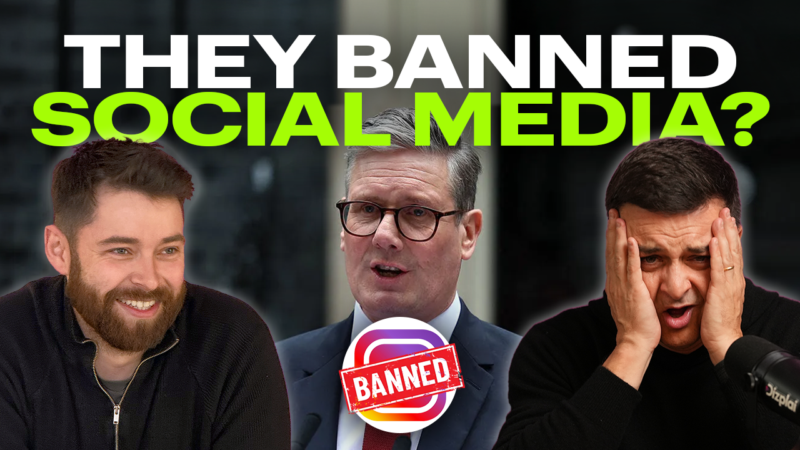
- Starmer Bans Social Media for Under-16s: The UK Prime Minister announced a blanket ban for all children under 16, going further than Australia’s December 2025 law that’s already removed 4.7M accounts. The UK is the largest English-language social market outside the US, with eight more countries pursuing identical legislation. The fan acquisition funnel just changed.
- The BBC’s Gen Z Problem: The Sidemen’s manager testified at the BBC Charter Review that public service broadcasting “does not match Gen Z experience.” Parliament invited the man managing the BBC’s direct competition for Gen Z attention to make the case for why public service broadcasting needs to be creator-led to survive. The seat at the table tells you the story.
- Creator Marketing Just Became a $44BN Core Media Channel: The IAB formally classified creator marketing as a “core media channel” in its 2026 annual report. Search advertising flagged in structural decline. 54% of brands shifting to ongoing ambassador models. Creator economy projected at $44BN, up from $37BN in 2025. The institutional moment that turns creator spend from a test line item into core budget.
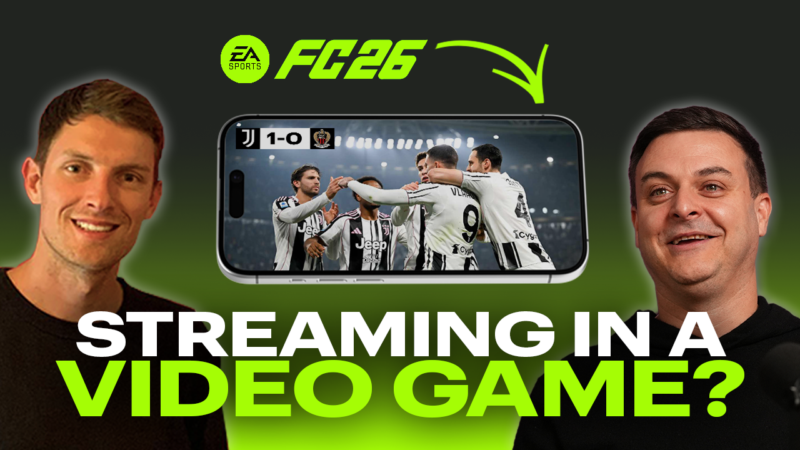
- Telemundo’s All-In World Cup Bet: Telemundo, exclusive Spanish-language US rights holder, just rolled out its most aggressive digital strategy ever. 24/7 YouTube livestreams, Watch Parties across TikTok and X, and 700+ hours of content on Peacock and the Telemundo App. The template for always-on tournament coverage built around a single audience.
- The $300M+ Sport Card Breaking Economy: Collectors are paying to watch sealed packs opened on live stream, with cards distributed by team slot. Whatnot doubled to $6BN GMV in 2025. Top streamers earning $15-18M annually. The Sidemen launched Sidecards with Eden Hazard. Sport’s most invisible audience is loyal, high-spending and entirely outside traditional broadcast.
- The Creator Economy Just Won and Lost the UK in the Same Week: $44BN of brand spend just got institutional validation while the UK government legislated its primary youth audience off the platforms. Channel growing, audience shrinking, infrastructure decoupling. Who’s building the next path to the under-16 fan that doesn’t run through TikTok and Instagram?
Transcription
Harry Macey (00:00.291)
Okay. Ready?
Ed (00:01.192)
Right, you ready? Born ready. Ready. Hello and welcome to this week’s edition of the Attention Shift Podcast. Today I’ve got with me Harry Macy, but before we do any introductions, let’s get straight into the first story that I know we were chatting about offline earlier. So Harry, the UK today has announced it’s going to ban social media for under sixteens. So the Prime Minister conducted a press conference this morning and they’re going down the path of the Australians.
who were the first to do this law and they’re planning to try and get this through Parliament and into law by the end of the year so it could kick in for spring twenty twenty seven. the Prime Minister said that social media is making children unhappy. It’s making it easier for bullies to harass and abuse them. It could even be harming their mental health. I’m not prepared to compromise on the safety and happiness of our children. And that is why this ban must happen, and this is why this ban will happen now. What do you think?
Harry Macey (00:59.449)
What a day to have my debut with news dropping like that, throwing me straight into the deep end. Listen, I I think the rumors have been there for a little while now, haven’t they? everything that he said’s right. Like I’m a a a new dad. and do I want my child growing up with perhaps the the environment that it is now, not so much it was when I was growing up, but no, I I think it’s the right decision. I think from if you put my my display hat on or sport industry hat on, I think we’ve got a real challenge on our hands.
Ed (01:01.608)
Hospital passes that is that’s what that’s known as.
Yeah, totally.
Harry Macey (01:28.781)
you know, overnight we will lose, sports organizations will lose the most common acquisition funnel for audiences, right? At the moment it’s it’s distribute stick content up there and hope the fans funnel through the channels. I don’t think that’s gonna be the case anymore, right? We’ve got find new avenues to to reach younger audiences, educate our audiences and and bring them into the fandom.
Ed (01:53.298)
Yeah, and what’s interesting as well is obviously Australia did this back in twenty twenty five. So it’s been running for about six months now and and it’s funny, I was having a chat with my daughter earlier and and and she’s sixteen in August, so she already escapes that ban, which she’s very happy about. but I would I was just talking just generally about it with her and she went she went, That’ll never work. I w And I like, Okay, an opinion on She went, Yeah, yeah. Seven in ten parents in the in Australia are already saying that that that kids are finding ways to get around the ban. I thought, Wow, I didn’t realise you were that that educated about it but
That’s the narrative and so it made me go and have a bit a little of a bit of a look online as well. And there’ve been d studies that have been done in Australia already that seven in ten parents apparently saying that kids are finding a way around. How are they doing that?
Harry Macey (02:31.577)
I think it’s sixty percent of kids between the age of twelve and sixteen are finding ways to create channels at the moment, right? or or using VPNs or whatever else it might be. So I think the government have got a bigger challenge on their hands, right? To to stop that from happening. And I think, you know, you see lots of whispers around the case that this is just the the beginning of introducing government IDs, right? so i is that gonna be the route to this? That’s it, right? Yeah, yeah, yeah.
Ed (02:57.18)
What di digital IDs?
Harry Macey (03:01.551)
But it will certainly be interesting to see h how they enforce it ultimately.
Ed (03:07.026)
And look, there’s a number of countries as well that are looking at this, like France, Spain, Norway, Denmark, Greece, Malaysia, Portugal, Slovenia, like everyone’s looking at this, pursuing legislation, saying that they’re gonna do something similar. We’ll have seen the Australian model. I think we’ve gone a bit of a step further ’cause they’re talking about chat chat bots as well being banned.
Harry Macey (03:30.159)
Well, that’s a nice thing to tap into there, right? Because like, okay, let’s forget about the parents or forget about the government in this instance, and even forget about the the teams, the feds, the broadcasts, whatever else it might be. Fans aren’t disappearing overnight, right? There’s still a 14-year-old there that loves football. There’s a 14-year-old there that loves F1, cricket, whatever else it might be.
The channels that they’re gonna be consuming information on now, the way that they engage with like-minded individuals, the way that they engage with their heroes that are playing the sport right now, is gonna change forever. So we need to, as a collective, as an industry now, make sure that we can still serve them in the right manners. and finding those channels is is gonna be a challenge. I think actually. Yeah.
Ed (04:11.397)
Is this it’s
Harry Macey (04:16.696)
Yeah.
Ed (04:17.319)
I was gonna say, is this not is this not censorship though? Are we going down a rock are we going down a down down a dangerous path here? I mean where does it where does it end? Like it
Harry Macey (04:23.692)
It’s balance, right? It’s not cens it’s it’s not censorship. I don’t think it’s censorship in the fact that, you know, we’re stopping organisations from speaking to younger audiences. We want them to speak to them in the right manner. We want to put do this in safe spaces, in spaces that can be that can have regulations around it.
And and that’s where the opportunity is now gonna work, you know. Wh where does the investment come from now? You know, brand investment is across social tenfold. So where does the investment now come into? Does it go into grassroots so that we’re educating audiences at at that level? Do we w you know, we’ll talk about it in a moment, but broadcasters how have a massive opportunity to become relevant again in in the Gen Z space and create content that resonates with younger audiences. So we’re not censoring
organizations as such. We’re just giving them we need different channels to to communicate with them.
Ed (05:13.745)
The only challenge with that is obviously that a lot of these traditional media companies and certainly public service broadcasters have already gone down the path now of sharing a lot of the content for Gen Z on the exact platforms that are now going to be banned from under sixteenth six under sixteenth, which brings us on to our next story, nicely. Jordan Swalzenberger, CEO of RK Media, manager of the Sidemen, we talk a lot about Sidemen, so we’re definitely not going down that path, testified at the BBC’s Charter Review MP’s evidence session, about two weeks ago.
And his argument was that public service broadcasting does not match a Gen Z experience, as that Gen Z obviously won’t don’t pay for licence fees, and that the BBC needs to be edgy and creator led to survive that. Now the argument is is he would say that. being obviously the creator led or one of, I guess, the architects of the creator led in industry, but I think there’s probably some truth in what he’s saying, right?
Harry Macey (06:07.909)
I like to think of myself as a voice of that, Gen Z, but I think I’m I’m on the fringes. I’m 94. So I think you you tip over.
Ed (06:11.963)
Well, I’m not obviously but yeah you just I think you’re just just on the cusp. You’re you’re edging your way out you’re edging your way out of it now.
Harry Macey (06:19.001)
But if even if I’m not, he’s still talking facts, right? The BBC hasn’t been able to keep up with how younger audiences want to consume content. So I think this is gonna be a real opportunity for them to see to showcase have they been watching? I mean obviously they’re they’re introducing new new new content across these platforms, but have they been watching how audiences consume across the live streaming product
Ed (06:23.015)
Yeah. Yeah, yeah.
Harry Macey (06:47.253)
Platforms, you know, the the Twitch is the kicks of the world, even the YouTubes, and I know I know I’m jumping all over the place at the moment, so sorry, producer Dan, but we we were watching the the Mr Beast stream, right, on the weekend on YouTube, where he was something stupid, like 400,000 concurrent live viewers, and 50% of them were engaging within a poll within a minute. Like, are the BBC looking at that and going, okay, cool, actually, the evidence is there how audiences want to engage with live content moving forward? How are they going to include that? And how are they gonna be the
home the the the chosen destination to consume content one when all of these other destinations are off the map ultimately.
Ed (07:25.413)
And what was interesting what he was doing as well is is he was he I remember we were cause we were all saying it at the same time were we when he was asking people how old they were in the chat, like, wow, he’s doing demographic stuff here, but he was acknowledging that people were doing it and he was bringing it back into the content he was making to help him to drive the editorial narrative, and I sound like a broken record when I say it, ’cause I I say it almost ten times a day, every day. And then you go and watch what goes on even now with World Cup coverage. There are a million
engaging things you can do in the BB Spe BB Sport app, but none of that impacts in any way, shape or form the content you are watching in and around the game itself. Look, I don’t want loads of engagement things necessarily spoiling me watching the game, but there is loads of content being made around the game which is lots of talking heads in a room and the audience being talked at, not talked with.
Harry Macey (08:15.213)
Yeah. I it’ll be interesting to see what the future holds for the iPlayer, right? How will they bring in these mechanics that audiences have got used to growing up, right? They’re not like you and I where it’s sort of like, they’ve introduced polls, they’ve introduced live chat or whatever else it might be. These have been like integral ways to communicate with other people in the community, right? And how are we gonna adopt that in the traditional sense of a broadcaster moving forward? so I think it’s gonna be interesting.
To see. But just going back to your point on why Mr. Beastwright was also
asking all those questions, he doesn’t get that information from Google, from YouTube, right? So he was trying to get an understanding of who his audience were in a live environment, asking obviously where they were and what their ages were, but what type of content do they like watching as well at the same time? They he was asking a bunch of questions from like, what’s your favorite type of content, long form or short form? how often do you watch YouTube? Whatever else it might be. I f I found it fascinating because he presented it in a way that was a a product of watching him hit his
Ed (08:53.446)
Yeah, yeah, of course.
Ed (09:12.273)
But it and it’s it and I did as well.
Harry Macey (09:19.011)
half a billion subscribers but also his field research I think was was super smart to that.
Ed (09:24.859)
Yeah, and and like I said, in a CN anim anonymity. And the thing of the route the realities is he’s like, he’s got a seat at the table, right, with the CEO, Neil Moen. But he still has to do that. He’s still not getting the data. He’s still getting what everyone else gets and they’re not going to give him that. But then again, they’re not stopping from doing that. Because we’ve had conversations with YouTube right as well, where they said like we don’t tell anyone they can or can’t do these things. We just expect they will, but we’re not gonna send them down the path to go do it like this or do it like that. Work it out.
Harry Macey (09:49.786)
Yeah. No, absolutely. It’ll be it’ll yeah, it’ll be interesting to see how people like Jimmy or Mr Beast creators you’ve mentioned, obviously Jordan and the Sideman, how the BBC and other traditional broadcasters adopt that as well, right?
Ed (10:01.38)
And also are we gonna have this yeah, coming back to what we said earlier, are we gonna have this situation that’s happened in Australia where they’ve just shut down loads of accounts ’cause they’re under sixteen. So similarly, like Jimmy who’s now eight five hundred million, does that mean that his numbers now dropped to four hundred million or whatever?
Harry Macey (10:09.668)
Now we gaan.
Harry Macey (10:14.403)
Yeah, yeah, yeah. I mean, I don’t think he’s gonna lose sleep at that, if if I’m honest, but but no, but y we we’ve seen the Bib, right, and and and ITV dipping their toes into the creator economies, you know, putting, you know, s youtubers on I’m a celeb, YouTubers on strictly, et cetera, et cetera. But
Ed (10:17.614)
I don’t think he’s gonna lucid for
Harry Macey (10:33.123)
We know wherever creators go, their fans will follow them. And if they are gonna be just the lights gonna be switched and they’re not gonna be able to watch them daily on on on YouTube or or the streaming platforms, whatever else it might be, we’ll
These traditional channels lean in on that and say, well, if we create original programming for these creators as such, will that mean that we can bring audiences back to the beeb so that that £170 a year is no longer a contentious decision? Actually, it’s the place and the home of where audiences want to spend their time rather than, you know, have to.
Ed (11:06.906)
Yeah. Well then, next story. Again, leading on now to the creator economy. The AI IAB. Creator Marketing is finally getting the institutional recognition it deserves. Who knew this was coming in? My massive surprise. So the Interactive Advertising Bureau has formally declared Creator Marketing a core media channel. I’d not I’d not notice that at all. That that’s pretty new to me. It’s no longer supplementary. Yeah.
Harry Macey (11:28.557)
Well, it’s good to know a forty four billion yeah, it’s good to know a forty four billion dollar industry is not being taken as a gimmick anymore, right?
Ed (11:35.812)
Yeah, they they’ve gone on to it. It’s no longer supplementary, no longer experiential, it’s structurally embedded in our brands plan and buy media, which Unilever would agree with that, haven’t decided to spend fifty per cent of their marketing budget on creator marketing. Like this I I don’t I d again, I’m just gonna have a rant here. Yeah, go on, you go first.
Harry Macey (11:53.646)
You know, I have a theory on this though. I think like this isn’t news to creators, right? And this certainly isn’t news to audiences. I think this is news to finance departments. I think that there this is the justifying the spend and it’s going, well if you know, if if if IBM or whatever it’s is, you know, say that we can IAB apologies, IABM, basically saying that it’s it’s it’s it’s justified spend now, then all of a sudden the cog should move smoother.
Ed (12:12.303)
I A B, yeah.
Ed (12:22.63)
But don’t you think as as sometimes like these obviously these these the whether you call them governing bodies or or professional associations that that are leading in s different sectors, like there’s if th if if they don’t double down on this and confirm to everyone that they’ve known for years, they can’t stay relevant themselves. They don’t they cease to exist.
Harry Macey (12:43.661)
It’s out of touch, right?
Ed (12:45.658)
I mean that’s the way I see it, right? When I when I saw this and obviously we were preparing what we were gonna talk about today, I like, god, I thought they would have done that years ago. They just realised that this is a thing. Like like
Harry Macey (12:53.869)
No, but yeah. But th the irony is as well, right? Just as this comes out, we’re stripping it away from audiences that have tended to call creators home and have grown up watching and engaging in these communities. so it’s it’s a real fine balance here in the UK, right? And we we do need to r, you know, double down on that. It’s only happening in the UK. This is an international report.
Ed (13:16.058)
Well obviously the UK is the centre of the universe for us, so obviously.
Harry Macey (13:18.573)
Obviously, you’re right. so yeah, it it we we have to be careful with
Ed (13:25.52)
But it’s f it I mean, and again, so if you just sort of sort say back what we’ve been saying here. So the UK government today have dis decided they’re gonna abandon the sixteen on social media platforms. Jordan, the creator, effective creator marketing, tells Parliament that the BBC’s already lost Gen said to those platforms. And then the IOB have declared that basically creator market is core. It’s kinda like, alright, so whilst everyone’s like said that, now the government have said what they said, kind of like alright, do we start again then? So what we are gonna see now is innovation, because that’s ultimately what’s gonna have to happen. Yeah.
Harry Macey (13:47.673)
Yeah.
Harry Macey (13:51.782)
Well, a new spend, right? If if if brands can’t put the budget into creators in the UK, where does it go now? Grassroots, I think, is an awesome conversation around that, right?
So like if for example, you you know, you’re a sponsor coming in and you’re targeting younger generations, let’s just call it, and you would typically throw that at your a football club and you want to acquire them, there’s no point doing it anymore, right? There’s no or there might not be as much point doing it. You’re not gonna get the best bang for your buck or or or ROI on it. Why not as a brand turn up in the fields and contribute to these kids, youths growing up, you know? so that you can build the affiliation at that point there, right? Because it’s all about building the long-term value of a customer.
Ed (14:32.4)
Yeah. I mean lot and I remember it like
Harry Macey (14:33.421)
Like tap into you know what? Tap into however many moons ago it was when you were doing Nike soccer school, right? It’s just another layer of that. So rather than Nike investing heavily in the social e economics, they’re actually double downing and, you know, bringing something back from the eighties.
Ed (14:40.474)
Yeah, yeah.
Ed (14:50.896)
Yeah, I mean what yeah, like I said, when I was running Man United Soccer Schools, like it we w that wasn’t talent talent identification. That was winning hearts and minds of young people around the world. So when they decide which team they want to support, that Man United is is the forefront of their mind. And not only that, because we used to focus as much on the parents that brought the kids as well, helping them to understand why Man United is the right club for their children to to support. Because of everything that that the football club stood for, its history, like we really went to to lengths to get across to them ultimately
the the the the culture, the community, the lifestyle, everything that made what Man United is. And look and every other sports club, brand, can have a narrative and a story, what makes them special. And you’re right, and I I think back to when I was a kid, Coca Cola used to do the you know, Coca Cola soccer schools where you could get badgets. McDonalds have been sponsoring the FA for a number of years now at a grassroots level. And you like and you look at that and you’ve got McDonald’s sponsoring the FA grassroots level. Yeah, they they understand that
Harry Macey (15:47.109)
Yeah.
Ed (15:49.028)
that grassroots marketing is important and there’s gonna have to be much more of that. In a similar kind of way where we’ve had the band of
Harry Macey (15:53.265)
Do you feel like the romance do you feel like the romance has fallen away slightly from that though? The grant the the grassroots sponsorship sort of platforms that brands can create for younger audiences? Yeah.
Ed (16:00.816)
Well yeah, ’cause they felt like they found a shortcut by doing, you know, the the the social media angle of it now and now they’re gonna realise, we’re gonna have to change that up a little bit ’cause we can’t do that anymore. So the reality is as marketeers always do, they’ll pivot and they’ll find a way. ’cause they’ll have to. So, yeah, y you know, they’re just gonna have to find another way and that’s that’s the way you do it. And the reality is we’re talking under sixteens here anyway, right? And there’ll be there’ll be plenty that’ll look at this going, Yeah, I’m not gonna change that much anyway, ’cause plenty of under sixteens are gonna find their way around it.
Harry Macey (16:15.504)
Reinvent the wheel again.
Ed (16:30.342)
‘Cause there will be plenty of organisations that think like that.
Harry Macey (16:32.656)
But it’s the sixteen but you know, we’ve got to look beyond just making the twelve to sixteen year olds happy of today. It’s about building the foundations for the generations that will never grow up with social media then. ’cause there will be a sticky patch, right? I was very much on that fringe of
going into my teens, just having MSN and Bebo and then moving onto Facebook. So I’ve learned w I know what life was like before, I know what life is like after. But at the moment we’ve got the the generation that have never lived without social. and then
We’ve got the generation coming that will never grow up with social until a to a certain point, right? So we still we need to acknowledge how we can connect with those younger audiences without having, to your point, the the the shortcut of putting a a logo as such on a on a video or connecting with a with a creator to to exist within that community ultimately.
Ed (17:27.258)
Absolutely. Yeah, look, I think we’ve covered this quite a bit across the first three stories of this week now. So what we’re gonna do is we’re just gonna go on to something that we’ve seen, which is and we’ve talked a little bit about this the last couple of weeks. So Telemondo have gone all gone all in for the World Cup. So anyone doesn’t know who Telemondo are, Spanish speaking media company, basically based out of the US, and across sort of Spanish language video rights holders across the US. So they are rolling out a number of digital and social media
strategic activations around the World Cup. Interesting, they’re doing live social watch parties and like stuff that we’ve never ever talked about, Harry. It’s I’m I’m like it feels like you one but you know, you wait for one bus and then loads come along. and we’ve we have covered this off quite significantly over the last couple of weeks. We talked about two be trying to think who else we covered as well. There’s a number of people doing this. We’ve seen that Beckham’s been doing his watch parties as well. That’s been all over the news as well. there’s not a lot
Different here with it, but obviously they’re making their plu play too, ’cause what we don’t know sitting here in the UK, ’cause obviously we don’t see it, is this is very much Spanish language oriented in North America. I’m guessing that that gap wasn’t being covered, hence why they’ve gone down this road.
Harry Macey (18:40.806)
It’s just nice to know someone’s listening, isn’t it? no, I mean listen, it it is great to have, you know, or see a a a broadcasterside of Telemundo that are treating their digital products with just as much respect as their as their linear channels, right?
Ed (18:43.109)
Yeah.
Harry Macey (18:56.258)
it will certainly be interesting to see what the data looks like off the back of the World Cup, right? How many people can they drive from these channels where they are renting their audience into paying subscribers or whatever else it might be. We know the model works. It’s just how you effectively execute it. So I I I hope it’s not a matter of throwing as much at a wall to hope some sticks and that they have sort of thought across every single angle across it.
Ed (19:23.693)
Look, and this there’s an element here of extending the broadcast window as well, ’cause what they are doing by streaming this across their digital channels where they’re not impacted by a schedule, it does enable them to go live for longer before and after, which is what they’re doing. And the reality is if they’re getting a critical massive audience doing that, then then they’ve got infinite opportunity to monetise that audience too. So as much as these experiences are free, to their ultimately to their the brands that are advertising with them, they’re giving them a package of
additional rights, let’s call, where they can actually advertise to these audiences as well.
Harry Macey (19:56.805)
Yeah. They’re they’re becoming the they’re they’re the go-to media products, right? for Spanish speakers a across in North America. Like it’s it’s yeah, it’s it’s not just about the live match. You know, they want to be the platform people go to at any point whilst they’re thinking of the World Cup. you know, it’s seven hundred plus hours, I think, that they’re gonna be pushing throughout the tournament. That’s an always on model, which is good.
Ed (20:00.887)
Yeah. Absolutely, yeah. Yeah, they’re part of the Comcast group, yeah, yeah.
Ed (20:21.433)
Yeah. Yeah, and it’s it’s amaz like it like five years ago no one was even thinking about this and now it’s just it is becoming the norm ’cause like I said, over the last few weeks and months we talked about this quite significantly on the pod that that people are now doing this and it’s just become standard. So like I said, we would we’ve been banging this drunk for a long, long time, so almost got bored of talking about it now because because we’ve got to that point where people are doing it. My only concern is is they’re all doing the same stuff and there’s no difference to what they’re doing. And I guess
They’re doing it to try and compete with the creators, but are they really competing with the creators? ‘Cause I feel like the creators will have a depth of audience unless they work with them.
Harry Macey (20:59.846)
I was just about to say it’d be interesting to to dig into this a little bit deeper and maybe that’s time for another episode, but have they have they lined up creators to live on the Telemundo platforms for this? Are they acquiring new audiences from different communities that never really existed within their own walls beforehand? I don’t know. I mean the headlines are all good. the purpose for doing it is all good. As I say, it all come all comes down to the the execution of it as well.
Ed (21:26.287)
Cool. So last story, sports card breaking. So this is interesting ’cause correct me you know way about this more about this, I’m really setting you up for a fall here than I do. so obviously sports card breaking is collectors pay to watch live streams of sealed packs being opened with cards distributed by Team Slots and th there’s there’s a three hundred million dollar plus live commerce category that’s grown out of this. like I said, I was saying to you earlier, it’s kinda like this doesn’t isn’t this just
Harry Macey (21:35.206)
Yeah, you will.
Ed (21:56.11)
unboxing and then you whoa whoa whoa whoa it’s but there’s much more to it than that. But explain to me what this is.
Harry Macey (22:02.328)
Yeah. I don’t know if I was that defensive. but I I I I’ve I’ve seen it as slightly and the only reason I’ve seen it as well, right? Is because perhaps the creators that I associate myself have really leaned into it as well. yeah, I mean listen, football cards, sports cards in general, like football certainly in the UK, US is multi sport, but have blown up massively again in the last couple of years. it certainly was a thing in the nineties and early noughties and it’s been reignited by, you know
some creators sort of sort of jumping on on the bandwagon again. But yeah, you know, live unboxing is basically where you are buying yourself a pack of a multi-pack potentially and then someone will break it on stream. So they can communicate. It’s a two-way communication. It’s no longer just about a creator being gifted a box
putting hashtag add in the bottom and then, you know, very satisfactorily opening it up and and displaying what comes from within it. It’s a two-way thing. So it’d be me breaking one, me talking to you Ed as the as the customer, and and building suspense over what you might have, building edge, building sort of this moment that other people want to get involved in as well. But again, loads of people have jumped on this this movement. So I think they’ll
Ed (23:13.465)
Yeah. Or fanat fanatics who seem to be omnipresent in most things at the moment that are
Harry Macey (23:17.632)
but you know, what even more interesting is a company called Whatnot have come out of nowhere for this. and have done multi-deals with, you know, the sidemen, with ging, whatever else it might be, so that they can actually start selling across their own collections across, you know, whatnot channels.
which is obviously bringing in massive, massive audiences. but what’s really interesting is it has adopted the new creator economy or or a creator sort of model of audience first. So it’s live, it’s it’s a two-way conversation, it’s not like QVC where you you’re opening up a blender and just watching me make you a smoothie. It’s actually creating this this this this product of of two-way communication.
Ed (24:00.772)
And the audience is interesting right because I was looking at this and and like I said, producer Will had given us some details on this. I ’cause I was thinking in my mind when I was looking at what we were going to talk about today, I was thinking, God, this is going to be a problem for them, ’cause I reckon this is probably a young age range, but apparently it’s predominantly male, an eighteen to thirty five age range, watching at eleven eleven PM at night, treating it in more as a a collecting gambling life before ’cause people are wagering on this stuff as well, right?
Harry Macey (24:25.07)
Yeah, people are spending a lot of money on it. And, you know, the the i i it’s it’s the same as EA. EA have been getting in trouble, right? For ultimate team pack openings, etcetera, et cetera. Where does the line draw on gambling? and I think this does tap into it. So truth the truth is you’re not really going to be having access to any of these accounts without being over the age of eighteen and having access to money or whatever else it might be because you do need to to to buy the product.
I think on the other sort on the flip side of things, right, if you look at IRL streaming and, you know, the manosphere that’s taken over across the likes of Kick and other platforms, I think it’s a great thing that that’s been taken away. This is very much a hobby, and and something that people come together on. and I don’t think it’s overly damaging. There are restrictions in terms of how much someone can spend. so I think it’s it’s it’s not at the point where that’s gonna come under the spotlight, I don’t believe. Could be wrong.
Ed (25:21.004)
Also, what’s interesting some of the top streamers here are earning fifteen million dollars plus a year.
Harry Macey (25:26.662)
It’s crazy. It’s crazy numbers. But that shows the power of direct commerce with creators in general, right? Again, all those successful,
You know, traditional shopkeepers come streamers now have are building the relationship with audience themselves and people are investing in them just as much as they’re investing in the tops card or or whatever else it might be. So it you’re you’re paying for your moment of fandom as well. You know, when when you buy yourself a a pack or whatever else it might be, you know, again the creator is addressing you personally and wishing you luck and celebrating your wins and c you know, sharing your losses. so it is giving audiences and something that we’ve always banged on on.
Ed (25:40.153)
Yeah.
Harry Macey (26:05.276)
giving them the their their moment of fandom and connection.
Ed (26:09.23)
Absolutely. No, it’s really interesting. I think like like there’s been it’s been an interesting thread this week as well. So Harry, how have you felt like your first appearance on the Pods Gone?
Harry Macey (26:20.27)
Well, I I I’m not allowed to mention the name, but mister the mi the Prime Minister threw me in deep and no doubt. yeah, it was
Ed (26:24.996)
To be fair, when that ha when that happened today we felt like we you know we probably should have a talk about this ’cause it’s been it’s been rumoured for so long that it it was worth covering.
Harry Macey (26:32.74)
I would love I would loved a couple of extra days to undress it properly, but I think everyone’s in the same boat, right? We’re all sort of in the mix going, what’s gonna happen, what’s not gonna happen? I think time will tell. I don’t think it’ll be long before we get the the digital ID cards that are thrown into the mix for this because I I truly believe that’s the only way that this is gonna become effective, if I’m honest. without saying whether I’m into or not into them.
Ed (26:37.422)
Yeah.
Ed (26:56.28)
We will see. Well, thanks so much for joining Harry and thank for everyone else for watching and listening to this week’s episode of the Attention Shift. Don’t forget to like, subscribe, and if you want to feature as a guest, give us a question or any other observations, you can do that via email. Hello at attention shift dot media or you can ping me on LinkedIn. That’s goodbye from me, Ed Abyss, and goodbye from Harry Macy.

- Tags: Brands & Agencies, Creators, Media Networks, Sports