Key insights
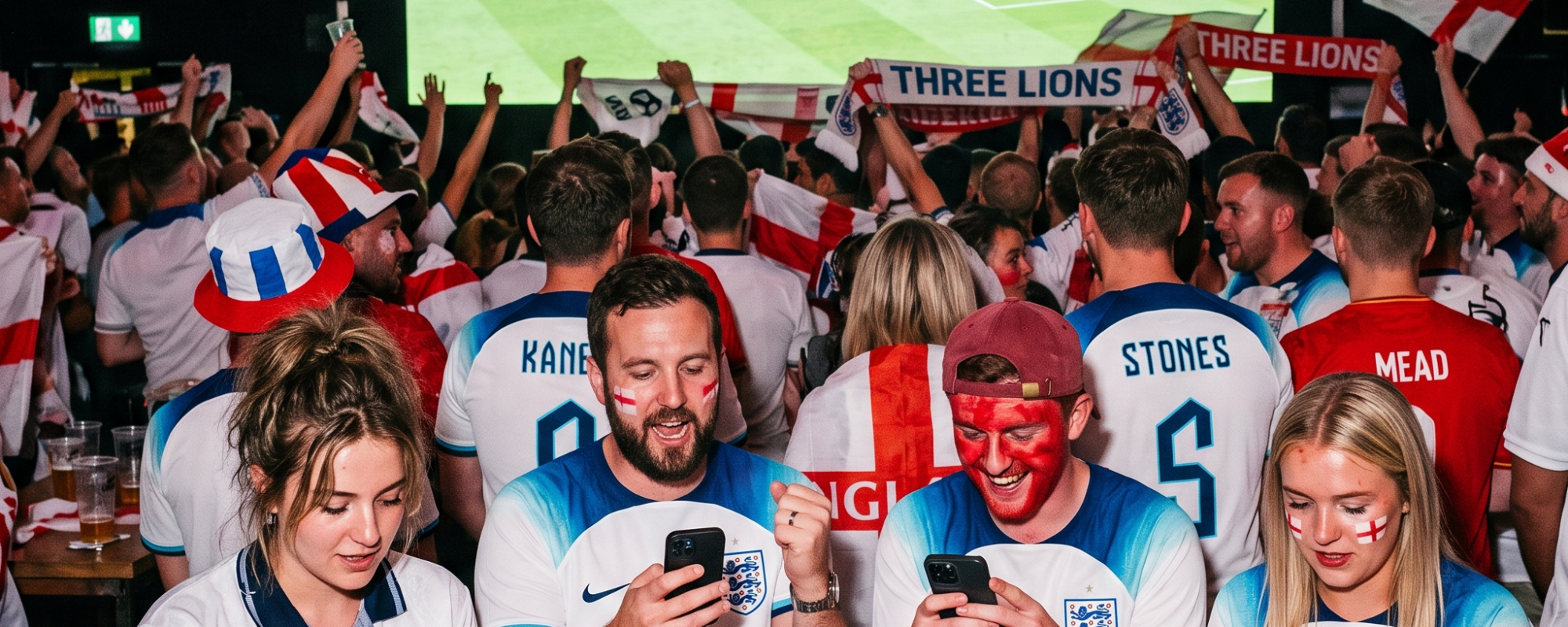
Nearly half of all fans (48.1%) were actively multi-screening during England’s opener, rising to 62.2% among under-35s.
57.6% of younger fans consumed independent creator content or podcasts as part of their match analysis routine, compared to 40.4% across all age groups.
78% of fans watching via a traditional broadcaster had no meaningful engagement with that broadcaster’s digital ecosystem.
56.3% of all fans would choose an interactive viewing format over a standard broadcast for future matches, rising to 74.2% among under-35s.
Gamification is the most effective engagement lever available: prediction games, prize draws, and on-screen fan inclusion are the top three motivators for active participation.
The 2026 World Cup is already rewriting the rules of sports viewing. Our survey of more than 1,000 UK-based football fans, conducted in the seven days following England’s opening match, reveals a fan base that is more fragmented, more active, and more demanding than ever before. Sports viewing is changing in real time, and the window to get ahead of it is right now.
Creator punditry has gone mainstream
Perhaps the most significant finding in our data is this: 40.4% of all British sports fans consumed independent creator content or sports podcasts as part of their match analysis routine, whether pre-match, at half-time, or after the final whistle. Among fans under 35, that figure rises to 57.6%.
So more than half of younger fans are supplementing or bypassing traditional TV pundits entirely in favour of creator-driven coverage. That’s not niche behaviour, it’s mainstream. Independent commentary offers the sense that you are watching with people who actually care, who react the way fans react, and who make space for the audience to be part of the conversation. When over half of your most commercially valuable demographic prefers that to your panel of former professionals, changes need to be made.
Reach without connection is just noise
Of fans who watched via a traditional TV channel or official streaming app, 78.03% had zero meaningful engagement with the broadcaster’s digital ecosystem. 53.9% watched completely anonymously, with no data captured at all. A further 24.1% logged in but never touched an interactive feature.
Only 19.3% of the traditional broadcast audience did anything that would count as active digital engagement: scanning a QR code, voting for Player of the Match, leaving a comment. Just under one in five.
Broadcasters can report impressive viewing figures while simultaneously knowing almost nothing about the people watching. No first-party data, no behavioural insight, no foundation for the kind of targeted, premium commercial partnerships that are increasingly what advertisers are looking for. The audience is there but the connection is not. Reach is not a relationship.
This is not an isolated finding. The Reuters Institute Digital News Report 2026 found that fewer people are watching broadcast television each year, with social media and video networks now the primary way audiences interact with video content. The reach is still there, for now. The relationship never was.

Fans are telling us exactly what they want
The encouraging news is that fans are not disengaged. They are just disengaged from the traditional formats on offer. When asked about interactive viewing options featuring live voting, screen interactions, and real-time chat, 56.3% of all fans said they would be likely to choose that over a standard broadcast for future matches. Among fans under 35, that number is 74.2%.
Three-quarters of younger viewers are ready to actively choose a more interactive experience if one is available. Real-time prediction games were the top motivator (32.3%), followed by exclusive prize draws (27.1%) and seeing their own comment or image displayed on screen (25.4%). Fans want to play, to compete, and to feel seen. These are not complex asks. They are well-understood mechanics that have been proven to work at scale in gaming, streaming, and social platforms for years.
The appetite is there, and it has been for a while. What this data makes clear is that fans are not waiting to be convinced, they are waiting for someone to meet them where they already are. For sports rights holders willing to move, the timing has never been better.
What this means for the tournament ahead
England’s first match was a signal, not an outlier. The viewing habits documented here are not unique to football or to a World Cup. Fans across every sport are multi-screening, seeking out creator voices, and actively choosing participation over passive watching. Take this data seriously, build for it, and you will have a genuine relationship with your audience when it matters most.
The fans are already building their own multi-screen experience. They are already choosing their creators. They are already telling you what would make them stay, engage, and give you their data willingly.
The infrastructure to meet that demand exists. Prediction games that keep fans locked into the live moment, real-time voting that turns passive viewers into active participants, and data capture tools that mean every interaction builds a picture of who your audience actually is. These are not future technologies. They are already working for organisations who have made the decision to use fan engagement tools.
If you want to see more, check out our complete fan engagement platform. And if you’re thinking about what that looks like for your organisation, get in touch.
FAQs
Multi-screening means fans are building their own matchday experience rather than relying on a single broadcast to do it for them. The opportunity for sports rights holders is not to compete with that behaviour, but to be part of it by making the primary screen worth engaging with.
Creator-led coverage offers authenticity, reactivity, and a sense of community that traditional studio formats struggle to replicate. Fans feel like participants rather than passive viewers, and for under-35s especially, that is now the default expectation.
Broadcast reach tells you how many people watched. A fan relationship tells you who they are, what they care about and how to reach them again. Traditional broadcast deals deliver viewing figures but no first-party data, meaning rights holders have no direct way to communicate with, or commercialise, the audience behind those numbers.
It is the gap between audience size and meaningful digital relationships. Large viewing figures mean little if the vast majority of that audience remains anonymous, unengaged, and unknown to the broadcaster behind the numbers.
Because reach without data is just volume. First-party data is what turns an audience into a commercial asset, enabling personalised content, premium sponsorship packages, and a genuine understanding of who is watching and why.
Real-time prediction games, exclusive prize draws, and the chance to see their own content displayed on screen. Simple, proven mechanics that fans are actively asking for.
By closing the gap between where fans already are and what they are being offered. The appetite for interaction, participation, and creator-led content is clear. Building the infrastructure to meet it is the next step.