

Fan Engagement > Podcasts > Andy Murray Launches a YouTube Channel, the BBC Shares Rights with Sidemen & the PGA Adds Relegation
Summary
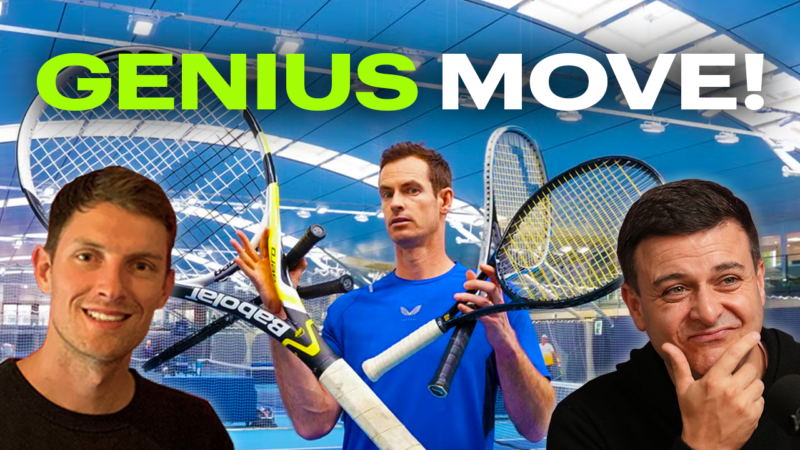
- How Andy Murray’s New YouTube Channel Could Change Tennis: Andy and Jamie Murray launched The Set on June 24, produced by Prodigy Studios (the team behind The Overlap and The Switch with Kevin Pietersen). First episode “Can We Turn KSI into a Pro Tennis Player?” published as a collab with KSI’s channel and Wimbledon. Murray explicitly cited Bryson DeChambeau and Kevin Pietersen as inspiration. The Overlap formula is now the template for elite athletes building owned audiences post-career.
- The BBC Just Shared World Cup Rights with the Sidemen: A first-ever creator watch-along for a major BBC sporting event. Ecuador v Germany streamed simultaneously across BBC Football YouTube, MoreSidemen and iPlayer, with the official BBC broadcast embedded picture-in-picture inside the creator stream. Strategic choice of game (low UK interest) suggests test-and-learn. But the signal is huge: the UK’s most established broadcaster is sharing access with a YouTube collective.
- Gen Z Fans Check Their Phones 10 Times a Match. That’s Not a Distraction: New Snapchat research among 1,000 UK Gen Z World Cup fans. 74% reach for phones during the scheduled 22nd-minute water break. 72% immediately message friends when their team scores. 90% of UK 13-24s are on Snapchat. The industry frames this as second-screen distraction. The data says it’s where fandom actually lives.
- ESPN Just Built Its Own Fan Identity Platform: ESPN Fan House launches in August 2026 with college football, powered by Flowcode QR tech. Polls, trivia, sweepstakes, merchandise, brand integrations across home, live events and mobile. Disney Advertising and Publicis Sports running the first agency pilot. ESPN’s first mechanism for owning a direct relationship with fans, not just renting reach.
- The PGA Tour Just Added Promotion and Relegation: A radical restructure approved on June 24. From 2028, two tiers: the Championship Series (top 90 players, 23-24 events at $20M each) and the Challenger Series (20+ events at $4M, 20 promoted annually). New CEO Brian Rolapp (ex-NFL): “competing for media dollars… you need to be constantly improving the product.” Tiger Woods chaired the committee. Rory McIlroy warned the Challenger Series risks becoming “a glorified Korn Ferry Tour.”
- Sport Is Being Restructured Around the Fan, Not the Broadcast: Andy Murray building owned audience. BBC sharing rights with the Sidemen to reach Gen Z. Snapchat data confirming where attention actually lives. ESPN building first-party fan ID. PGA redesigning competition to compete for media dollars. Every story is the same shift at a different scale: sport is being engineered backward from the fan and the ad market.
Shownotes
Transcription
Ed (00:01.068)
Hello and welcome to this week’s edition of the Attention Shift Podcast. The I’m Ed Abyss, and this week I’ve got me Andy Marson of Sports Pundit. Andy, welcome to the pod.
Andy Marston (00:18.979)
Cheers Ed, nice to be here.
Ed (00:21.312)
Right, let’s get straight into it. So, Andy and Jamie Murray have launched a new YouTube channel called The Set. And I think this potentially could be big for tennis. They launched it on the 24th of June, so we’re only five days in with Prodigy Studios, who, as we know, have been working with the overlap and the Switch featuring featuring Kevin Peterson. the first episode they’ve done is Can We Turn K Sai into a pro tennis player? So they’ve gone to a YouTube stall where as it were to try and get some reach with the channel.
they accessing archive. look, and Andy said himself he’s a big fan of YouTube and the content that that is being created on there, like the Chambeau and the stuff that Kevin Peterson’s done. So it’s interesting that they’ve him and his brother, who are not necessarily renowned for having personality I would say, have decided to lean in and go down this route.
Andy Marston (01:09.153)
Yeah, I mean, think, well, first of all, just clarify, it’s Andy Murray you’re talking about, not Andy Marston, when you say Andy’s launched a YouTube channel with Jamie Murray. Well, maybe, you know, and it might be on the cards. Business of Tennis podcast, maybe, maybe that’s something to work on. But yeah, no, I think in terms of personality, think Andy Murray started to show towards the end of his career a lot more personality. He became good friends with Nick Kirios, like…
Ed (01:16.75)
True, true. you might.
Ed (01:34.286)
Yeah, true.
Andy Marston (01:38.785)
his friendship with Novak Djokovic became more visible as well. think he started to come out a bit more. So I think he actually could be quite a good character for it. And then I also think the dynamic of having his brother will probably also just allow both of them to open up a bit more, because it’s somebody that you’re going to feel more comfortable around. In terms of this launch, the thing that first kind of triggered in my mind, and obviously you mentioned it’s the same producers,
So obviously they’ve been setting this up because Andy Murray went on Kevin Peterson’s channel probably five months ago and did like a cricket challenge where it was like, can Andy Murray survive a hundred mile an hour ball off a bowling machine? So I wonder if that was like, I assume that was setting them up for them doing their own or it was giving them a taste of like, this is what you could have in tennis. And they’ve seen the success of it and gone actually go on then.
Ed (02:27.821)
Yeah, it looks like it.
Andy Marston (02:35.608)
launcher channel. I mean, I’m not sure which one of the two it is. Five months is quite a quick turnaround if that’s kind of the ignition point. I would imagine it’s more of a setup, but yeah, I think it’s a smart move. I think to be honest, any sport outside of football is probably underserved when it comes to YouTube content. So if you’re to get genuine access, which I guess they can both provide now that Andy’s retired and I think Jamie’s retired or maybe he still plays football.
Ed (03:02.573)
I think he has, yes.
Andy Marston (03:05.154)
they probably have the right amount of time to put into the show. So what was your take on, you’ve actually watched the full video, so curious what your take on it is.
Ed (03:16.021)
Yeah, we were we were chatting about this, weren’t I’ve come that hours obviously working at the week and watching YouTube videos. yeah, look, I I think that y you you see so Seb Lazardo, we know is behind it as well and he works a lot Prodigy Studio as a YouTube strategist on this, and Seb came on Tension Shift Pod a couple of weeks ago, so you can find that pod on our on our timeline. He he’s he’s got a way of doing things, he’s got a format, and you can see how much he leans into making sure that the video is discoverable on YouTube, first off by
by the thumbnail itself, the title, and I was I was having a look at the numbers yesterday and I think to myself, you know, it’s it’s it’s it’s building slowly. I think it was on about 140,000 views yesterday and I’ve just looked again. Now it’s on two hundred and twenty thousand. So you can see this is going to build and build and build over the course of the next seven days. And I wouldn’t be surprised if it hits a million video views, which for a new video and a new channel is is pretty good. Look, and they’ve gone and got K Side to do this and they’ve also done the collab feature.
Where they’ve collaborated between KSI, the set, and Wimbledon as well. so look, time in just the week before Wimbledon as well. leaning into KSI, and obviously he’s had some announcements recently in terms of his work with the side men as well, or not anymore. I I think the format really, really works. I think to your point, Andy’s got that dry sense of humour, right? He’s not your sort of natural comedian as a personality.
And I think it does work and I think it does balance off with with KSI in this particular instance. And what Andy has got is he throughout his tennis career he’s been one that has stood up for people that didn’t necessarily have voices. And I think that has ingratiated him with the tennis community, which means he can absolutely get to anyone he wants to come and be part of this. I wouldn’t be surprised if we start seeing stuff with Serena, who he’s done a lot of stuff with in the past and they played doubles together. He can go to any tennis personality in the world.
And bring them into this channel and I think that’s that’s gonna give him a massive head start on anyone else who’s gonna decide to do anything.
Andy Marston (05:16.268)
Yeah, no, so that’s what I thought was probably most interesting was like the choice of guest for the first episode obviously going with someone like KSI and then being able to do a collaboration where you can push it across the channels. Obviously Wimbledon is smart timing in terms of I’m actually off to Wimbledon later today. It’s work, it’s work. It’s like you watching YouTube videos at work. But no, I think…
Ed (05:38.444)
I’m going to Liverpool this afternoon.
Andy Marston (05:42.349)
You know, him not picking a tennis player for the first episode, I think was interesting because obviously with Peterson, think what’s worked very well is obviously Peterson knows a lot of people across the cricket landscapes, played with a lot of people, and he’s very much lent into getting current and former players onto the podcast, not podcast, onto the show.
And I think, you know, someone like K.O Rahul, for example, I think it was the first episode, which went over a million. Obviously cricket’s got this huge benefit from a numbers perspective in that there’s just, there’s a lot of people in India that love cricket and will watch anything that involves their national team style players. I don’t know if tennis has that to the same degree, but I think what will be interesting from this is…
I think, you know, obviously tennis tried to go down the drive to survive route and launch its own, it’s own documentary series.
Ed (06:38.286)
Yeah, and it was it was okay, but it like there was nothing fundamentally it almost it yes.
Andy Marston (06:43.03)
Well, it just wasn’t different enough, I guess. And I think also like the glamour of F1 is attractive to people, whereas that maybe there isn’t quite the same level of glamour on like an ATP tour where you’re living out of a hotel room. And there’s just a lot more kind of like…
Ed (06:57.974)
It did feel a bit same, it didn’t we’re in a hotel room again. Yeah, yeah, I know what mean. Yeah.
Andy Marston (07:00.92)
But I think the benefit of shows like that is driving and showing off the personalities within the game. And I think Andy is going to be a great judge of character as to who would be, whose personality would be worth kind of showing off. And so I think if people start to see, you know, having the mix of YouTubers, which then drives kind of like maybe general sports fans on YouTube to the channel.
but then also having the kind of hardcore tennis fans that maybe want to see more of the personalities of the top players. Because I would say like right now that’s probably the challenge that tennis has is like illustrating the characters and the stories. Because obviously you’ve got Sinner and you’ve got Alcaraz at the top. Sinner is like very focused on his tennis. Doesn’t really give you a lot outside of just being a very, very like sort of like straight laced professional.
And so like, think if you could start to show off some of the personalities, because there will be personalities to those players and maybe they’ll feel comfortable doing that with an ex pro like Andy versus like going onto a YouTuber’s set and having to kind of like play up for the cameras.
Ed (08:13.026)
Yeah. No, I agree. I agree. I think that l like leaning into that that culture, lifestyle, that crossover audience. I was chatting to Tony Pasta from Goalhanger this weekend, actually, in terms of what they’ve been doing with the rest of his football for the World Cup and the fact they’ve had people like Gordon Ramsey on and Nile Horen is that the whole point there is to try and get that crossover audience. And you can see that Andy’s done that with K S I’s his first guest. And you’ll j y i it’ll be one of those. They’ll they’ll have tennis pros and then they’ll have people from
outside of the game, they’ve got an interest in the game, but no, look, it’s interesting. Shall we go on to the next story? So the BBC and Sidemen, watch along. so interestingly, BBC have openly shared their World Cup rights with the Sidemen collective. they did it for the for the Ecuador Germany game that was simultaneously on the BBC YouTube channel as well. So we’ve got that again that’s similar like using that collaboration function within YouTube itself.
Which gives them hundreds of millions of combined subscribers. Interestingly, like the viewing numbers weren’t that high for it, but you could argue it was Ecuador Germany and his people in the UK gonna be massively interested in that game. But they were always gonna pick a game like that, I think, because they’re not gonna give the truly premium right for this. But it was interesting that the BBC have lent into this as well, to do something like this, because it’s not their natural place to play, right?
Andy Marston (09:17.272)
Mm-hmm.
Andy Marston (09:33.293)
Yeah, yeah, I mean, I think, you know, as a public kind of service, its job is to get its product or get its content in front of as many people within the UK as possible. And so like, it kind of does have a duty, I think, to experiment. And I think the BBC in general has actually been pretty early on a lot of innovations when it’s come to broadcast media. I mean, like iPlayer, I feel like was probably quite a long way ahead of the other.
TV channels as it relates to kind of like a streaming service. So I think they’ve actually done a fairly good job of it. I mean, like you say, Ecuador, Germany is a tough slog to try and get people interested in that. In a group where Germany is already through and there isn’t a whole lot to play for in terms of like relating that back to a UK audience. You know, maybe if it was…
winner of this game is going to get England in the knockout phase or something like that. Then you can kind of try and tell a story around it. I think, yeah, it makes sense as a game, like you say, there’s not really a lot to lose. They probably ran the numbers and were like, we’re not going to get many people watching this. So why not try something new?
Ed (10:31.682)
Yeah. Yeah.
Ed (10:48.184)
Yeah, Rich Johnson and I had a ch we we we did talk about the BBC in the last episode of of the pod, actually, where we talked about a lot of the stuff they’d done ’cause the BBC have been heavily criticized for their actual T V coverage compared to what I T V had done where BBC decided to stay in Salford, but I T V have gone out and and really splashed the cash in New York. But we were looking more at what they’ve been doing from a digital engagement perspective and the amount of things that they’ve done within the BBC sport at which look, I gen generally would notice anyway, ’cause I
BBC Sport App is my go to for from sort of day to day news updates and things like that. And look, and they have done a lot of things and that look, some things work, some things don’t. But it’s always easy to criticise the BBC because the reality is they’re not afraid to fail. yeah, and some would argue they’ve got the budget to do that too, right? Being a public service broadcaster. but they they have certainly driven things forward in a way that I’ve not seen ITV do with their digital offerings for this World Cup. so
The fact that they just had to go down the road of doing this too, I’d like to see all of those things connected up better than they are at the moment. Again, and we covered that last week. but you can see that they’ve certainly tried to do some different things. And look, they’ve made a call that T V coverage, in a sense, is less important to them than distribution via sidemen and interactivity engagement via their digital platforms.
Andy Marston (12:10.583)
Yeah. Do you know on the collaboration here, whether it was they were just streaming the exact same thing across both channels or whether it was just like they lent their rights to the Sidemen to do their own watch along? Because I would be curious whether like you wouldn’t want to necessarily impose the watch along on everyone that wants to watch that game. You probably want it as like you’ve got your vanilla broadcast over here for your general football fan that just wants to watch it. But then also you can go to Sidemen and watch.
their version.
Ed (12:41.186)
Yeah, I think the I think this was YouTube only. I think it was picture in picture as well. on the YouTube channels, but at the same time, obviously if you wanted to then go and watch the game itself, you go and watch it in the iPlayer or on T V and it wouldn’t it they weren’t necessarily featured within that because this v was very much a YouTube player. So you look you had your options ’cause like you said, there’s gonna be a certain kind of audience are gonna go, I don’t I don’t even know who these people are and I certainly don’t want them interfering with my with my with my viewing pleasure ’cause some people just wanna watch the game as it is, with the comments as it comes and not
Take on board all the other things that that get pushed at them. So I think we are in that world now, right, where public service broadcasters and and traditional media in general are starting to catch up with the kind of things that they need to do to engage younger audiences. And there’s been quite a bit of criticism recently, actually, even in the House of Commons where or select committees, sorry, media select committees where they’ve been talking about how BBC needs to modernise how it thinks about distribution.
and making content for younger audiences ’cause otherwise they risk alienating and then as if by magic this happened sort of two weeks later. so it’s almost like it was timed. so y yes, you had different options to watch it where in whatever flavour suited you.
Andy Marston (13:50.777)
Yeah, I think I spoke about this with Drew on the pitch, this kind of concept of having like multiple watch alongs. So like, I could see a world whereby you have the central rights owner of the media, but then they basically say like, we’re going to basically hand out licenses to 10 different creators that are all going to have their own spin on it. And then people basically pick the flavor that suits their interest level. like, cause I would say, you know,
sticking with the BBC for a sec, like when they stream the NFL in the UK, obviously they have to, because they’re trying to serve the mass market, they have to go down quite a like, like quite a beginner level kind of like explanation for the NFL, because they have to assume that most people watching and haven’t watched an NFL game before don’t really know the rules. I can imagine if you’re an American living in the UK and that’s your only way to watch the game, it’s probably quite frustrating. So having like, I don’t know, an ex.
like an expert channel where people that wanna watch it kind of in high fidelity with very technical insights, that could be one option, another could be the Sidemen, another could be the beginner channel, another could be with a creator that’s more speaking about the celebrities that are in the crowd and they’re not even talking about the football for most of it.
Ed (15:11.438)
I think we’re absolut yeah, we we are absolutely going down that road now. We we’re actually doing some work with volleyball world at the moment where we’re working with a number of creators around the world where depending on on rights, in some territories where broadcast rights have been handed to to a media company, the creators are getting a suite of tools which has allowed them to have day more data and more access to narratives than you would have previously. And they’re doing watch alongs to their audiences, whereas in some territories where there is no media deal, they’re actually giving the creators access to the live stream in itself.
with all those other tools too. So i it allows you to again, in the fragmented world we live in, as I you say often, use different ways to distribute to different audiences at different times. So it it yes, it it’s starting to evolve more and more in the way of doing things. And I think we’re gonna see that over the next twelve, eighteen months you’ll see a lot more of that, without a doubt. Cool. All right then. So
This is more sort of statistical story that we’ve got here. So Gen Z fans are checking their phones tens times a match. Don’t know about Gen Z, I’m doing it myself. it’s not a distraction. It it’s just I guess it’s just how we’ve trained ourselves now to to ultimately consume content, right? We are watching what we are watching at the same time we’re doing other things too, whether that’s chatting with our friends or or engaging with something like the BBZ example that we’ve used there. but this new Snapchat research among a thousand UK Gen Z fans during World Cup finds that
That they’re checking their phones ten times with forty-six percent checking during natural breaks and seventy-four percent reaching for their phones during the schedule the scheduled twenty second minute water breaks that everyone’s doing at the moment. it’s I guess I guess it’s I guess it’s not rocket science for us to be told this right, but it’s interesting that someone’s decided to go and do this research.
Andy Marston (16:53.273)
Yeah, I’m surprised it’s not higher to be honest. I would imagine. Yeah, and also like only 75 % are reaching for their phone during the water break. I would imagine it’s like 95%. But I would assume that would assume the 25 that aren’t are watching it in the pub maybe. Or like, I guess maybe that number would be higher if ITV and BBC had chosen to do actual ad breaks versus tactical analysis because they are still providing some level of
Ed (16:55.788)
Yeah, I’m definitely doing it more than ten times.
Ed (17:06.562)
What the other twenty five doing?
Ed (17:11.639)
Yeah, fair.
Andy Marston (17:22.623)
value to the fan in that break so it’s not like a completely clean break where you’re
Ed (17:27.052)
It’s not felt as intr exactly in he us sat here in the UK, it’s not felt as intrusive as perhaps it would have done in a like I can only imagine in America that it’s just adds, adds, adds in those breaks and they cut straight to it. Whereas here like I said, they’ve used it as an as an opportunity to do more tactical analysis. So there is something there to keep your interest maintained.
Andy Marston (17:37.145)
Okay.
Andy Marston (17:44.961)
Yeah, I mean, I think the point around, you know, checking the phone, and the point around just like the group chat almost being that second screen activation is something that I don’t think necessarily gets enough coverage when you think about how much time is given to discussing YouTube, discussing Roblox.
but actually WhatsApp and Snapchat as kind of like fan engagement tools, I think are probably under appreciated by rights holders. Like you don’t hear many, yeah, you don’t hear as many like rights holder strategies around like what they’re doing to drive the group chat discussion on Snapchat or WhatsApp. Like I remember having an interview with Dan Porter from Overtime and like,
Ed (18:20.728)
Yeah, there’s a disconnect. They happen in isolation rather than connected.
Andy Marston (18:38.763)
everything related back to like how does this translate through to the group chat. And with Snapchat as well like I think if you’re not in Gen Z, obviously they’re the ones that did this research, if you’re not part of Gen Z, like I gave up Snapchat when I left uni, I feel like it would almost, I mean I guess just if your friends stop using it then you stop using it right so.
But the numbers behind Snapchat are insane. the number of people using it. I think they had something like 90 % of 13 to 24 year olds are on Snapchat.
Ed (19:16.686)
Well, I asked I asked Will our we would I I’d I’d I’d message Will, right? And he didn’t get back to I’m like, Why don’t you get back to me, Will? He’s who’s in that sort of mid twenty five year old age range. He went, s sorry, I don’t really check like WhatsApp that often or my messages that often. I went, and I just sort of like delved into it a little bit and it was like, no, basically I just used like me and me and all my friends we use Snapchat for communication. He said, I don’t really have anybody’s number. We just we just message on there, that’s how we communicate.
Andy Marston (19:40.589)
Yeah, yeah, through me. There was a piece of content that came out during the Women’s Rugby World Cup, where it’s like three of the players sat around getting asked questions about each other. And it was two quite young players, I think maybe they’d just joined the squad and then one player that was more senior. And she mentioned that she used WhatsApp and they burst out laughing and basically started making fun of her for being old. And I was like…
And they were like, she was like, wait, you don’t use, you don’t use WhatsApp. And they’re like, no, we just use Snapchat. And I was like, this is the best ad for like, it wasn’t an ad for Snapchat, but it was the best ad for Snapchat. I’d have been like clipping that and putting that everywhere. But yeah, I think it’s a slept on platform. They’re getting some, they’re getting some heat at the moment Snapchat for their hardware. But I think from a, from a messaging platform perspective, it’s like, it’s a hugely influential one. And I know the FAA has done quite a lot with them.
to launch like lenses and stuff for this World Cup to be like integrated into it. So.
Ed (20:43.342)
So it so I suppose a Snapchat story there where you’re saying about how there’s not a lot of interconnectivity between those platforms in the moment and actually the the owned platforms that media companies and even sports rights holders have themselves. So it’s interesting on the next story what ESPN have started to do, which is look something that I know we we as a business bang on about all the time, where they’re they’re building their own first party fan identity platform. they’re using flow clo flow code to do it, but ultimately it’s you know
pit poles, trivia, sweepstakes, brand integrations. They are trying to maintain the interest and acquire the audience that is anonymous to them watching on set top boxes and things like that. But ultimately bring them into their digital environment there where they can start to understand who they are. So the players always been in the past like, we’ll send them to socials and then they’ll engage them. It’s kind of like yeah but if you’re sending them there to there they’re still anonymous to you. You don’t know who they are.
They’ve now realised actually the players needs to be. How do we bring them into our own environment and keep them there? so it’s interesting they’ve done that. And look, and and there’s a lot of people behind this as well, between Public Sports and Disney advertising. Feels like there’s a lot of people involved in this that looks costly, even if I say that. that doesn’t need to be for something that that I certainly think is is an obvious strategy to employ to maintain your audience, which is again, we talked about the BBC doing it with their own app as well.
Andy Marston (22:04.537)
Mm hmm. Yeah, I guess the challenge is like, you’re getting more and more platforms all asking for data. And I think something that the sports organizations have themselves is a level of like, unparalleled loyalty, right? Like if your football club is asking you for data, you’re probably going to give it over. As more and more platforms though, start to want it.
I guess is like an element of like, not again. I have to go through another like, because it is Vienna doing it. And then all the other channels copy, right? Like every time you want to watch something on TV, suddenly you’re like, I’m now getting put through this funnel. So I guess the, there’s probably a element of like winner takes all for the top platforms, but for the smaller platforms, it start to become a bit draining on the user. If you’re not providing enough value as you go through the process.
Ed (22:55.246)
Well, that’s the value exchange is key, isn’t it? That and and what what what I hate to see is when these things are almost done like yes, you’ve sent me from the content I’m watching to go and do this over here and then I’m gonna do this thing over here, but how is what I’m doing over here then actually driving the content that I’m watching? Like it is it interlinked in some way or something? Are you asking me to do something that then impacts what I’m watching? Because if you’re not, you just send me somewhere else to do something almost in my own little bubble.
without it necessarily impacting. So there’s stuff like when I see the BBC talking about, go and do, you know, QR code, go and do our predictor. But then I never see them making any content based on what the fans’ predictions are. But then I see certain pundits droning on who are not very interesting at all. I think, God, you could have done a better job actually if you’d started using some of these content, start comparing to how, you know, the starting lineup that the that the pundits are going to pick themselves. There’s not a lot of that happening and
Again, I don’t know what obviously we don’t know what ESPN strategy is gonna be on this is, but for me, and I’ve always thought about it like this, look, you have opters and you have sport radar that make sports data. This is fan generated sports content that you could be using. Because one of you tells you what the official narrative is, and one of the the other one gives you feeling. And I think bringing that feeling back into the content would certainly help to give a better value exchange than than people get right now.
Andy Marston (24:18.807)
Yeah, no I wouldn’t disagree with that at all.
Ed (24:22.016)
Okay, then last story. So, PGA there’s a lot going on in in in golf in the last week as well, so we’ll we’ll start off with what PGA two are doing, but also what’s going on with the Australian Open as well. So they are betting on on a new narrative with a with a bit of a restructure. I say a bit of a restructure, it’s pretty fundamental really, because they’re talking about introducing promotion and relegation.
Which is interesting, right? Because US sports organisations don’t normally lean towards promotion and relegation. It’s normally franchise model, which in a lot of ways it it kind of has been, although players have been able to come in and come out through qualification. so for 2028, they’re gonna have a two tier championship series and a challenger series. where they’ll have promotion relegation between it. it’s gonna be twenty-three to twenty-four events, twenty million dollars per each event, February to August. The top ninety players are retained and twenty are promoted annually from the challenger series.
So I guess what they’re doing here is they’re formalising more the process of how a player gets in or gets dumped out, essentially. This is a big shift, right, for organisation like this.
Andy Marston (25:24.791)
Yeah, it’s a pretty big shift. think it’s a nice kind of hybrid towards the American model versus the European model, right? Because I think if you look at European football, there’s a lot of people in America that will romanticise the relegation promotion. But then if you’re an investor, there’s not that much romantic about relegation, maybe about promotion, but maybe definitely not about relegation. So the fact that there’s kind of like two tiers.
But you can’t, I mean, I’m not clear on whether you can get relegated out of the bottom tier or whether there’s like an element of safety net at the bottom of the pyramid. Cause it reminded me a little bit of what USL have done. So United Soccer League, which is a competitor to the MLS, kind of seen as like a tier two soccer property in the US, has come out and launched promotion relegation in a bid to kind of differentiate itself from the MLS model.
But essentially it’s, I think three tiers. So they’ve essentially just bracketed the clubs and said like, you’re never going to fall out the bottom the way you can in English football where you just get relegated out the football league and just spiral. There’ll be kind of like checks and balances across the three so that you’re, you know, as an investor, you’re protected still to some degree, but we’re also now able to reward kind of like high performance. Cause the challenge in American sport is it’s
Like once you’re in, it’s very communist, right? So if you’re at the bottom, you then get the first pick. So you’re rewarded. So then the challenge that a lot of the top American leagues have is trying to disincentivize tanking. Cause if you’re going to miss out on the playoffs, then actually you might as well finish last rather than fourth from last, because then you’re going to get a better pick in the, in the draft.
Ed (26:54.402)
Yeah, yeah, yeah.
Ed (27:13.1)
Yeah, essentially you r y you can be rewarded for failure in in American sports. We saw that happen with the the Raiders where they you know, they went out of their way in the NFL base to make sure they did finish last to get the first pick.
Andy Marston (27:24.601)
Yeah, I mean, it happened over like 15 years with the Washington Commanders, right? Like he was widely regarded as like a poor operator and yet the franchise value, because the whole league kind of rises, I think exited for like six or seven billion, the Washington Commanders. So, yeah, I think it’s always a challenge.
So I don’t, I quite like it. I think the other thing that it does is it creates like competition in what would have been the middle of the pack because suddenly people that would have been finishing kind of mid range over a season could be winning events in the challenger series, building up their confidence because you’re kind of taking out the best players from the field. And then that allows them to come up to the bigger league, to the top league and then see if they can compete.
So it kind of creates maybe new narrative and new opportunity for people that would have finished in the middle to win competitions that they otherwise wouldn’t be able to challenge for.
Ed (28:32.12)
think it’s interesting as well that obviously there’s the this there’s some innovation that’s gone on in just in broadly in golf over the last few years and to give and you I think you know about this with me, but give Liv some credit, right? What they have done is is it’s it’s made people have to think about how they’re gonna do this and how are they gonna make this sport more appealing to to audience of today and Bryson’s had a big play in that too in terms of the content that he’s done. but Liv has certainly had an impact on this I think.
Andy Marston (29:01.881)
Yeah, I mean, think Liv have innovated a lot and driven a lot of innovation across golf broadly, right? Like if you look at the TGL as well, I think the team concept that’s been leveraged in the TGL to raise quite significant money because it allows you to create these like investible assets, right? You can’t invest in a player, but you can invest in a team that’s owned or named after a player or owned by a player or that groups together a collective of players. So I think from an investment perspective,
you know, the team concept that they’ve implemented, which I don’t know whether there was already an idea or a concept around that pre-live, but there’s obviously some, some sort of validation to that.
Ed (29:45.806)
Yeah, think I think the Ryder Cup everyone had always thought, can we turn this into something that’s more regular ’cause people love it so much.
Andy Marston (29:52.097)
Yeah. Yeah. And I think the second part of what Liv has done really well is it’s amplified the importance of other markets. So some of the places where Liv took the best players in the world weren’t necessarily markets that received top quality golf on as regular basis. And so like to go into another story that’s recently happened, like Australia is one of those markets, for example, right? The Adelaide event that Liv put on looks…
epic. I haven’t been to it, but like the images that come out of it, they get tons of people to it. There’s a party kind of atmosphere. It’s a bit like the waste management event that the PGA do as well.
Ed (30:32.546)
I’ve always wanted to go to that but apparently they’ve toned that down a bit now.
Andy Marston (30:35.469)
Yeah, but like the PGA has just announced a formal partnership with the Australian Open, the Gulf Australian Open, which essentially has said like, we’re going to kind of increase your standing within the calendar and make you a more significant event, which again, like they probably won’t ever publicly credit Liv with this, but I wouldn’t be surprised if Liv has helped validate the Australian market to…
people at the PGA Tour and they’ve gone hang on a second, there’s probably a case for us doing more in a market like Australia because there seems to be quite a big appetite for golf.
Ed (31:17.314)
Yeah, no, that that that makes sense. And I think these again, it it’s it’s it’s always difficult to see what’s actually going on in the moment, right, and whether things are gonna make it. But then often, other things come out of that particular process as well, which it looks like this has too. And I think we’ll look we’re running out time a little bit here. So we can talk touch on this a bit more next week actually, ’cause I think it’s worth spending some time on to actually see what they’re doing, doing a bit more digging into it. so Andy, thanks for coming on. Really enjoyed it. Yeah.
Andy Marston (31:44.215)
Yeah, happy.
Ed (31:47.011)
Hopefully hopefully see you again soon. So thanks everyone for joining the Attention Shift pod this week. Don’t forget to like, subscribe, and if you want to feature as a guest, give us a question via our email at hello attention shift dot media or you can hit me up on LinkedIn. I’ve been Ed Abyss and this has been Andy Marston. Thank you.
Andy Marston (31:49.357)
Yeah, right.

- Tags: Brands & Agencies, Creators, Media Networks, Sports