

Fan Engagement > Podcasts > Inside the fastest sport to ever reach the Olympics | FIBA 3×3, Esteban Gonzalez Villa
Summary
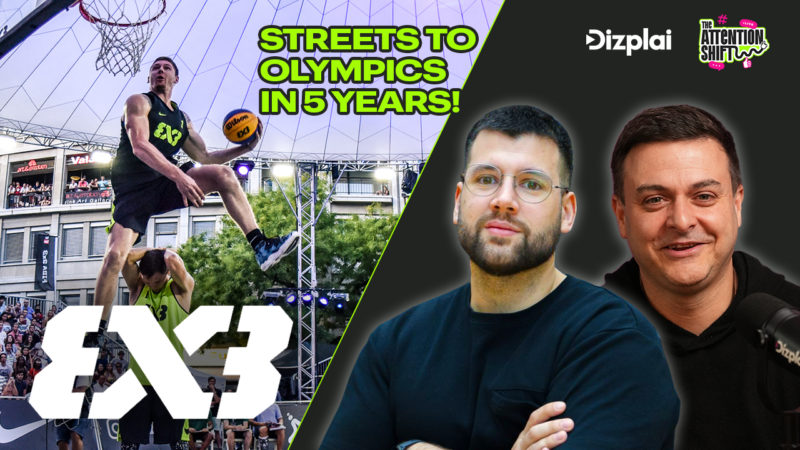
- A New Olympic Sport in 5 Years: That’s all it took FIBA 3×3 to go from first pro circuit to Olympic discipline. No broadcast deals. No inherited audience. No template. Why is 3×3 the case study every emerging sport should be studying?
- The Digital-First Bet: Most new sports go digital because they have to. FIBA 3×3 did it on purpose. Going digital-native gives an organisation the nimbleness to move fast, test formats and build something that stands out from day one.
- How a Small Team Built a Global Content Engine: 10 million followers. 1.1 billion video views. $220M+ in media value in 2025 alone. Esteban breaks down how a small in-house team, a network of freelancers, AI localisation, and a platform-native approach built one of the most efficient content engines in world sport.
- The New Sponsorship Model: FIBA 3×3’s women’s circuit lets brands own a team, not just sponsor one. Mitsubishi Electric did it. Is this what the next era of sport sponsorship actually looks like?
- Why Lifestyle Brands Are Choosing 3×3: 3×3 isn’t competing in the basketball lane, it’s living in the lifestyle lane. Music, fashion, urban culture, travel. That’s the audience Karl Lagerfeld and Elle want access to. The takeaway, it’s the brand culture, not the logo, that win sponsorship in 2026.
- Why Owning the Audience Beats Renting It: Esteban’s biggest unfinished bet is moving off-platform. Apps, fantasy, D2C. Because every social platform is rented ground, and the next chapter of 3×3 is about owning the audience, not borrowing it.
Show Notes
Transcription
Ed (00:01.287)
Hello and welcome to the Attention Shift. Today we’ve got an interview with Esteban Gonzalez from FIBA. Esteban is the 3v3 digital content senior manager for FIBA. I’ve got a bit of a history FIBA as well. Back in my perform days, I was involved with FIBA at the early stages when they’d got into the world of streaming and 3v3 had started around that time as well. So it’s great for me to get updated really in terms of where Esteban and FIBA have taken.
the game itself. So welcome to the podcast Esteban.
Esteban Gonzalez (00:34.274)
No, thank you for the introduction. Thank you for having me and looking forward to this conversation.
Ed (00:39.347)
Fantastic. So just to frame things up at the moment, obviously you’ve now been there since almost like the very start of the 3v3 journey. And now you’ve got to the point where you’ve got 10 million followers across socials, you’ve delivered 1.1 billion video views and generated 220 million dollars in media value for sponsors in 2025 alone. So we’ll get into some of those things. But I think to start off with, you’ve got you’ve had quite a unique, I guess, history.
in at FIBA and 3v3 because you started there as the social intern and started with the question really is why does 3v3 not have an Instagram?
Esteban Gonzalez (01:19.43)
So yeah, when I started and I had a three month contract back in 2015, now looking back is 11 years. So where it started as a, yeah, there’s gonna be like just like a summer thing turned out to be something I’ve been doing for the last 11 years. So a bit of a background, I was studying in Barcelona. I was looking for…
an internship during my studies and this opportunity came up. Just to be honest, the first time I got a call from my previous manager, like, did you know FIBA has a 3×3 format? And they’re like, I have no clue. And we went through the interview and then one day he called me, okay, yeah, you got the position. I entered the office and start acting.
A lot of questions, hey, everyone is on Instagram, why don’t we have an account? Everyone is doing this, what are we doing for that? And the team was so small back in the days that they were just doing like the top priority things, like, let’s have a live streaming app on running. And then we see what can we do from that. So I was there just trying to…
cover different things, then we got into, okay, Twitter, let’s do Findless course because then people will engage with that. Let’s start doing more Instagram content, not only from photos, but also videos. And I remember you could not do videos natively on Instagram back in the day, so you had to go through an obscure website in order to upload them to the platform.
And from there I…
Esteban Gonzalez (03:12.108)
gained more experience, gained more as well like weight on the strategy side of things, I start taking over a lot of the social media projects and until now that I’m overseeing when you look at the big big picture with over 150 events you end up overseeing counting photographers, videographers, social media freelancers, etc. more than 50 people during the year.
with a small team in-house but then we have like a good network of freelancers that help us to to get things done. So when I look at those numbers it’s a super team effort because we are a well-oiled machine and that when I look at now especially reaching 10 million followers it felt really really special.
Ed (04:04.498)
And it’s like I said, very, very unique, right? Cause it’s often, look, the reality is the world of work is transit, right? People come and go, but for, to have been there since 2015 and to see the evolution, like, cause you’re not just seeing the evolution of the sport, right? You’re seeing the evolution of platforms and distribution and different content creation types and different job titles and people coming in as well. Like, I guess it’s exciting, but also you’re constantly reinventing yourself over that period of time.
Esteban Gonzalez (04:33.1)
Yeah, I think that’s what kept me as well in this position for 11 years because every year you have something new to look forward to. The events are never the same. That’s what makes it interesting that you don’t know what to expect. The game is quick, it’s fast, it’s entertaining.
Even when I’m not covering an event or I’m not working on an event, I wake up to watch because I want to know what’s happening, is winning. And that makes it really, really special as well, because you have this connection with the sport. And as you said, things change almost every year, every couple of years, you have something new coming up, you have new ways of creating, consuming, delivering. So you have to keep reinventing yourself. And that makes this job pretty exciting.
because once you feel I’m getting tired of doing this, something new comes up and like, okay, let’s do it.
Ed (05:32.818)
And also, we’re talking about 3v3, right? And we’re assuming that everyone knows what 3v3 is. And look, we’ve 10 million followers, quite a few people do. Can you just sort of give us an idea of what 3v3 looks like compared to 5v5? Like, how is the experience different for lovers of basketball in general?
Esteban Gonzalez (05:51.865)
So especially stepping a bit back, going to the physical game, let’s say like this is a half court. So of course, because you have less players, you have three players per team plus one sub. So as soon as the ball stops, you can make substitutions. It’s the first two 21 points or the one with the highest score after 10 minutes. So the average game time is 18.
minutes so it’s perfect for for digital consumption and the shot clock is 12 seconds so is things happening all the time there are no stops you have no i don’t know how to say you have
you don’t check the ball after every possession or every basket so there is always continuing movement you only need to grab the ball go outside and then you can already score so it’s always something happening which makes the game pretty exciting to to watch and then when you go on site we have a dj that is part of the game
Actually, during the Olympics, we were one of the only sports that doesn’t require music to be played, that had music in every single game, during every single moment. And the DJ is amazing. He plays the beats exactly for the moment of the game. When he’s drama, he picks like a tension music. When the game is more fast, he puts faster tempo.
Ed (07:10.746)
It’s already baked into the experience. Yeah.
Ed (07:18.706)
Ha
Esteban Gonzalez (07:27.04)
The DJ can make as well the experience on site really, really important. And we have seen that when the DJ is not good, it’s like, is something missing here.
Ed (07:36.307)
Interesting. So I think what’s useful as well as to some more context as well and sort of moving on from obviously where you started to Olympic status. So obviously when this all started, there was no legacy broadcast deals as it were. obviously people played this right at grassroots level, but there’s no heritage for it to become the sport it’s become now in terms of professionalization. So you had to build legitimacy and an audience, I guess, digitally first. And then you go to the Olympics.
With no blueprint to follow, how did you decide to focus early on? was the Olympics a target from day one or did that opportunity just naturally emerge because of the nature of the game?
Esteban Gonzalez (08:19.746)
Well, I think that every sport that appears and every new discipline that gets created has the ultimate goal of being an Olympic discipline and giving away some medals in a podium. So in this case, the original idea was how can we make a second discipline of basketball that brings new fans? How can we bring something that enlarges the basketball family?
And data shows as well that there is a different audience consuming both. So we don’t fight for the same target audience. So this was a good idea to increase the pie in this case, try to bring a more urban, younger audience.
to the family of basketball and then with the goal of course of creating a business that is self sustainable and that can grow towards that Olympic dream. 3X3 basketball was the fastest sport to get into the Olympics since the first World Cup in 2012.
Ed (09:30.93)
Seven years basically from inception to Olympics.
Esteban Gonzalez (09:35.311)
Actually, the first test, yes, was 2010 and it was in the Youth Olympic Games. Then the first World Cup was in 2012. The start of the pro circuit was as well 2012. And then it got included into the Olympic program in 2017. So you get launching pro to being in Olympic is five years. And yeah, this is the fastest ever.
Ed (09:58.108)
Wow.
Ed (10:01.925)
Which is remarkable really, because like you said, what I like about it, way you explained that as well is like, there is no cannibalization of 5v5, it’s basketball but it’s different right? It’s not about fragmentation, it’s additional, it’s additive, it’s not one thing replacing another or one thing trying to compete with another, it’s a different format of the game ultimately.
Esteban Gonzalez (10:30.446)
Yeah, it’s a different format of the game that we try to bring a new audience to basketball. Of course, then you will have some overlaps because it’s normal, because at the end of the day, it’s basketball played with different rules in a different format. But based on what you said, we still have to build the legacy every day and prove people why 3×3 matters. Because, of course, you will always have haters, will have people that you need to prove.
And to me, legacy and building a legacy for the sport is one of the my KPIs as well. When I’m trying to design the strategy is the content. How can we make sure people believe in what we are doing and we are not just seeing as like the smaller brother of basketball. How can we make sure people as well see 3X3 as a competitive and standalone brand with these own advantages as well.
and at the end you will watch what you want to watch because the opportunities nowadays to consume are endless. So we just try to do our best so when people decide what to watch, seriously it’s top of their minds.
Ed (11:41.137)
And would you say that going digital first with this sport was a strategic choice or was it just a necessity because ultimately it didn’t have that heritage to go, I guess, TV first?
Esteban Gonzalez (11:56.257)
I believe it’s a strategic decision. And the main reason why I say that is when you launch something new, you have to be bold and you have to be brave and do things different. Otherwise you will end up with the same strategy and the same audience that everyone has. So if you just repeat what everyone else is doing, how will you differentiate yourself? In this case, going digital first was strategy. How can we then build something that is
Ed (12:18.779)
I
Esteban Gonzalez (12:25.932)
different that then people will recognize and think yeah they were really different than the others from the get-go and even comes with the tone of voice with the way you communicate with how you position the sport if you launch something new you have to innovate with something otherwise you shouldn’t be innovating because you will just repeat what everyone else is doing and there is a lot of more legit disciplines in this case that have a lot of
history and a lot of legacy so you have to compete against them so in order to succeed you have to behave different than them.
Ed (13:05.499)
Yeah, I love the family aspect of 3v3 as well and the way you defend the players online and how you’re supporting athletes. I think clearly people like that aspect of the game itself and I think that probably attracts people to the game as well that you discourage it almost like toxicity that can happen in other sports and you want rivalry, but it’s rivalry with professionalism and understanding of the challenges.
Esteban Gonzalez (13:33.366)
Yeah, what you said is a family aspect. We like to see it more like surfing, skateboarding, when people travel together around the world and then compete, but there is still this family vibe.
Ed (13:43.078)
Yes.
They’re happy, they’re almost happy for each other when they succeed because they appreciate what they’ve achieved.
Esteban Gonzalez (13:51.885)
Yeah, and at the end this has their pros and it also has its cons because it’s like we would like people to be more like with a street attitude but at the end you see each other almost every weekend so you at the end develop that boundaries with them, you develop that friendship in between teams and you have players that have played together or against each other since they were 18 and they end up playing against each other in the Olympic finals.
So this is as well an amazing story that thanks to how the sport is developed and played, you have these amazing moments that players said, okay, we’re playing like the youth league 10 years ago and now we are playing each other in the Olympic final. This is pretty awesome.
Ed (14:35.654)
Yeah.
So they’ve grown up together almost. think also what is interesting with that as well is the cultures and the different habits. Obviously you would do events all over the world, like Miller, Paris, Germany, and each market. And I didn’t really notice until I was reading the notes, he’s has got its own different basketball cultures and different habits. Like how would you lean on almost like the local, but also ensure there’s a consistent…
global brand so make sure that you’re amplifying but you’re connecting locally.
Esteban Gonzalez (15:12.718)
Yeah, this is a pretty good question and it’s something that we are always trying to do. How can we make sure we translate to the online audience the good things we have on site. Thripp’s Rebasketball, you have to come to a live event to enjoy it at its max because you have all the experience around the games with a lot of entertainment as well when you come. So we try to both local culture
and the 3×3 global brand like for example filming why should we film in a hotel room let’s go outside and show the city let’s do hype videos showcasing the city together with a player from another country like for example a couple of weeks ago we were in Bangkok in Thailand that is like okay of course Google gonna feature the local players in all the promotions but let’s bring the international players as well to
enjoy the local flavor, the streets, the lights, etc. and try to put together like as well this kind of tourism approach where through 3X3 basketball you’re also able to discover new cities that then you say I would like to go there on holidays.
Ed (16:29.329)
I think what’s clear to me then is, I think this is the way that we’ve seen this more and more now, like with the way that content’s been, the fragmented nature of content creation, distribution, the way creators are going, the culture and lifestyle are becoming so prevalent now, but it feels like you were almost the head of the game with this.
Esteban Gonzalez (16:49.41)
Yeah, and someone asked me this question as well this week and I felt like we had a super competitive advantage at the beginning because we tried more urban approach to how we create content, more like pop culture as well approach to how we communicate about the game, more Steve as well. And now we’ve seen that a lot of brands went towards that route. So it’s like, okay, how can we continue?
with this approach and differentiate ourselves from everyone else that at the end did the same because we started with a really good advantage but at the end things moved so fast that in a couple of years people were already replicating or doing things different and doing a really good job as well on that end and nowadays it’s super normal that everyone tries to communicate with the same tone with the same
references. remember back in the Game of Thrones day everyone was throwing Game of Thrones references in their captions and for us that was always one of our, was top on the list of how you should communicate about the game, make captions and copy that resonates with people that might not know the game and right now it’s about bringing the creativity as well to the center on how we create content.
distribute the content and communicate about what we are doing in order to stand out from the others and break the noise.
Ed (18:21.7)
Yeah, and I think we’re to come on to the sponsor value engine as well and how that’s really working for you. But I think some of the collaboration you’ve done with people like Karl Lagerfeld and Elle, they’re not easy brands to get interested in sport. They’re not the traditional brands you’d expect to come and do collaborations in sport. So clearly you are cutting through in a way that most sports don’t if they’re wanting to work with you.
Esteban Gonzalez (18:46.498)
Yeah, and at the end it also speaks to the audience we have. It’s an audience that is urban, it’s a lifestyle as we previously said, no? And it’s what these magazines now want to showcase, and what brands want to do is engage with sports, because at the end sports are one of the most popular things in the world. And how can you make that organic?
and with 3×3 basketball you have both the professional side of an Olympic discipline and at the same time you have as well the freedom that surf, skateboarding and other individual sports also provide because you can create your own team as a player and then you are in full control of how you communicate, how you create content, how you select the players so we give both the flexibility that other individual
disciplines provide but at the same time the professionalism and the structure of a more recognized and or the traditional sport model let’s let’s say and when combining both i think we have a unique product that speaks to a lot of brands and this speaks to a big big audience because you have the best of both
Ed (20:05.168)
Yeah, and we mentioned right at the top of the show there, we talked about the media value that you generated in 2025. And I think it’s anywhere between 220 and 290 million dollars, right? And I think, you know, what you’ve seen, I mean, ultimately, it’s a hybrid distribution model, right? And you’ve seen linear TV or all different forms of TV grow into your sport afterwards, because you start from a digital perspective. So it feels like that.
You’ve almost leant into the fragmented world of distribution and also the infrastructure that you’ve got to grow your audience is equitable. So you’re not over reliant in one particular area, which I guess is pretty rare, I guess in most sports, right? Because it tends to be an over reliance on one or the other, but never that sort of sense of balance.
Esteban Gonzalez (20:52.854)
Yeah, in your case, feel we did the opposite of what everyone is doing. First, we go linear and then we go digital. In your case, we went digital and then it’s like, okay, now we know what we have. We know what people want to consume and then we have a good product to offer to. Yeah.
Ed (20:57.219)
Absolutely,
Ed (21:10.232)
And you come at it from a position of strength as well then, right? And I think which is very different that you’d like to have it, but you don’t need it, which means that you can, guess, you can be a bit more in control of what the product is that then you offer, depending on the distribution channel.
Esteban Gonzalez (21:25.196)
Yeah, but at the end, think even though we all say digital, digital, digital, the decision making is still done on linear TV. If you see what I mean, the people that at the end decide where to put the money, where to invest. Yes, their kids might be on digital, but they still watch linear TV. They still read the newspaper. They still read magazines. So it’s super important.
to be there as well. And this is a change I had to do in my own mind where I was like, but okay, we’re digital versus sport. And it’s like, you realize, yeah, but the ones that are deciding where to put the money, where to grow, where to focus their business, they still watch linear TV, they still read the newspaper every morning. And you have to as well create content for them and focus on this B2B audience that
A lot of times we forget when we are working on the digital side of things.
Ed (22:27.428)
Yeah. So, I mean, that’s a nice segue, really. So when you wrote, well, sorry, when you walk in a room with a potential partner and you need to prove those 1.5 billion impressions, how do you show them that’s genuine engagement rather than just reach passive scrolling sometimes, as we call it? What does that conversion look like in your narrative to those people?
Esteban Gonzalez (22:50.05)
Well, at the end you have to look at the engagement number we provided are pretty good as well. You can look at the comment section, you can look at how the players react as well. And this is a KPI that I think a lot of people never realized, but how happy are the athletes with what you are doing? Because at the end they are your first influencers. So for example, when working with brands, I always like to say, yes, we can do whatever you want.
to go with that message you want to transmit, but let us do the creative part because we know our audience, we know how to reach them and we know how platforms want to distribute their content as well because we have the expert experience doing that. So let’s do advertisement, but has to feel native to the platforms. Let’s think how creators especially are promoting brands when they partner with them and let’s apply that.
to our own product as well because if creators and influencers are doing it that way, we should probably learn from them because they are the ones that are getting the most brand deals on these days. So we have to look at that and then we show them, look, this is what we want to do for you. This is why it’s gonna work and this is how you’re gonna get your return off the investment might be with.
Follows, clicks, sales, etc. But at the end we have built the case for several brands that whenever they tell us this is what I want, let it to us. We will do the planning for you. At the end, you will see the results.
Ed (24:34.243)
Yeah, I mean, I was reading about the Mitsubishi team, right? Mitsubishi Electric, they don’t just sponsor, they’ve actually built a team. Like, how did you position that opportunity? that come, was that, were you given a vague brief or did they come to you saying, no, actually, we don’t just wanna be, we don’t just wanna badge this, we wanna be directly involved in it. How did that all work?
Esteban Gonzalez (24:55.276)
Well, with the women’s pro circuit, we wanted to offer was something different to what we have in the men’s side as well. So at the beginning, we thought, OK, we don’t want just people to sponsor the game. We want them to be a part of it. And these commercial teams, at the end, they pay, of course, an entry fee, but that money is not for us. It goes directly back into the circuit.
So we want brands to be a part of the product. We want brands to feel this is just not your normal sponsorship package. We want you to be a part of it. We want you to be at the center of the product. And what better way of being a part of it than having your own team. And at the end, don’t need, for example, Mitsubishi is a Japanese company. You don’t need to have four Japanese players. You can just build.
your own team with international players, Japanese players, if you want as well, but we give you as a brand the control of your own team. And I think that’s pretty cool.
Ed (26:04.047)
Yeah, I know it is fascinating and like, do you think that’s the future for next gen, the next sort of generation of brand partnerships that, know, not only are they, I guess, their brands all over it, but ultimately they are sort of right at the center of how that content is created and their own in the channel in a sense.
Esteban Gonzalez (26:24.216)
Yeah, and we have seen different properties that they are just built on the creator, the brand owns the team. And we have seen several popping up around the world. But at the end, the good thing that you have with this is the belonging to something bigger because there are so many, so many different products.
to consume every day that you have to go the extra mile in order to bring an audience. And as well, it’s not only a battle for the audience, it’s a battle for the sponsorship. If we look at that way, so you have to always be creative on how you approach brands to convince them because everyone is looking for the same target audience. Everyone is looking to work with the biggest brands. The budgets are
Ed (27:08.74)
Yeah, yeah.
Esteban Gonzalez (27:18.016)
limited so you have to get their attention somehow.
Ed (27:20.687)
Yeah. So if we look at your content strategy in general and how you’ve built this over time, you’ve, like we said, we talked about it already, you’ve delivered 1.1 billion views, through AI and some of the work you’ve been doing in WSC sports, and you’ve been working for some time now and look, they’ve been around in the industry for long time, they’ve developed massively. So how have things developed with Airtek in the time that you’ve worked together from the inception of the partnership and how is AI changing more and more the FIBA content team and how you…
deliver the right content to the right people.
Esteban Gonzalez (27:53.593)
So just to start with AI, I see it as an enabler, but never a replacement of people. We have to use AI in order to create more, but better content as well, because I believe that AI, yes, can help you, but can as well ruin your reputation if you do things wrong. So when we work with WC, they allow us to scale things at the massive.
size to be able to distribute content faster to different broadcasters, players, teams, federations, creators worldwide that they just want to follow one team. So this they have been awesome as well developing their tool to fit the needs of the market and they also now are bringing more more capabilities to reach local audiences like AI, dubbing,
text on the screen, etc. So they have helped massively to be able to adapt a global brand to local markets through especially localization of the product with dubbing, as I said, which I believe helps a lot to reach new audiences because not everyone speaks English.
Ed (29:14.713)
Well, look, and you can see what YouTube’s done recently now where they’re offering that as well. Clearly, they’ve understood if they’re offering that at scale globally to everyone, clearly they see that that’s where content distribution and localization is going now. So again, you’re ahead of the game with that, right? And it’s interesting to that get validated, I guess.
Esteban Gonzalez (29:31.448)
Yeah, and the.
And with YouTube, what they are doing is pretty awesome because it’s like not only dubbing, you can translate your whole title, description, thumbnail. So they allow you to localize everything. Everything you can have on a video, you’re allowed to localize it, to translate it in all the languages you are able to do it. So…
Ed (29:42.243)
Yeah.
Ed (29:56.847)
I remember a time when you said, let’s have it in that language, have it in that language. And like, it’s just physically impossible, right? You can’t build a team big enough to do it. That’s the reality.
Esteban Gonzalez (30:04.422)
Yeah. Yeah. So here AI helps a lot, of course. And then for example, when we have France against Thailand, okay, let’s do it in French, in English and in Thai, because if we want to do it in more countries, we don’t have the capabilities to do it. Okay, let’s start with the titles. Let’s see how that goes. Okay, that goes well. Let’s add the thumbnail and then we see how can we take it from there.
Ed (30:28.847)
Absolutely. So interesting, 70 % of your audience is age 13 to 34, which I’m sure most sporting brands would dream of that kind of age range. And you’ve described that the content you’re making is tailor-made for these new generations. But what does that mean in practice? Is it the format, the content style, the platforms, or is it a mixture of everything?
Esteban Gonzalez (30:50.464)
I think it’s a mixture of everything. First, you have a product that is attractive for the new generations because it’s shorter, it’s fast, and you always have stuff going on. We used to say every basket is a highlight because we have something every five, 10, 12, 20 seconds. There is action on the court. Then, of course, you take it to the distribution site where you have to fit the needs of all the platforms.
Ed (31:04.014)
Yeah.
Esteban Gonzalez (31:19.822)
You have, it’s not like 10 years ago, you would have one video to post a chorus, everything. Now you really have to create things for each platform. You have to understand the platforms. You have to understand the audience as well, what they want to see. And then just build stuff that feels native to them because they will realize when you’re trying to sell something that doesn’t feel right to you. And these new generations will penalize you for that because they want…
authentic brands, want people that stay true to the core values. And I think with RIPSE we have a brand that first speaks to millions of people. It’s really, really recognizable.
Ed (32:01.954)
And how are you finding the storytelling is different across the different platforms? Because obviously, look, one size doesn’t fit all right. You’ve got to tailor for different platforms. But how do you tackle that?
Esteban Gonzalez (32:08.686)
Mm-hmm.
Esteban Gonzalez (32:16.012)
Yeah, we just go case by case. For example, on YouTube, we know what’s work and a lot of people say, for us, highlights work really well on YouTube. To us, our full games are 15 to 25 minutes. We’ll just go all in with our full game because people do in long form. But at the same time, YouTube also offers you shorts. So you are able to replicate what you’re doing on Instagram or on TikTok on YouTube shorts and have this
Ed (32:34.424)
So more long form. Yeah.
Yes.
Esteban Gonzalez (32:46.604)
With YouTube these days, you can cover almost everything, but on short, I have the impression you have an older audience that will long form. you’re able to tackle both. Then for Instagram, of course, is the platform where everyone is paying attention to. So you have to keep in mind not only the fans, but also the partners, the stakeholders, potential hosts, sponsors, et cetera, when you are creating content and you’re the part the
Ed (33:11.074)
And there’s probably a little bit more of a culture lifestyle angle to what you’ve done on Instagram as well,
Esteban Gonzalez (33:14.54)
Yeah, yeah, because at the end I know that if someone is going to send me a video why we did this 99.9 of the things of the time, sorry, will be an Instagram post because everyone is looking there on a daily basis and then we have TikTok which allows us to be a bit more fun to play a bit more with audios, with transitions, with trends, with how we edit in order to feel native to
the platform and once someone said you don’t behave different when you go to different platforms. I don’t know about you but I use Instagram for one thing and when I want more unhinged content I go to TikTok because I know I will have five ten minutes of things that will help me to disconnect when I go back to Instagram is like back to real world just to say it like that like that
Ed (33:57.742)
Yeah, yeah.
Ed (34:02.444)
Yeah, yeah.
Ed (34:07.586)
And I think it’s no surprise, right, the way that YouTube is leaning more and more into long form. Yeah, we’ve got shorts, but the long form videos and you see some of the viewing habits now with people using tablets or laptops or TVs to watch that long form. Because I think when you’re spending more time watching something you’re more invested in, you probably need a bigger screen to do it. And I think that’s why people are leaning more and more into that.
Esteban Gonzalez (34:28.418)
Yeah, and for us, the data shows that TV is like the number one way how people consume our YouTube content. And I even started to say, let’s do that for TV. like broadcasters, not for TV, I mean YouTube, because it’s how people are consuming our content there. We saw, okay, you always have the phone, which of course shorts is a big part of how people consume YouTube. But then when you go to long form, TV is number one. As we have seen for the last couple of years that
Ed (34:42.519)
Yeah.
Esteban Gonzalez (34:58.368)
more and more and more you have people watching YouTube on TV and you see how other platforms are going towards that direction with Instagram and TikTok as well launching apps for for TV without a play where you just have talk on wheels as a as a background but I do believe that YouTube is doing things really really well on on that end and is I believe is the is the only platform that
Ed (35:11.758)
Yeah. Yeah.
Esteban Gonzalez (35:27.81)
touches every single generation from some studies I’ve seen recently. So I think that it speaks that YouTube should be a key part of your original strategy and a lot of IEFs in the Federation space. We are still trying to catch up with the likes of music or cinema industries because we’ve been playing this game for a long time.
Ed (35:47.981)
Yeah.
Ed (35:51.999)
So look, this has been fascinating. We’ve got a few final questions now. So platforms and algorithms are changing constantly. I I post a lot on LinkedIn and that seems to be changing on a weekly basis at the moment. What trends are you watching right now that you think are going to reshape sports content in the next, let’s say, two to three years?
Esteban Gonzalez (36:10.99)
Here I always get dramatic and I said like we all look the same these days. So the brands that will win in this two, three, four, five years are the brands that are going to stay true to their own core values that will maximize their brand assets, not only the logos, because I believe logo should be the last thing that people should recognize you for.
You have the tone of voice, you have your color, you have your music. In our case, our ball is blue and yellow, which is super recognizable. So you have to really use your brand assets at the maximum in order to differentiate yourself from the noise. Because at the end, when there is a trend, you see everyone jumping to that trend. But you have to step back a bit and think, how can I bring that trend?
my own brand if it’s needed because this is another discussion that we have to have when trends appear. Are we really going to do it? Yes. How? So we are different than the others and I believe those that maximize their own assets are the ones that are going to win the long-term game and are going to stay in this marathon that is this Battle for Attention which we live these days.
Ed (37:32.748)
Yeah, look, think it’s really interesting. Obviously, we see what’s happened with X over the last couple of years, right? And I think it’s no surprise that as X, people have different views on what it is anymore, that Reddit, that’s been around for long time, is starting to rise more and more now because people are finding, I guess, that the conversation on Reddit is less, is it fair to less toxic than perhaps some of the conversation on X? I’m not, look, not every conversation’s like that, but it seems like as we’ve seen that, we’ve seen that. And I think those are…
Again, these platforms have been around for a long time. It’s not like this suddenly appeared. It’s just the of the shift in how people start to use them and where they feel comfortable with that usage.
Esteban Gonzalez (38:10.88)
It’s like the boom of Discord, for example, or Facebook groups when people are like, no, Facebook, no one is on Facebook anymore. Man, look at the data. It’s crazy how Facebook is still growing, more views, more engagement, more growth, especially in the private groups, when people then go and discuss and they really protect themselves from the toxic environment that other platforms do have.
Ed (38:13.569)
Yes.
Ed (38:21.247)
It seems, yeah, absolutely.
Esteban Gonzalez (38:39.116)
Reddit is a great example and we have seen them trying to push sports to do more in Reddit. And WhatsApp as well is another one where look or how hard they push everyone to have their own WhatsApp chat, their WhatsApp community, et cetera, because the shift we are seeing is people will move towards private spaces because then you feel safe in your own.
community and of course you have to be a part of that if you want to continue growing and then how you Quantify the return of the investment there is a bit subjective till these days, but I’m sure at some point we will see like a clear return When you are betting on on those private channels
Ed (39:19.981)
Yeah.
Ed (39:30.465)
Look, it’s clear you’ve, this is last question for me, it’s clear you’ve had massive success, right, in all this time, but are there any gaps? Is there anything that almost like, you wanna crack, that’s irritating you, that thing that you’re thinking like, that’s something we need to do, and you’re playing with it, but you’ve not quite worked it out yet.
Esteban Gonzalez (39:48.515)
Yeah, we have two things. One is we want to develop more what we’re doing with creators and influencers. How can we have more people talking about what we are doing? Because our numbers have been stable for three years now. So it’s like, okay, let’s try to amplify. Let’s try to bring more people to talk about us. This is one. The second one is more D2C products. An app gamification.
fantasy game, you name it, but those are two spaces where we still have a lot of work to do in order to reach new fans and be able as well to serve stakeholders better with these new products.
Ed (40:33.537)
Yeah, and that sort of that resonates, right? Because you can see one is trying to reach audiences that you don’t reach yourself. And the other one is, is how do you start to off platform and that start to own the narrative with the audience rather than we often talk about this. Like the reality is when you are sharing content on all these platforms, you’re in a sense, you’re renting the audience while you’re there. But look, that doesn’t just because you start to off platform and you start to bring the environment you own doesn’t mean you still won’t do stuff there. But at least you start to build a picture and you’ve got a better opportunity, I guess, to understand.
who that audience is, who that fan is, where they are, what makes them tick and, you hopefully it to make, you new contact formats or develop the product that is the game, I guess.
Esteban Gonzalez (41:12.194)
Yeah, it’s actually funny because I mentioned that exactly same example this week. This is rent the space at the end. Everyone wants to buy their own house, some house. We have to work towards that goal because changing the algorithm can have you out of the game for a couple of months until you figure out things again. yeah, you need to have something that you own and you know you have the full control.
Ed (41:23.211)
Yeah, yeah.
Esteban Gonzalez (41:42.219)
over that ecosystem.
Ed (41:44.907)
Esteban, this has been fascinating. I could talk to you for hours about this and I, you know, look, I’m sure we will connect offline as well and talk more about it. It’s great to see what you’ve been doing with this, what FIBA’s been doing with this. And I’ll, you know, I’ll look forward to seeing you at the LA Olympics as well and seeing how the game and the sport progresses more. But thank you so much for your time.
Esteban Gonzalez (42:02.958)
Thank you for inviting me, it’s been a pleasure and yeah I could answer questions about this for hours because I love my job, I love the product we have and we still have some projects to start so yeah that’s a pretty cool job to have.
Ed (42:08.023)
Hahaha.
Ed (42:20.237)
Cool, it’s clear to see. So look, thank you so much. We’ve been the Attention Shift podcast today. This has been Esteban from FOMFYBA 3v3. If you’ve got any questions for any of our future episodes, if you’d like to join us as a guest, you can email us at helloattentionshift.media. But that is all for today. Thank you and goodbye.
Esteban Gonzalez (42:37.583)
Thank you.

- Tags: Brands & Agencies, Creators, Media Networks, Sports