

Fan Engagement > Podcasts > Why Expedia Bet on iShowSpeed, Adidas’ Bold World Cup Anime Play & $5BN Later, PIF Cuts LIV Loose!
Summary
- Why Adidas is Beating Nike on Culture: Adidas Originals’ pre-World Cup drop with a streetwear label cast Raphinha and Luis Díaz as anime characters six weeks out from kick-off. It’s not technical wear, it’s not boots, it’s pure aesthetic. Nike still can’t articulate what it stands for. So why is Adidas winning the vibes war while the Swoosh figures itself out?
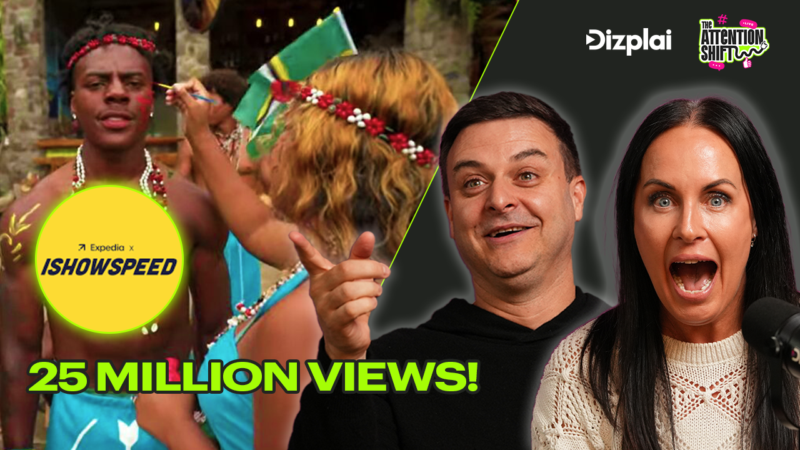
- The Expedia Partnership Nobody Saw Coming: iShowSpeed has been named Expedia’s official travel partner, complete with a globe-style mini-site at speed.expedia.com built around the places he’s filmed. It’s not logo-slapping, it’s a fully-baked live commerce play wrapped in travel content. Are sports rights holders about to be lapped by a 20-year-old with a camera?
- DAZN Just Bought the Picks and Shovels: DAZN’s $100M acquisition of ViewLift signals a pivot from chasing rights to owning the pipes. With the RSN model collapsing in the US, DAZN now sits in the middle of the streaming stack for teams, leagues and federations, and gets every fan-data signal that flows through it. Is this the AWS moment for sports streaming?
- TikTok Shop’s 10% Prediction: Circana’s Marshall Cohen reckons 10% of all US retail sales will go through TikTok by 2028 — up from 1% today. Q1 alone did nearly $5BN in GMV, doubling year-on-year. Aloe, Lululemon and Olaplex are already on there. So which sports orgs are finally going to take TikTok Shop seriously, and which are about to get left behind?
- Why PIF is Pulling the Plug on LIV: After burning roughly $100M a month and $5BN in total, PIF is ending direct funding of LIV Golf at the end of 2026. It got Saudi a seat at the PGA table. But it also proved a harder truth, even unlimited capital can’t fix a broken distribution model. Was the format the problem, or the way the format was sold?
- You Can’t Speed-Run Fandom: From LIV Golf to Baller League pulling out of Germany, the same lesson is showing up everywhere, VC and PE money expects tech-style returns from a model where affinity compounds slowly. Reach is rented. Fandom takes time. Are these new leagues being mis-sold to investors from day one?
Show Notes
- How Adidas is using anime to reach casual football fans ahead of the World Cup.
- DAZN buys ViewLift for $100M.
- Expedia names IShowSpeed its official travel partner.
- 1 in 10 US dollars is forecast to run through the TikTok shop by 2028.
- Saudi Arabia PIF pulls LIV Golf funding.
Transcription
Ed (00:01.355)
Hello and welcome to your attention shift. Amid abyss.
Jo (00:04.77)
And I’m Jo Redfern, let’s get straight into it. So we’re gonna talk about Adidas and anime, something that I’ve been thinking about quite a lot recently and yeah, it is, it’s because sports is sleeping on anime. This is my provocation for today. But interesting story last week with Adidas originals partnering with a streetwear label to launch a pre-world cup.
Ed (00:12.043)
your favourite thing anime.
Jo (00:32.812)
drop and it’s all built around the anime universe. So not your traditional pre-world cop sportswear campaign, but we know that loads of footballers are really into anime. In this campaign, they’re using Rapinia and Luis Diaz, mean, Dom Salanqui loves anime. Lionel Messi’s said that he used to watch Captain Tsubasa when he was young. these players are all cast as characters in this anime world and it’s not about kicking a football.
It’s about culture, it’s about the aesthetic, and it’s about the storytelling that is massive amongst teens, particularly in the US at the minute. So yeah, pretty cool. What do you think? Are you gonna be buying some?
Ed (01:16.646)
Good question. You’ve been educating me a lot about anime and you do on a weekly basis. I’m not sure if I’ve gone the whole hog yet in terms of buying anything but weird is, well I’ve got a little bit of my sort of Japanese gear on today as well. That was totally by accident. think look, Adidas over the last what, two, three years, what they’ve done in football culture, not just the kit that they’ve done but the Adidas original Rangers.
Jo (01:29.592)
Yep.
Jo (01:38.798)
Mmm.
Ed (01:43.223)
you know, all the lifestyle stuff. And I think it’s just a sign of them expanding more and more and really cementing their place in not just football culture, but, you know, pop culture. And I think like taking this step into the anime world as well, I think he’s just one of those things. They’re just getting the tentacles bloody everywhere.
Jo (01:48.76)
Yeah.
Jo (02:04.706)
Yeah, but when you contrast it with Nike, which has been struggling and people just don’t know what Nike is or what it stands for anymore, it feels like Adidas has doubled down on, I mean, particularly with its originals line, it’s going back to what it was known for and it’s really leaning into it. And that seems a sensible thing to do, particularly when you contrast it against Nike. But this originals line, I mean, it really plays into that audience of football fan.
particularly kind of younger ones and the more female as well, because girls love anime too. That it’s not about performance, it’s not about the technical wear, it’s not about new technology in a boot. This is about something really cool and the aesthetic is, as you said, it’s all about the culture and I think that’s, it’s the reason that they’ve gone out so early, it’s six weeks out still from the World Cup, so they don’t have to tie it too much to math play. But this is something that I think
makes Adidas really stand out compared to others that are beginning to roll out Rangers for the world.
Ed (03:09.463)
Yeah, and the whole, everything they’re doing in terms of how they’re linking also in the physical and the digital, because obviously this is a lot about streetwear as well, so they’re really seeding this content and products in grassroots level, know, across Hong Kong and South America. But even if go back to like last summer, the Oasis concerts, you know, they really made sure that they were the big talking point around Oasis because of the range that, didn’t I remember going into the store in Covent Garden, because I was in London that, you know, around that time and…
Jo (03:20.835)
Hmm.
Jo (03:30.435)
Yeah.
Ed (03:38.229)
And some of the gear in there as well. It’s just like, there’s so many things I wanted to buy and I just thought, God, I’m not even going to any of the gigs. I’m going to be such a saddo if I do this. But they made it really, really aspiration. You can see they’re looking for one of the other almost like levels that we can work through to really embed ourselves that while Nike are still getting their shit together, which pains me to say having worked for Nike and…
Jo (03:43.426)
Yeah.
Ed (04:05.879)
still loving Nike as a brand, but I’m buying more and more Adi stuff that I never thought I would do 10 years ago, because I was always Nike, Nike, Nike all the way. But I am constantly buying new Adi gear because they’re always releasing something. What about the Italy gear as well? Obviously not qualifying for the World Cup kind of killed that moment. But that aside, because there was a load of stuff I don’t think I’m going to buy that, I’m going to buy that. But not until I’m absolutely certain they qualify. I think they’ve just proven that they’ve got the finger on the pulse.
Jo (04:24.599)
you
Jo (04:29.454)
Mm.
Ed (04:35.243)
and they know exactly what’s going on in what, you know, I was gonna say niches them, anime’s not a niche, right?
Jo (04:41.558)
No, it’s massive. It’s massive. It flies under the radar because it’s so particular to Gen A and young Gen Z that a lot of like over 25s, 30s don’t really get it, but it’s massive. It’s absolutely massive. I’m gonna butcher the stat. I’ll have to look it up, but there was some research I think done by Sony and Crunchyroll that polled US teens. I mean, it’s huge in the US that polled US teens.
And most of them are watching anime at least once a week. it’s a, I mean, it’s proper kind of cultural movement. And it’s also, I mean, we’ve seen from the two footballers here, like it’s the South American talent. South America loves anime too. And actually there’s local flavors of that kind of anime aesthetic that aren’t just purely Japanese that are getting a bit of a South American flavor too. it’s, yeah.
It’s something that’s really huge and it’s not, no surprise to me that it’s kind of bleeding into sport and Adidas originals are really owning it and it’s a smart move by them.
Ed (05:49.58)
Yeah, so there was a range of footwear that dropped on the 22nd of April, they’re doing the fall drop on the 2nd of May, so if you’re that kind of stuff. Well, yeah, I’ve got a few things open on my screen, may well buy some of the drop, yeah. Anyway, that’s cool. So next story, Expedia. So Expedia have done a deal with iShow Speed, and he’s become their, his official travel partner. So obviously iSport, Show Speed are the last.
Jo (05:54.495)
See I had you down for buying some, I know you’ll punch up for new sneakers.
Ed (06:17.717)
what year or so has been doing loads of real life, yeah, real life experiences where he’s just out meeting his people, walking the streets, doing a multitude of things. So he’s been named their travel partner. There’s a whole site called expedia.com. That’s e-Xpedia.com. Will will put it in the show notes as well. I’ve been having a bit of a play around in the last couple of days as well. And it’s really cool actually, you’ve got the globe right.
Jo (06:19.662)
I mean, strength to strength, isn’t it?
Ed (06:46.709)
you can go and pick certain areas where he’s been and there’s loads of video drops of what he’s done when he’s been there. I love it, I think it’s this great sort of travel log of what he’s up to, where he’s been and ultimately from an Expedia perspective, know, their suggestion is they’re facilitating getting him around the globe and I think it’s ticking every box for Expedia because not only do they do obviously flights and transport stuff like that but they do do experiences as well and…
Jo (07:13.997)
Yes.
Ed (07:14.825)
Weirdly I’m booking a road trip around Italy at the moment and it solicited me to not just look at the travel part of it, which I do use quite a lot for certainly for hotels, but the other experiences that they can do as well that have been pushed for quite some time and it made me really get deep on some of that. I found some really cool things as well so it’s certainly got me looking at it differently.
Jo (07:28.824)
Mm.
Jo (07:36.047)
Yeah. It’s interesting, isn’t it? Because for that, the generation that they’re targeting with speed, they don’t buy travel in the same way as we did. I mean, he’s really grown on me, speed, in the last couple of years. He used to really annoy the shit out of me, to be honest. But he’s really grown on me. I mean, he’s growing up, obviously, but he…
Ed (07:45.004)
Yeah.
Ed (07:53.804)
Yeah.
Jo (08:00.696)
There’s no getting away from the fact that he’s actually, his enthusiasm is quite infectious and compelling. And you know, the fact that they’ve partnered with him and they’re doing this in, I mean, it’s a really interesting way to flog flights and holidays, basically live commerce. And I know you and Display have been looking at live commerce. So this live commerce, because you think about traditional holiday providers, sponsorships.
Ed (08:21.591)
Yeah, yeah.
Jo (08:28.588)
You don’t really see it and whilst you’re watching a football match, pick up your phone and book a flight. But actually, if you’re watching this, you might be tempted to do it in the live stream, know, pick up your phone and do it immediately, particularly with through this little stunt site, this Expedia with obviously the word speed embedded in it. So yeah, I think it’s really, it’s really good. Devil’s advocate, who gets the attribution though? Speed or Expedia?
Jo (08:59.534)
Well, this is it from a brand point of view. mean, this is something when I used to work at the BBC, attribution was everything. I’m not sure who gets the bulk of the attribution here.
Ed (09:00.752)
You know what?
Ed (09:10.519)
Look, I think the brand looks really, really strong on it. And I think that the way they’ve done it and they’ve created this, it’s not even a mini site, right, because there’s so much going on on there as well. I’ve been keeping an eye on Expedia. I remember having conversation with Expedia a number of years ago myself for something totally random in this business. And I guess I’ve always just kept an eye on what they’ve been doing as a business ever since. And they’ve actually got a huge number of offices in Manchester as well, which I didn’t even realize was walking around the streets that they’re ever present in Manchester as well. So I’ve just always kept an eye on what they do.
Jo (09:14.465)
Yeah.
Jo (09:29.55)
Mm.
Ed (09:40.438)
I think from an attribution perspective, ultimately, it drives the metrics that they’re looking for, does it matter? In all terms, what are they trying to get out of it? And I think that impulse buying, the amount of times I buy things when I see things in the moment, and, you know, when we did the chat with Phil from the NUD podcast as well, we could get anyone here talking 20 minutes about why impulse buying is so strong. And you can see that that’s what they’re really, really leaning into here. And I think it’s…
Jo (09:47.523)
Yeah.
Jo (10:06.626)
Yeah.
Ed (10:10.305)
What I love about it, it’s not logo slapping, right? It feels like a fully invested partnership where they are working together to try and create something that is more than the sum of its parts.
Jo (10:21.912)
Yeah, I agree. I wouldn’t use the term to create a slapping on this one because it feels slightly more embedded and constructed. And I think it’s made for really interesting viewing and people are picking up on that. Certainly on the chat that I was in on LinkedIn.
Ed (10:35.735)
I was, I was just like click it video, video, video, like even just on that mini set, just going through all the different and it was, and I was like sort of laughing out loud, oh does I have another look before we came on this? It’s really nice how they’ve done it and I think it’s great storytelling.
Jo (10:38.594)
Yeah. Yeah.
Jo (10:47.97)
Yeah.
Yep, it is. It’s not bad. It’s not bad. Okay. We win for speed, I think. Right, next story, Dazon buying View Lift, which came up last week and we had a bit of a chat about it. interesting move from Dazon. Not entirely unsurprising when we dig into it, but it’s bought View Lift for a hundred million dollars, which basically is a technology layer that sits underneath a lot of streaming products. And I mean, with the collapse of the RSNs, particularly in the U.S.
this comes with a certain amount of infrastructure that comes on top of it as well. So, makes sense for Desone to buy ViewLifts. Is it a bit of a shift for them away from bidding for rights, do you think?
Ed (11:36.492)
No, I think it makes total sense. obviously, I said, Vueli for a direct-to-consumer streaming platform, right? And we all know because it was in the media. I don’t think it was a big secret, right, that Dazone were looking at acquiring the Fangual Sports Network before it effectively shut down. And I think they probably had a look at this and said, actually, if we go and do this instead of doing that, it probably makes more financial sense. And I think Dazone…
Jo (11:41.187)
Mm.
Jo (11:53.122)
Yeah, yeah.
Ed (12:02.353)
Obviously, who used to perform as well, from what I’m hearing as well, they’re looking to get more into the services business as well. So there’s an element of servicing all these teams and leagues and federations with streaming platform. But at the same time, if they’re bringing all that content into their buildings or into their infrastructure, they can then say to those teams and leagues and federations, we can also distribute your content by the Dizone apps around the world too. So it’s a two-pronged attack. I think it makes total sense for them. And I think it’s, know…
in the grand scheme of things in terms of what the debt pile is for disordering another 100 million not making a great deal of difference.
Jo (12:37.41)
That debt pile is an interesting thing though, isn’t it? does this mean that they see more growth and more revenue from owning the pipes or the picks and shovels or whatever analogy you want to use rather than try and compete for sports rights? Because they’ve tried to be the Netflix of sport and they haven’t quite succeeded.
Ed (12:41.675)
What is it, six billion plus, something like that?
Jo (13:04.778)
Is there more growth in the media infrastructure? A bit like Amazon did with AWS, right?
Ed (13:09.975)
think there’s potentially a million content opportunities. If they’re bringing all that content from a variety of different, let’s say it’s American franchises, right? They’re bringing all that content into their infrastructure that they then end up distributing via these direct-to-consumer platforms, which the reality is these sports, the US sports franchises, are not just suddenly going to go, oh, we’re going to go free-to-air on YouTube or even subscriber-live on YouTube. I just don’t think they’re going to do it from everything I see about what they’re doing with content at the moment. So if you’re able to bring all that content into the Dazon infrastructure, which…
Jo (13:19.342)
Mm.
Ed (13:39.448)
for them is going to flag up countless other behind the scenes content opportunities, other formats that they can create. It puts them in the middle of everything when these franchises and teams and leagues are fed and thinking about how are we going to distribute our content. Now, zone will be the one saying you need to put some on that platform, need to put some on that platform, some on that platform, but they’ve got a seat at the table around the decision making rather than sitting outside the decision making.
Jo (14:00.121)
Mm.
Jo (14:05.358)
What does it give them in terms of insight and data? if they’ve inserted themselves between a club with its own branded app and the fan, then they’re the middleman. They’ve got the infrastructure and that data. What do you think? Does that deliver any commercial value to them?
Ed (14:30.101)
Yes, because ultimately they are going to get insights from how people are consuming the content, where people are arriving from, where they’re going to, the kind of things they’re interested in, the kind of things they’re not interested in. It’s ultimately going to benefit Dizone in terms of their own direct-to-consumer model, but ultimately it’s going to give them scale across any other sports teams and leagues. they’ve got a huge…
Jo (14:43.278)
Mm.
Ed (14:57.687)
They’ve already got lots of insights themselves in terms of what they’ve been doing for a number of years now. Like it’s been going a long, time, that business even under a different, different guise. Now I think that gives them the opportunity to have insights that is going to be pretty unique both from a, you know, if you think about it, they’re they’re a, they’re a global distributor and gateway to content, but also now they’re going more at a local level from a team to team perspective too, and everything in between. And it’s not like they don’t have experience of doing that from a team to team perspective.
The heritage is there within the business. They’ve been doing it for 20 years.
Jo (15:29.122)
Yeah, yeah, interesting. And particularly in the US market where those local markets actually in and of themselves can be quite lucrative when you look at the size of them.
Ed (15:39.82)
Yeah. Cool. All right. Next one. So TikTok and shops. like, yeah, TikTok shops. That’s a thing. knew? So there’s a retail chief reflash advisor at company called Circarna. I think I pronounced that properly, called Marshall Cohen. And he’s made a prediction that by 2028, 10 % of all US retail sales will be through TikTok. It’s currently about 1%. Now that is a massive shift if that happens.
and it’s going to have so much impact from a physical retail perspective as well. I’d love to see, and I’ve not got any numbers here in terms of what does the US look like at the moment for something like Amazon on a total percentage basis. Like where is that extra 9 % that he is predicting actually coming from? But that kind of shift is going to have so much impact across the board, whether that’s physical, whether that’s the Amazons of this world.
Jo (16:10.03)
Mm.
Jo (16:29.262)
Mm.
Ed (16:38.783)
Like, where’s it coming from? Because if it does happen like that, that is mad.
Jo (16:44.238)
Yeah, it is. I I’ve been following the growth of TikTok Shop, particularly in the US, because it’s on a different trajectory there and arguably a much different one now, the Ellison’s Control TikTok in the US. But TikTok Shop, I mean, the amount of merchandise value it puts through is eye-watering, even at that 1%. And I reckon, yeah, 10 % of US retail spend is a bit punchy within the next two years.
But Q1 sales this year apparently were nearly 5 billion US dollars. that’s doubled its growth in a year. I mean, and it used to be that you bought your fancy shampoo and your Stanley cup through TikTok, everybody, much like Amazon, everybody’s opening a storefront now. So you’ve got Ralph Lauren on there, you’ve got Ulta Beauty, which is a pretty high-end kind of Gen Z.
Ed (17:13.719)
Yeah, that’s a lot.
Jo (17:43.439)
cosmetics brand. So it’s not just your little kind of low value lip liners and lip balms anymore. This is real posh brands selling through TikTok shop, which I mean, yeah, you’ve got to wonder whether they can sustain that growth. Younger retail buyers do tend to trust the algorithm to recommend them products and they’ll buy. We talked about impulse purchase, not.
Ed (17:57.302)
Yeah.
Jo (18:13.006)
three, four minutes ago. But there’s also, you know, there’s not a huge amount of money to go around for those younger demographics either. They’re feeling the squeeze. But yeah, be interesting to see whether they can maintain it.
Ed (18:28.055)
What’s the implication? I was going to say the implication for sports as well is interesting. Look, I’m not aware massively of any sporting organisations that are doing serious money from an official perspective through TikTok shots. You’d imagine fanatics are going to be all over this because they usually are over most things from a sporting perspective and they work with, you know, most of the big sporting organisations around the world from a retail perspective. But it’s a big opportunity. And if the sports orgs don’t get on it quick as well, they’re massively going to miss out here.
Jo (18:43.747)
Yeah.
Jo (18:57.016)
Whoa, mean, it depends what deals they’ve got with other retailers. this is the thing, when you’re a big legacy brand, so always, but yeah, so I mean, with the exception of Ralph Lauren, Ulta Beauty that I just mentioned and Olaplex, who were another one of these luxury brands that opened a storefront on TikTok this last quarter, they’re social first retailers anyway. So that’s fine, they can do it. But when you’ve got…
Ed (19:03.383)
Always convoluted, isn’t it? Always convoluted from the sportives.
Jo (19:25.282)
big retail partners and you’ve got inventory and you’ve got certain deals that you’ve got in place, it might not be as easy for someone like an Adidas or a Nike to to kind of set up shop on there. So I think it will be interesting for sports apparel. I think you’ll find the younger ones, like the smaller incumbents really embracing TikTok shop that could catapult them and really make a dent in the more traditional, particularly sportswear manufacturers sales. mean, aloe yoga.
Lululemon, they can sell a lot on TikTok shop and through their reseller network, they can shift a ton of products, not just your own branded storefronts as well. So yeah, I mean, it’s true mass retail media.
Ed (19:56.567)
Yeah.
Ed (20:10.167)
Yeah, it’s not just about shorts anymore, It’s like you’ve got to have a proper strategy here. Like how are you driving from the content to purchase? Because it has become a glorified eBay for the new age in a lot of ways.
Jo (20:14.316)
I know.
Jo (20:23.906)
But yeah, but going back to what we just talking about with speed and Expedia, you’ve got TikTok now that is getting into vertical dramas, know, like micro dramas. So again, that commerce is going to start coming through content. It’s not just going to be a storefront, buy this, buy this. Yes, you’ve got resellers, but there’s also going to be narratives now that are built through this, this true content commerce, a five-part mini series of vertical scrollable that at the end, you can buy this from the TikTok shop, click it’s in your basket, done.
Ed (20:33.548)
Yeah.
Ed (20:52.193)
Yeah, yeah.
Jo (20:53.87)
Okay, last one. Motoring today, aren’t we? We can’t have a podcast this week without talking about Liv. Obviously, everybody’s been talking about Liv Golf. And I think it’s more or less confirmed. Yes, it is confirmed now that PIF are stopping funding Liv Golf after the end of 26. That’s after pouring just a trifling $5 billion into Liv Golf.
I mean, we can get into whether we think it’s had a material effect or not. The burn rate of $100 million a month really made my eyes water when I read that. It’s not going to disappear, but how do you think it’s going to change? Is it going to be able to run like a normal sports business now, a normal golf league?
Ed (21:29.024)
Yeah.
Ed (21:37.848)
think it’s going have to change, right, because that’s a serious amount of money. It’s whether the new people who’ve been put in place to try and find funding for it can find that level of cash. But I think there’s a want and a need for team format. And I think the Ryder Cup, every time that comes around, proves that people do love that format. I think that on that basis, I think they will try and find a way. think from a…
From a PIF perspective, ultimately, got them a seat at the table and got them talk with PGA and got them involved with the PGA. So think that’s an element of where they wanted to get to. I think if they just gone in there and said, we want to invest in you and do it, the PGA weren’t going to let them in the end. That’s how they got in. So I think it served its purpose in that sense. I think it’s been part of their wider strategy globally from a sporting perspective. They won’t see the five billion that they’ve spent as wasted cash because ultimately it’s part of a wider…
strategy and it’s not the only thing that’s been changing from a Saudi investment perspective. They’ve been looking at a number of things have been changing recently as well. So I think it’s just part of their wider plan. And obviously this had been going on for weeks. It wasn’t going to happen. It was going to happen. They will not see this as failure and I don’t see this as failure either. It’s interesting. I saw a post actually just before we went online that Creator Sports Network had done as well about this as well. Obviously Baric that we know talking about ultimately this is not a
Jo (22:40.43)
Mm. Mm.
Jo (22:52.268)
Yes, I saw that,
Jo (22:56.28)
Mm.
Ed (22:58.357)
He was saying this is not failure of necessarily the format, but it’s the distribution model that’s been employed with it. And he said, look, you need to find different ways of distributing. You’ve got these great golfers, Bryson being the one that everyone talks about, that understands how the modern audience is now leaning into golfers’ distribution. And they haven’t really leant into that as Libs. So this might force them to think of different distribution models when they work out how they’re to fund this moving forwards.
Jo (23:28.558)
I agree with that. There’s another thing when I was thinking about this that was, okay, you it was a bit of a Trojan horse and it forced, it forced there, you know, like you said, it got them a seat at the table. And arguably that means that, you know, the fact that it hasn’t worked as originally touted, it doesn’t really matter because it did what it intended to do. It lobbed a hand grenade into the business.
of golf. The other thing though, and this comes back to what we’ve spoken about a couple of times before, and I’m going to talk about Baller League as well, is if you are going to back with a lot of money, a new league, a new way of doing things, it gets you the noise. Yes, it gets you the headlines. It gets you a certain amount of time to prove that you’ve got a business model that works. But Baller League has ceased operation in Germany.
This has come to a head and now they’re withdrawing funding. We’ve said you can’t speed run fandom. What is it about these things do you think that they’re getting wrong? The massive capital buys them a bit of time, but what are they getting wrong when they’re trying to construct these new things? Is there anything foundational that sticks out to you that they’re not quite nailing?
Ed (24:49.719)
I’m not sure that Baller League has got anything wrong in that sense. They’ve decided not to operate Germany anymore because they’ve launched in the US, which is the biggest market. They think there’s an opportunity there to grow the US faster than they can grow Germany. And ultimately, we know it’s not a massive team there. We also chatted to Harry when we saw him at the Solution Series event, Harry Hesp, Baller League. There’s only so much time, effort, resource they can put towards doing what they’re trying to do.
Jo (24:57.602)
Yeah.
Jo (25:12.11)
Mm.
Ed (25:19.927)
And I think they just thought that US was a better bet than Germany moving forward. They started in Germany, right, because Felix and the founders are German, which is the place that they started. But it would never be, I guess, the ideal territory that you would want something like this if you want to get true scale. So I don’t think that is a failure. I think that actually that is just them saying, we’re going to pivot over here because we’ve got more opportunity for growing there. And I think did say it was funny, actually, that point you made there about fandom. I think Felix did actually write something about that on LinkedIn over the weekend.
Jo (25:26.968)
Mm.
Ed (25:49.623)
where he was talking about ultimately building fandom, ultimately his reach. So he was flipping it the other way. So I don’t know whether he’d been listening to you, Joe.
Jo (25:49.727)
did he?
Jo (25:59.097)
Well, yeah, I mean, and I’m not saying that the league is a failure either. What I’m saying is, I do wonder if a lot of these leagues, when they’re raising the capital, are sold on a much quicker return than is actually possible, given that you can’t speed run fandom. I mean,
Ed (26:16.833)
with that I doubt, because the VC world’s built on quick returns, right? Generally. So, so ultimately, where do get their money from? Generally from VCs. Yeah. Yeah, yeah, yeah. It’s not the same.
Jo (26:21.528)
Yeah, and they apply the tech model. They apply the tech model and that doesn’t work. when you’re, no, not when you’re thinking about how long it takes to grow affinity, to grow reach and then awareness and then affinity and then love, which equals fandom. Again, you don’t go from one to 11 with that. It takes time. You do it in stages and in increments. Things have to compound and that doesn’t feel like it’s compatible with
Ed (26:30.209)
Yeah, you spot on.
Jo (26:51.094)
a shiny pitch deck to VC or private equity who want the money back within a certain timeframe. So I just, yeah, I do wonder if the, this just kind of shows that you’ve just got to pace, got to pace patient capital, got to pace it and you got to be realistic.
Ed (27:13.655)
And also be mindful of what you’re spending as well. you know, you know, look, five billion, five billion for, I guess, PIF, probably a drop in the ocean, right? And ultimately, because of the nature of their natural resources, that money’s being regenerated all the time. But still, they won’t value for money. And they’ve stated that in multiple different places, you know, the line construction that they’ve been doing inside here as well. They decided not to do that anymore.
Jo (27:24.355)
Yes.
Ed (27:41.174)
They’ve looking at things now, they’ve gone through, they’re going to this next stage now of their investment in properties and infrastructure and saying we want to get value for money now. We’ve established ourselves, everyone knows we’re a player now. Now we really want to make sure that we get the most out of what we can so they’re being a bit more discerned about how they spend it. So it’s, they’d argue it’s done what they wanted it to do.
Jo (27:54.766)
Hmm.
Jo (27:58.756)
Yeah.
Yeah, yeah, I would agree with that. And I think, you know, it’s good that there’s a bit more financial discipline being applied. You know, they’re not gonna go hungry, are they? they’ve got that cash. I mean, I suppose what it did do was it put a rocket up the PGA and now it’s meant that they’ve had to look at their own business model and how they route competitions and how they pay their players. So I guess overall,
Ed (28:14.017)
Doubt it.
Jo (28:30.806)
it’s not been a bad thing. just don’t know as it potentially turned out as it would inevitably have been pitched in the first place.
Ed (28:38.487)
Yeah, I think it’s put a rocket up the sport of golf in general, right? I think there’s lots more formats out there and different people doing different things that five years ago, was, know, Rory Manley was driving, he’s saying, golf is, to be brutally honest, on its arse. What are we going to do to make sure that young people actually care about it? Because at the moment, I’m not sure they do. So they’ve done that. Cool. There we are.
Jo (28:40.801)
Thank you.
Jo (28:56.014)
Yep, Okay, we’re at time, we’re getting told off in the comments. You better wrap up.
Ed (29:05.975)
So there we are, five stories, five minutes each, roughly. Thanks for joining me, Joe. I’ve been Ed Abis. This has been Joe Redfern. Thank you for joining this week’s episode of the Attention Shift. Don’t forget to like, subscribe, and if you want to feature as a guest, us a question via our email. You can email at hello at attentionshift.media. That’s it for now. Goodbye.

- Tags: Brands & Agencies, Creators, Media Networks, Sports