

Fan Engagement > Podcasts > Breaking Down Justin Bieber at Coachella, Nashville Kills the Paywall & How Golf Is Rewriting YouTube Sponsorship
Summary
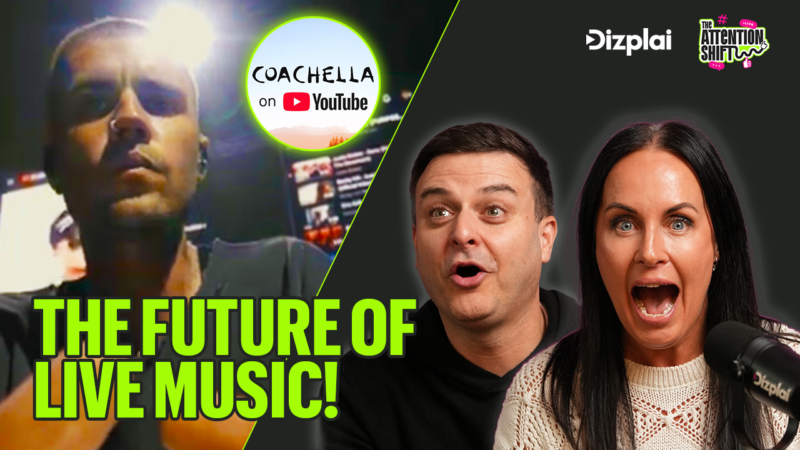
- Justin Bieber Just Reinvented the Live Music Experience: Bieber didn’t just perform at Coachella. He performed for millions watching at home through YouTube, engaging with live chat in real time while YouTube streamed all seven stages simultaneously in 4K with multi-view, embedded shopping and creator watch-alongs. Is this what every major live event looks like from here?
- Nashville Kills the Paywall: With the collapse of the US regional sports networks, the Nashville Predators have made every home and away game free on a new local TV station. No cable package, no subscription. Just free hockey and a direct line into every fan’s data. Is this the model other sports organisations should be watching?
- YouTube Is Now Cloning Creators: YouTube has launched AI avatars for Shorts, letting creators film once and generate a photorealistic version of themselves to appear in content indefinitely. It solves the burnout problem and removes the barrier to publishing at scale. But if everyone can clone themselves, what happens to authenticity?
- How Golf Is Rewriting YouTube Sponsorship: Bryson DeChambeau, Grant Horvat and the Bryan Brothers have launched Source Golf, a YouTube backed creator network backed by Bolt Ventures. Rather than competing against each other for brand deals, they’ve unified their commercial proposition and are selling sponsorship at TV level CPMs. Is this the blueprint every creator network will follow?
- Netflix Japan Just Made the Case Against Fragmentation: Netflix took exclusive rights to the World Baseball Classic in Japan, went all in on production and launched their first sports creator programme. Their streaming share surged from 60% to 82%. Every other platform collapsed. 30 million unique viewers showed up. Sometimes exclusivity still wins.
- Stream TV Lisbon: Ed and Jo recorded this episode live from the Stream TV Europe conference in Lisbon, where fragmentation, creator distribution and the future of live sports dominated every session. The conversation happening in the industry right now is moving fast and this episode captures it in real time.
Show Notes
- Coachella x YouTube 2026 livestream
- Nashville Predators go free-to-air
- Source Golf launches backed by Bolt Ventures
- YouTube AI avatars for Shorts
- Netflix Japan World Baseball Classic case study
- Jo’s newsletter
Transcription
Ed (00:03.673)
Hello and welcome to the latest edition of the Attention Shift. the week that Justin Bieber used YouTube for karaoke at Coachella, Netflix streamed baseball, beat every film and series ever made in Japan and proved live sports is now its biggest weapon, and a group of golf creators decided they were done using individual brand deals and launched their own network instead. Without further ado, you know the drill Joe? Five stories, five minutes each. Are you ready?
Jo (00:28.366)
I’m ready. I love your… I love your openings. They’re so joyous. Anyway, let’s talk Coachella. Or, as my friend put on social media, which made me chuckle, Kowchella. They call it Kowchella because of what we’re going to talk about. Yes. So using YouTube, Coachella have basically programmed the whole event.
Ed (00:36.921)
favorite part of the pod.
Mmm!
Ed (00:48.111)
I’ll tell ya.
Jo (00:57.068)
as its own TV channel. So it’s streamed all seven stages simultaneously. They used YouTube’s multi-view, which we know has been couched as a good option for sports. And so basically they’ve been able to stream all seven stages, I think it is. And that big news was about Justin Bieber, who did something pretty fun. He basically, during his set, opened up a laptop, searched some of his back cat on YouTube.
and did karaoke, sang along to his own songs, which I believe got him out of all sorts of rights restrictions, so pretty canny. Yeah, but it’s interesting, because this whole idea that they’ve turned Coachella’s event into basically a 24-7 TV channel means that my friend can have her Coachella at home. She had a dog next to her. She got her slippers on. She got her snacks and a bottle of wine. It’s a little bit like…
Ed (01:32.591)
towards his back catalog.
Jo (01:53.326)
you know, she’s able to experience it from the joy of her own home. Isn’t that fascinating?
Ed (01:58.883)
Yeah, and I don’t think I’ve ever heard Cal Coachella talk about as much, yeah, Cal Coachella talked about as much as it has been this year on the back of them doing this with YouTube. And look, and the fact that, you know, it was pretty like, it’s ballsy right for me to turn up with nothing but a microphone and a laptop and go, I’m just going to sing along with me on songs on a screen. That was like, but like the parallels of why he did it as well, and lots of people have had lots of opinions, but that’s him almost
Jo (02:04.184)
How jealous.
Ed (02:28.952)
saying to everyone, look, I’ve grown up in the YouTube age, I haven’t forgot where I came from, and to then do that when YouTube is streaming it all as well, like, look, I don’t know who thought it up, but it was pretty cool, and I’m not necessarily a fan of Bieber, but I’m not a believer.
Jo (02:34.67)
Mm.
Jo (02:45.87)
It’s interesting though because this whole idea that multiview, mean the first time I encountered multiview was through sports.
And I saw it when they trialed it with some women’s football in the UK. And I was watching four screens and four quarterfinals, I think it was, streaming at once. Which I was pretty cool. Never really thought, although it makes sense, that you could apply it to a music festival where there’s several different stages performing at once. But it’s the idea that they’ve done it at this scale.
They’ve done it as a 24-7 livestream. And we know how important music is to YouTube. mean, music videos have been the backbone of YouTube for a long time. But the idea now that YouTube is a premium streaming partner for one of the world’s most culturally talked about, at least, music festivals, that elevates it to, you know, a Champions League level, right?
Ed (03:40.131)
Yeah, look, and this is YouTube, I think this is YouTube now saying as well, like we’re going after live music as well now as a pillar. We know what we do in sports and they’re already making massive waves in sports and it’s almost like that wheel just started to turn on its own now from the work they’ve done. They’re going after music now and like I said, for an event that ultimately the tickets sell out anyway, so you’re not cannibalizing anything, it’s not stopping ticket sales. You’re not going to put every live gig that’s ever done on there, but for things like this where it’s always oversubscribed.
It makes total sense then because the coach and I are like, they’ve already sold the teams the next time, right? And anything else we want to do as well. There was lots of other little things in there as well where they were doing, you know, limited merch and stuff like that as well. So it’s pretty cool.
Jo (04:21.998)
We’re recording this in Lisbon. The attention shift is on tour. One of the interesting things that came up in the Coachella stream, but it was mentioned on the panel that I was on this morning with YouTube, is this watch with feature. And they were talking about in the context of sports this morning on the panel, but it equally applies here for Coachella as well. This idea that at a live event,
and a culturally relevant event like Coachella, the idea that you can bring in creators and artists and musicians who are your live co-hosts through YouTube’s Watch With feature adds a whole different layer of, well, it’s kind of that parasocial layer, which we know and we’ve spoken about many times on this podcast that creators bring, but also it brings in this kind of community aspect, this personalisation aspect.
aspect, this kind of feeling like, like I said, you’re there, you you might not be at Coachella, you’re at Couchella, but you’re still watching it on your big screen at home. But you’ve got your favourite artist who’s doing a watch with and you feel like you’re watching along with them as they’re watching the stream, sorry, on the screen. So I think this is something that I think really hasn’t been acknowledged, certainly in sports, the power of what this could do for those big culturally
relevant events where it’s all about bringing people together all at one time for this one specific moment.
Ed (05:54.286)
Yeah, like we said there as well, fact that so many people could watch this live from home with so many different experiences as well and then throughout it, YouTube shopping was embedded in as well. You can see the amount of products that YouTube are starting to layer into these things now. It’s almost like YouTube are finding themselves the things that they’ve been doing together and piecing it all together and finding those cultural moments to be able to do it with.
Jo (06:14.094)
And apparently that shopping was embedded into the live stream. So you don’t have to stop watching to then complete your purchase. Again, we talk a lot about friction and interruptions and you’ve got to try and make engagement seamless or monetization or particularly shopping commerce. It’s historically been quite onerous to stop and buy something and then complete the purchase and go back to what you were doing and you might have missed something. this is, yes, something that I think we should watch very, very closely.
Ed (06:20.215)
Yeah. Yeah.
Jo (06:42.796)
this YouTube shop embedded directly into that live stream as well. Pretty cool.
Ed (06:47.885)
Cool, right, next story. So the National Predators have announced this week that from next season every home and away game is going to be broadcast completely free on a new local TV station called The Spot, Spot National 28. So there’s no cable package, no subscription. So look, this has come about because of obviously everything that’s been going on with local broadcast deals and effectively the collapse of the FanDuel Sports Network.
Jo (07:13.26)
Yeah.
Ed (07:15.149)
Yeah, more and more of the US sports fans are working out what they’re going to do. But this is pretty unique in the sense of they’re not charging subscriptions, they’re not going down the road they’ve gone down before, they’re saying, actually, we want to try and reach the biggest, widest audience we possibly can and actually try and scale our whole, I guess, sponsorship around that as well and try and drive revenue in a different way rather than through the fans. So I think it’s a pretty good thing for fans, right?
There’s not going be any of these questions now about piracy, like, because it’s free to wear and anyone can watch it.
Jo (07:48.376)
So I had to look up who the Nashville Predators were, hockey, hockey team. Yeah, so this is interesting because with the collapse of the RSNs and I mean, they were left with very little opportunity to do anything.
Ed (07:53.847)
Me too actually.
Ed (08:07.959)
Yeah.
Jo (08:07.97)
with the rest of inventory, right? So it feels like this is probably something that they had to pull together pretty quickly, but actually could end up being something really valuable to them because yeah, they’re free broadcast, but they’re gonna get a ton of data from this, right? Because the only way that you watch is by giving your data to the Nashville Predators and their partner in this, which is gonna be really valuable.
Ed (08:32.577)
Yeah, and they’ve done this with scripts as well, which obviously, I mean, it was interesting when on one of the panels earlier, Evan Shapiro was doing his presentation all around, he was comparing Fox and Paramount and the different ways that they’re going, the legacy businesses are going down the path, and was going, actually Fox with 2B are doing something an old traditional media company wouldn’t normally do, Paramount are just doing the same thing again again again. And you see scripts here, scripts are trying to do something.
Jo (08:54.572)
you
Ed (08:59.821)
I think a bit different here and they’ve not gone down that same, I guess, subscription route. So I think that’s the fifth team that they’ve now got on their roster in the NHL as well. So quietly in the background they’ve been acquiring these relationships with these NHL teams.
Jo (09:16.664)
So tell me how it works as someone who’s not necessarily familiar with this. So they are the rights holder. the team is the rights holder. I assume that the rights have reverted back to them with the collapse of the block. So really what they’re saying now is, okay, we’re the rights holder. We’re gonna make this decision to give these games to our fans for free in return for them giving us a direct relationship with them really. It’s DTC, isn’t it?
Ed (09:29.613)
Yeah, that’s right,
Ed (09:46.286)
Basically, yeah, look, and scripts are obviously part of this process because they have channels, they have delivery mechanisms, they’ve got the infrastructure. But they’ve also created a direct, they’ve called it like a direct consumer experience where fans can live stream games throughout the local broadcast territory. So it’s going to be interesting. They’ve not said what that is yet, but it does sound like some kind of creator experience. it says within a local broadcast territory, I don’t know whether that means outside of the immediate territory that…
Jo (09:51.159)
it’s a shock.
Ed (10:15.991)
that the team controls or actually only within the territory. They’ve not given a lot of details on that at the moment as well. So effectively, they’re going to be co-streaming with the official version of it as well. They’re obviously opening themselves up to try a few different things.
Jo (10:22.648)
Yeah.
Jo (10:28.023)
Yeah, yeah.
Yeah, yeah, and I mean, I guess the with the with the collapse of the RSNs, then that just opened up the potential for piracy. So I guess this is a soul for that, because it’s free to wear.
So there’s no motivation or incentive to go and find a pirate stream if they’re saying, look, we’re to give it to you for free. Yeah, this is where my knowledge of that very local sports market in America is a little bit light because it’s so very different to obviously how we work across the UK and Europe.
Ed (11:04.281)
Yeah, what I do know about the NHL as well, this is just through friends in America, they’re that it is quite an aging audience and I think because most of the content has been behind or has been gated in some way, shape or form, obviously they’ve been missing out on that younger audience. So you’d hope that this is a kind of way to go, how do we start to get to that younger audience? So the reality is, you know it’s going to, some of it’s going to end up on YouTube as well.
Jo (11:11.81)
Mm-hmm.
Jo (11:28.962)
Yeah, yeah, yeah. Okay. We couldn’t have an episode of the podcast without talking about creators. Anyway, we’re back to golf and creators. Golf must be the sport that has the most active creator community going. I don’t know. I struggle to think of one that isn’t quite as voracious with its.
Ed (11:49.473)
But also, if you think about where golf was, I remember, was it five, six years ago when Rory was calling out golf and saying that golf was on its arse and they needed to do something, the transformation now in the creators’ sphere with golf is unbelievable in the space of time it’s happened.
Jo (12:05.996)
Yeah, well, so another week, another golfing creator announcement. So Bryson DeChambeau, Grant Horvat and the Bryan Brothers, who were also in the news last week because the latter two of those, Grant Horvat and the Bryan Brothers, have recently launched a tour as well. The Your Golf Tour that comprises 16 players and a $1 million prize pot in Vegas. Anyway, now next week, they’ve joined Bryson.
DeChambeau and launched Source Golf, which is a YouTube based network backed by Bolt Ventures. So once again, we’re looking at golfing creators taking matters into their own hands. They’re not playing with a PGA or live. These are, you know, they they’ve created this tour and now they’ve created Source Golf as a way to take golf content out into the creators fear and into into your YouTube.
And it’s going to have a, again, back to what we were just saying about Coachella, it’s a TV style programming. It feels very much like premium golf TV. And as a result, they’re offering it as a TV level media buy for advertisers, not low CPL entry that’s just against any old toots on YouTube.
Ed (13:18.934)
Sounds very similar to the story we did last week about Fieldhouse Media. Trying to standardise the kind of media that’s available so then they can attract the TV level investment rather than the low cheap programmatic that’s just getting cheaper and cheaper and cheaper.
Jo (13:22.638)
Mm.
Jo (13:33.678)
Yeah, yeah, it’s it’s interesting because I think this is a theme and it’s something that came up again this morning at Stream TV in Lisbon with Marion Ronche. She mentioned that the chief commercial officer of Channel 4, I think it’s Rach Patel, had said that actually the amount of content that TV companies and streamers are putting on YouTube, it’s not really washing its face. It’s not bringing the the replacement revenue, certainly not the level of revenue that ad.
media buys attract on TV. So what we’re seeing now is then people who are owning the rights and these are creating their own rights as golf creators, selling it as premium inventory on YouTube. Now, if you’re going to invest and we’ve spoken to, I know you’ve spoken to Chris Sise and I’ve spoken to Chris Sise about icons. If you are going to create a premium TV style sports experience and put it on YouTube, then actually now we’re increasingly saying, right, and we want to be able to sell
Ed (14:23.242)
Yeah.
Jo (14:34.096)
this advertising to advertisers as premium inventory, not low CPM. And I think we’re going to see that increasingly now. And YouTube at some point is going to have to play ball because YouTube wants to be seen as premium TV.
Ed (14:47.244)
Yeah, look, and as far as I’m aware, YouTube, of course, they understand that creators who invest in the content that is now being streamed on YouTube are going to have to find other sources of revenue other than what YouTube is helping them to gain. being able to then create, scale, and let’s have it right as well, it’s high attention and unskippable as well because it’s part of the experience.
It ends up being pretty compelling and when you get these people together, it’s telling us that I think it was Grant Hovert where we saw an interview where he was talking about, like, it’s now more lucrative for him to do this than it is to play on the tour, to do these kind of things. Again, that showed the transformation of golf from a creative perspective over the last five, six years. It really is remarkable when you see the change that’s occurred.
Jo (15:26.572)
Yeah. Yeah.
Jo (15:39.31)
And clearly, Bolt Ventures have seen the revenue opportunity in it, not just for on-platform monetization from premium CPMs against this more TV-style premium sports media. But again, we just talked about Coachella. Now you can open up this seamless content commerce that sits in the feed. It’s not taking you away from the action, but you’re going to be able to buy stuff. I was only reading yesterday about
how much merch is sold at the Masters. There’s bloody gnomes that everybody goes crazy for. They sell out in like an hour and they make so much money from that. Well, if you can replicate that in a premium golf format or a premium golf event that is featuring Bryson DeChambeau, Grant Orvat, Brian Brothers on YouTube, it becomes a meaningful revenue play then. So I think this is really interesting.
Ed (16:12.766)
Hahaha!
Ed (16:34.476)
The beauty of doing it, obviously because it’s not a physical event so no one’s actually picking anything up, if you’re doing this digital like this then you can do dropship stuff so you’re only making what you sell. You don’t have to hold any inventory, you’re only going to create it once it’s actually been sold. It solves all sorts of problems as well. But giving you a global scale compared to the sort one event scale when they only capture one of these people who are there. So yeah, it opens up lots of opportunity.
Jo (16:48.611)
Yes.
Yeah.
Jo (16:56.739)
Yeah.
Yeah, I think it’s fascinating. would be keen to see, it feels like that pairing of the Bryan brothers and Grant Hova are really looking to mix things up and they’re getting backing for, they’ve got Bryson on board and this, so it’d be interesting to see. I’m sure they’ll probably announce something else next week, golf related.
Ed (17:09.088)
Yeah. Yeah.
Ed (17:18.284)
Absolutely, we’ll keep our eyes out. Right then, next story. So, YouTube have released another product. It feels like every week at the moment YouTube’s releasing something new. So I’m going to ask you in a second if you’ve a go at this yet. So they’ve launched AI avatars for shorts from the 9th of April. So four or five days ago when we did this. Unfortunately though, it’s not available in Europe so we’ll have to get the NordVPN out. Not a sponsor of the show. To see if we can try it out. But basically, you film one live selfie.
Jo (17:27.726)
I’m in
Ed (17:47.082)
recording your face and voice while reading a series of prompts and YouTube then generates a photorealistic AI version of you. So from that point on, you can appear in any short without ever being on camera again. I think someone made this up and got me to read this out. Is this real?
Jo (18:04.142)
I’ve got Newtie here, Ed. This is not me. It’s my avatar. This is, I mean, where to start with this one? It’s interesting. Do you know what it reminded me of actually, when I was looking at this story just earlier, doing my rather belated prep for this week’s episode? A few years ago, there was a really famous gaming YouTuber called Quebble Cop. Really like Minecraft, Let’s Play, Create.
Ed (18:07.211)
Yeah, yeah
Ed (18:33.215)
I don’t know how you remember these names, I really don’t.
Jo (18:36.044)
Well, the thing is, Kwebbelkop, who is a Dutch YouTuber, his name is Geordie, Kwebbelkop, millions of subscribers, really, really popular, got to the stage where he was getting burned out. And so, I mean, but he’s very tech savvy and tech forward. So, I mean, we’re talking three years ago, Kwebbelkop.
Ed (18:41.6)
Okay.
Jo (18:56.47)
created an AI version of himself. And he said to his millions of followers on YouTube, I’m going to stop appearing as myself. I’m going to send an AI version of me to do my content. And bear in mind, most of his followers and subscribers were teenagers who loved him for his gaming and his let’s play videos. He got absolute pelters, literally for months was just ridiculed because he’d basically said, I can’t do it anymore. I’m burning out, but I’m going to launch an AI avatar.
Interestingly now three years later, YouTube are rolling it out as a tool.
Ed (19:31.775)
Well, and the thing is that they’ve explicitly said that they are not interested in AI slot, but then they’re allowing people to clone themselves to create content with AI. It kind of does blur the lines, right? And it looks interesting to me, because I just thought to myself then, if this works, I never have to do another YouTube shot, then Will can just use the AI version of me to do it.
Jo (19:33.72)
is how things come around.
Jo (19:55.639)
Well, so that’s the thing, isn’t it? mean, acknowledging that if you are a creator, a human creator, and most of your following is about who you are and what you do and how you say it and how you wrap your content, there is a finite amount of time that you can create content in any given day. And if you do it for long enough, you reach burnout. We’ve all spoken to creators that have reached that very point. And when you combine that with how
Ed (20:14.357)
Yeah.
Jo (20:24.488)
Shorts are so great for reach that terrible for monetization, but they’re great for reach. But actually, you know, you’ve got people and channels and publishers that are publishing hundreds of shorts a day. You can’t do that. You’re a human being. Not if you want to lie. So I can kind of see why this would be rolled out as a tool. You know, if I’m thinking about Carbileam or those creators who do something that’s very specific that could be replicated by an
Ed (20:40.469)
No.
Jo (20:54.552)
version of you in a short format I can see why it kind of makes sense do I love it no I can but I see why it makes sense your point about slop is an important one because there ain’t no way that you mean if you’re creating 300 shorts a day of you doing your thing whatever it is six seven your car whatever it’s gonna tie it’s gonna tie a very quickly and so you’re not telling that it doesn’t unlock
Ed (21:16.031)
Yeah. I did all the time.
Jo (21:23.662)
as much as YouTube say that they’re not.
Ed (21:27.275)
So what is interesting, just touched on the European exclusion then. So YouTube say that the consent and ownership, that like your face and voice data stays exclusive to your avatar. But the fact that they’re not launching in Europe yet would suggest that they haven’t convinced the regulators around the privacy elements that are clearly involved in this. So whether that’s going to be an ongoing thing or not, or they work it out or whether it’s just going to stay permanently out of Europe.
Jo (21:45.057)
No.
Jo (21:56.077)
Yeah, I mean, very often, YouTube very often do trial new tools in the North American market, that makes sense, and then pull them out. But you’re right to point out that we’re seeing ever more pushback.
Ed (21:56.565)
will be interesting.
Ed (22:03.166)
Yeah.
Jo (22:08.394)
across the UK and Europe with regard to regulation on this stuff. What’s happening with the data? Trust in whether the content is real. Who’s making it? Are they real? Again, it blurs that line. So the regulators, we’re seeing it across kids’ media. We’ve seen it with talk of social media bans. The regulators are beginning to focus on this stuff now. So expect a lot more scrutiny.
Ed (22:33.108)
Yeah. Cool.
Jo (22:34.324)
Okay, last story. Streaming sports rights. Now this one, thank you for indulging me on this one, because this is something that I wrote about on my sub stack this week. But it was interesting because we, we live in an era of fragmentation. We’ve you know, most of what we talk about is it you know, it’s about fragmentation in some shape or form. We’ve heard that word a lot.
Ed (22:43.562)
Absolutely. was good.
Ed (22:53.354)
I think we’ve heard that word 10 times this morning, haven’t we, in the sessions, fragmented? I think we’ve been in it every single session this morning has been for fragmentation.
Jo (23:02.358)
Yes, and even Evan Shapiro in his keynote has a slide that says fragmentation, fragmentation, fragmentation. So what’s interesting is Netflix Japan. So I was sent some data by media partners Asia. And then as an aside to that, I looked up Netflix’s own data on basically the World Baseball Classic. So World Baseball Classic, as you know, it took place in March.
Ed (23:07.966)
Yeah.
Jo (23:32.307)
And unlike most other territories, actually, Netflix Japan took exclusive rights to World Baseball Classic. Only on Netflix didn’t even have a free to air fallback. There was no co-exclusive streaming deals. It was on Netflix, one platform, one tournament. Full commitment from both sides, which we know is very, very rare these days. And arguably, know, fragmentation dilutes fandom, frustrating for the founders we know.
What was really interesting to me and even as I came at it as a kind of a sceptic thinking, you know, surely one tournament on one streaming partner ain’t going to work these days. But boy, it went nuts. Now, let’s caveat. Baseball is a thing in Japan. You know, they love their baseball. They’ve got Shohei Otani, global superstar, plays for the LA Dodgers. So baseball is a huge sport in Japan. But
Ed (24:20.499)
Yeah, yeah, yeah.
Jo (24:30.422)
What was really interesting was Netflix went all in. They didn’t just think, right, well, they’ve got to come to Netflix to watch this tournament. They went all in. So they did these indoor drones. They did loads of stat cast kind of data overlays, dirt cameras, the whole shebang. So they went kind of deep on it. And then, so basically 30 million uniques tuned in to watch the championship on Netflix during the tournament window.
And this, so the audience, well, you we think about audiences scattered. We talk about audiences being scattered so much. They all consolidated. They all came together and they turned up like big time on Netflix. So before the world baseball classic, Netflix held a 60 % share of streaming hours. They got 17 million monthly active users. But when the tournament was on, the share surged to 82%. Now you go.
Ed (25:28.959)
Wow.
Jo (25:30.124)
So was this just added to viewing? They were just binging baseball in this short window? No, because what we then got from Media Partners Asia and this other data was that we saw viewership across Amazon in the territory absolutely collapsed from 11.6 % to 4.8 % share. TVER, another streamer in the region, their share collapsed from nearly 17 % to seven. So basically everybody else lost viewing. Like they…
Ed (25:58.557)
And that will have massively hit them in the pocket from an advertiser’s perspective.
Jo (26:02.258)
Massively, massively. Netflix, yeah, viewers weren’t just adding extra to their viewing. They were abandoning other platforms. you know, we talk a lot about how hard it is to shift audiences. You can’t guarantee that a creator’s audience is going to follow them from YouTube over here. What was really interesting is by going all in on a really good product, making, I mean, this was a product that the Japanese were hungry for. Yes, it was culturally relevant and they love their baseball, but
Ed (26:08.094)
Yeah, yeah, yeah.
Ed (26:27.71)
Yeah.
Jo (26:31.468)
by both sides going all in, they had this huge effect. And there’s other data, I won’t go into it, but yet they had a creator program. Yeah, they allowed creators to create content with tournament footage across YouTube and keep the ad revenue. And they also brought in a whole heap of younger viewership. So under 35s were around 30 % of total viewership, which historically had quite as high. So it was just a really interesting case study, I thought of.
You know, we talk about fragmentation, we talk about you’ve got to be everywhere where your audiences are. This is the complete opposite to that. But done well just shows that there actually is a case against fragmentation and that it can work.
Ed (27:11.476)
And also I was reading in your article as well, they also did a creator program for it as well and they approved these influencing creators access to footage that was then distributed across YouTube and X and TikTok that gave them another 270 million cumulative views. So they were making sure that as much as the audience was going all towards their platform to watch this, they were also controlling basically the narrative of where all the clips were going as well.
Jo (27:36.195)
Yeah, so it was a real masterclass in not being precious about the rights. Again, they were like, no, okay, we’re gonna, it was the first time that Netflix Japan had done a meaningful sports creator program. And they’d said, yeah, go for your life, go and create across the platforms and keep the ad revenue. So this is like a combined effort between Netflix and creators. And it, I mean, they basically knocked it out of the park. So.
I thought it was really, really interesting and they saw, you know, increased signups for Netflix for this. Now, whether they’ll be able to keep them and not churn is another matter. We all know that that’s easier said than done. But one great big argument, you know, rare though they are these days for having one exclusive streaming partner or broadcast partner for one event.
but really investing meaningfully in what you’re gonna build for those audiences. And you build it and they will come and they came in big numbers. So I just thought it was really interesting.
Ed (28:37.523)
Yeah, yeah.
So, yeah cool, so what we’ll do is we’ll, our producer, we’ll get him to put the link to your newsletter in the show notes. So anyone who wants to read that, long form version of the five minute chat we just had on it, you can do it, because it was a fascinating article. When Joe was telling me about it yesterday when we were preparing for this, like, right, we’ll do that, that was really, because I didn’t know anything about this, obviously, when I was reading through it. So yeah, it was just fascinating to hear that and see that actually some things that you would think.
just don’t happen anymore actually can still happen and can still get an audience. If you really capitalise on what that moment is, and for Japan, that’s baseball is a moment,
Jo (29:10.69)
Yeah. Yeah.
Jo (29:17.575)
it and I think that’s probably the key to it it’s something that was time bound you know it’s it’s it’s one
Ed (29:23.625)
It’s leaning into Netflix, a strategy. Yeah, totally, Which we’ve talked about before. You’re absolutely right.
Jo (29:26.22)
What? But it’s something that they knew, yeah, knew would be a big draw. So rather than spread the rights far and wide and potentially dilute the experience for the fans, they went all in on one and it just seems to have worked. So interesting. Alrighty.
Ed (29:42.388)
Cool. Right then, so we’re going to head back now to the Stream TV conference and see some more interesting sessions, some really good ones today. I know that you and I will be writing about this and talking about this on LinkedIn over the coming weeks as well. Evan Shapiro did a great keynote this afternoon. Then he did a session with T.F. Earn on YouTube all around how they’re working with creators to create news and they collaborated on it as well, which was fascinating. had a lot of stuff I didn’t know as well, so I’m going look into that more.
Marion did some great sessions this morning as well. Your session obviously was the best of the day.
Jo (30:16.91)
I mean, obviously. No, it was great. It was great to have Dazon and YouTube and telcos and even some of the CDN. You know, it’s interesting. don’t we talk a lot about fan experience in sport, don’t we? We talk about shoulder content. We talk about live rights. We talk about media rights. We don’t very often talk about the infrastructure that allows all that stuff to happen. And if it didn’t work, the fan experience is ruined. You can have the best content.
Ed (30:32.627)
Yeah.
Ed (30:39.549)
Yeah.
Jo (30:45.994)
in the world. But if your sports media can’t reach your consumers and in a way that delivers quality, then you’re buggered. So it was really interesting pulling that part of it because I hadn’t really…
Ed (30:58.389)
Yeah, I remember back in my perform days when I was dealing with things like that and CDNs and all that. I don’t miss dealing with all those kind of things and making sure the streams stay open. I don’t envy people having to deal with that kind of infrastructure because it is a mammoth task and I think some of the stuff that was talked about about how, do they say they’re going to have to be anywhere between 30 and 50 times more infrastructure in place the way consumption is shifting in the next what?
Was it five to ten years?
Jo (31:26.19)
Yeah, for when the kind of the old, I say analog switch off, but.
Ed (31:30.755)
The UK analog signal gets switched off, yeah.
Jo (31:33.871)
Yeah. So when everything becomes delivered over the internet, they’re going to need 30 to 50 times the infrastructure. yeah, it’s pretty, pretty foundational, this stuff. Anyway, thank you for joining us for this week’s episode of the Attention Shift podcast. Don’t forget, you’ve got to like and subscribe. And if you want to feature as a guest or give us a question or even a topic to discuss, then you can email us at hello at attentionshift.media. He’s been Ed Abyss and I’ve been Jo Redfern. See you later. See you in a minute.
Ed (31:41.522)
Wow.

- Tags: Brands & Agencies, Creators, Media Networks, Sports