
Key insights
- PDC has generated 92,967 total sign-ups through Dizplai’s fantasy and predictor games, with 36% of participants opting in to PDC marketing communications
- The 73.9% first-play conversion rate demonstrates how well-timed fan engagement games perform when they connect to a live competition moment
- Returning users generate 61% more entries than new users, confirming that the games build lasting fan habits rather than one-off participation spikes
- 15,424 users, representing 42% of all active users, participate in mini-leagues, turning individual game play into a social and competitive community experience
- 7,151 leagues have been created to date, with 77% still active, showing the depth of sustained engagement the mini-league mechanic generates
How Dizplai builds fantasy and predictor games for PDC that turn match-day viewers into active participants, driving marketing opt-ins and sustaining fan engagement across every tournament in the calendar.
What PDC needed: consistent fan engagement between matches and across the full tournament calendar
Darts has evolved. The audience has shifted from pub crowds to a younger, digitally native fanbase of active participants that expects more than just watching. PDC needed to meet fans on their turf: on their phones, between matches, and throughout entire tournaments.
The challenge was threefold: drive fans to opt in to PDC marketing communications, create consistent touchpoints across multiple competitions, and give a new generation of darts fans reasons to stay engaged beyond the match itself. PDC also wanted to drive additional traffic to their website, creating more value for new and existing commercial partners.
How Dizplai built fantasy and predictor games that keep darts fans coming back
Dizplai builds fantasy and predictor games that turn passive viewers into active participants. Fans can predict match outcomes, build their dream line-ups, and even create mini-leagues to compete directly with mates, family, and fellow fans.
The mini-league feature sparks the kind of competition that keeps people coming back. It isn’t just about playing the game, it becomes about beating your rivals. Participation is incentivised with prizes such as signed shirts, darts, and dartboards, creating a fair value exchange that gives fans every reason to get involved.
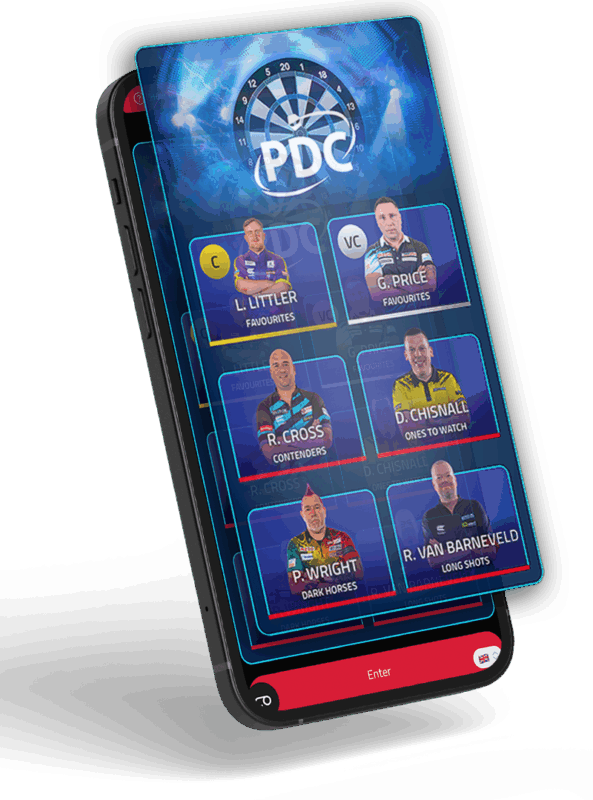
The games run across multiple PDC tournaments, giving fans consistent reasons to return. Each match becomes an opportunity to climb the leaderboard, adjust predictions, and stay connected to the action in real time.
The results so far: 92,967 sign-ups, a 36% opt-in rate, and a darts fan community that keeps growing
PDC hasn’t just increased engagement, they’ve built a community that keeps showing up:
- 92,967 total sign-ups, with 36% opting in to marketing communications
- 73.9% first-play conversion rate, demonstrating strong relevance around live competition moments
- Returning users generate 61% more entries than new users, validating the long-term audience development approach
- 15,424 users participate in mini-leagues, representing 42% of all active users
- 7,151 leagues created to date, with 77% remaining active
The mini-league mechanic has proved particularly powerful. Fans don’t just play, they recruit others, fuel rivalries, and turn individual participation into shared experiences. That kind of engagement lasts beyond a single tournament.
“Dizplai gave us a way to turn darts fans from spectators into participants. The mini-league mechanic in particular did something we hadn’t quite anticipated, fans started recruiting their own networks, creating rivalries that kept them coming back tournament after tournament. The opt-in rates alone told us we were onto something, but the real win was seeing fans play five, six, seven times and still want more. That’s not just engagement, that’s community.” – Lewis Wood-Thompson, Head of Digital, PDC
FAQs
Dizplai builds and manages fantasy and predictor games for PDC that run across multiple darts tournaments throughout the year. Fans can predict match outcomes, build fantasy line-ups, and create mini-leagues to compete with friends and fellow fans. Each tournament gives players fresh reasons to return, with prizes including signed merchandise creating a value exchange that makes participation worthwhile.
Fantasy and predictor games give fans a genuine reason to register with a sports organisation rather than just consuming content anonymously. For PDC, 36% of sign-ups opted in to PDC marketing communications at the point of registration, creating a direct, permission-based relationship between the organisation and its most engaged fans. That’s a first-party data outcome that passive viewership alone can never deliver.
A mini-league is a private competition within the broader game where fans can invite specific people (friends, family, colleagues) to compete directly against each other. For PDC, the mini-league mechanic has proved particularly powerful because it turns individual participation into a social experience with personal stakes. Fans don’t just return to check their own score, they return to track their rivalry. Of PDC’s active users, 42% participate in mini-leagues, and 77% of all leagues created remain active.
Rather than building engagement around a single event, Dizplai designs games that give fans consistent reasons to participate across the full tournament calendar. Each new competition resets the leaderboard and creates fresh moments to recruit new participants, while the mini-league structure gives existing fans reasons to stay active between tournaments. The result is a fan community that builds over time rather than peaking around one fixture.
The PDC model demonstrates the commercial case clearly. A 36% opt-in rate across nearly 93,000 sign-ups creates a substantial, permission-based marketing audience that PDC can activate directly. The mini-league mechanic extends reach organically as fans recruit their own networks. And the first-party data generated across multiple tournaments gives PDC a clearer picture of its most engaged fans than broadcast viewing figures alone could ever provide.