
Senior executives from brands such as Formula 1, West Ham United, Baller League, the FA, and more across the sports industry gathered for our first Solution Series event in London. Their challenge: solve the anonymous fan problem in 10 minutes.
Key insights
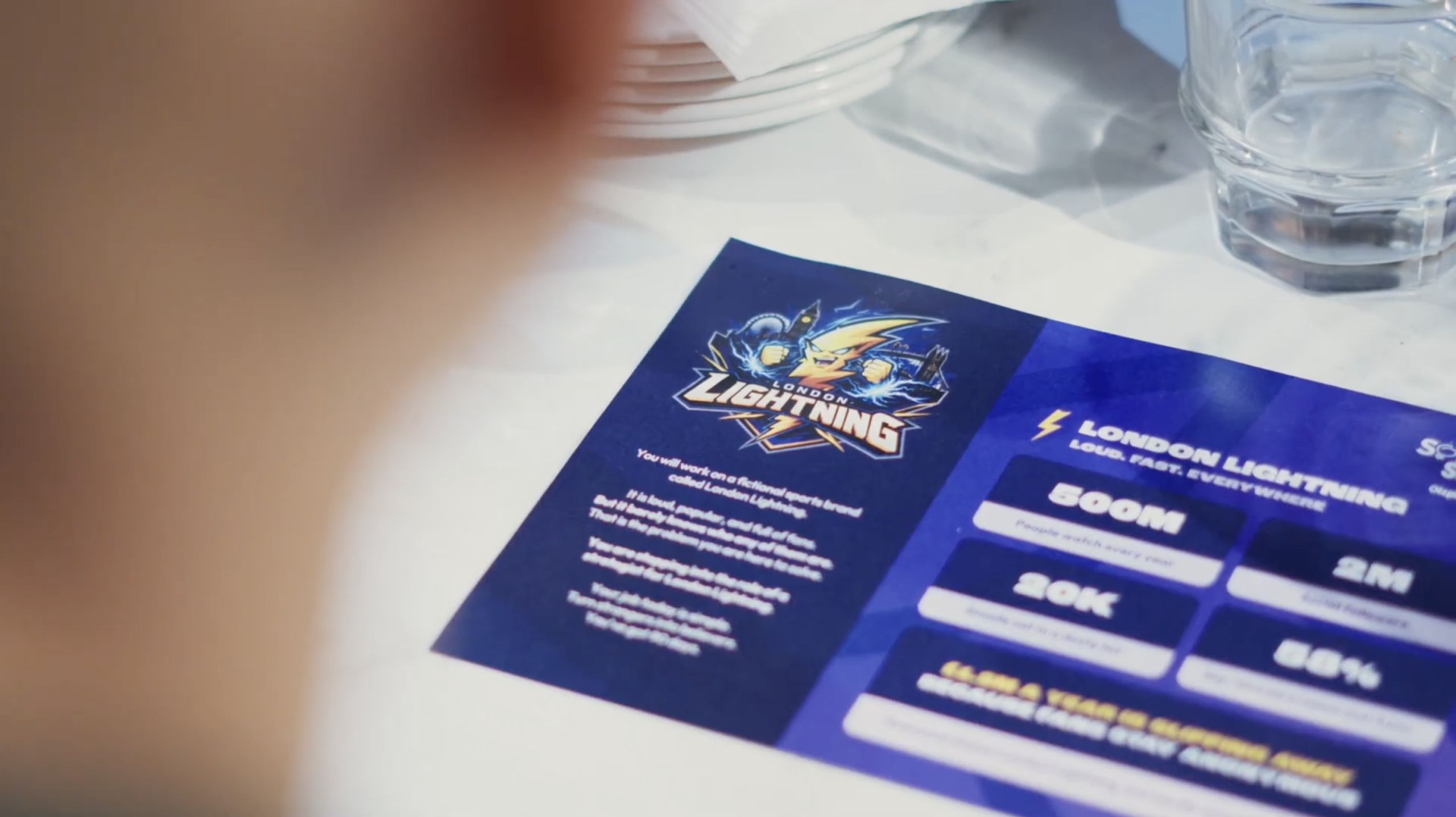
- Sports organisations that can only identify 40,000 fans from a base of 500 million broadcast viewers are losing an estimated £1.2 million a year to anonymous fandom.
- Fans don’t resist sharing their data. They resist sharing it when nothing meaningful is offered in return.
- The most effective fan engagement strategies make identity feel like elevation, not extraction.
- Broadcasting creates reach but no first-party data. Social creates engagement but not ownership.
- The anonymous fan problem isn’t a data challenge. It’s a design challenge.
The setup: a fictional crisis with very real stakes
London Lightning is a team that boasts 500 million broadcast viewers, and 2 million social followers. But that brings them a first-party data problem that costs £1.2 million per year: they only know 40,000 of their fans by name. The rest are anonymous fans.
At our first Solution Series event in London, we gathered senior executives from across the sports industry and gave them a ticking clock and a real problem to solve.
No presentations. No panels. Just 10-minute sprints to design solutions for a fictional NFL franchise with a very non-fictional challenge; the anonymous fan problem that’s quietly bleeding revenue from organisations across the industry.
The challenge: how sports organisations activate fan attention
During the first round, teams were hit with “The Hype” challenge: You have the attention, but you don’t activate it.
One team’s solution was “Loyalty & Reward.” The concept was elegant in its simplicity. Fandom is a habit, and that creates repeat sales and constant engagement. They identified that you can’t expect to build on loyalty from people you don’t know exist.
Another team went deeper with what they called “Trace Consumer Spending.” They proposed a loyalty rewards programme similar to Nectar, but designed specifically to understand where fans spend money across partners and retailers. The ambition was clear: if you can track consumer behaviour, you can increase your data to share with partners and prove commercial value.But the issue is that tracing spending patterns assumes that fans will opt-in to being tracked. The missing piece was the value exchange. What should fans get that makes this service look less like surveillance?
The identity moment: when anonymous fans choose to become known
By the time teams rotated to “The Identity” challenges, the question became sharper: Could they identify the exact moment a fan stops being anonymous?
One winning concept, “The Community Exchange”, understood something fundamental: fans will trade phone numbers and data for access and recognition. The idea proposed collecting this information through a “badging” system that rewards with things like early access, the opportunity to ask questions at press conferences, and the opportunity to vote on decision making.
Another team tackled “The Trade” challenge with stark simplicity. Their solution: to ask for a phone number and other data, but offer access and recognition in exchange. Clean, direct, no gimmicks.
The insight here wasn’t complex, but it was focused. Fans don’t resist identification because they’re precious about their privacy. It’s because most organisations ask for data without offering anything meaningful in return.
The fan acquisition engine: breaking down our favourite solution
The best idea from the Identity round was “#MyFirstTouchdown.”
They proposed a social campaign where winners share their experience on social media and appear on a leaderboard. Fans vote who it is each week, and a new anthem is created by a co-creator. Fans must sign up with a micropayment to vote.
Why did it work?
- Social proof built in: fans become the content
- Data capture disguised as participation: voting requires identity
- Recurring engagement loop: weekly ritual creates habit
- Economic validation: micropayment proves intent, not just interest
This was a solid working fan acquisition engine designed in only ten minutes.

The pattern behind the best fan engagement solutions
Across both challenge areas, the solutions that scored highest shared three characteristics:
- They made identity feel like elevation, not extraction. Fans weren’t “giving up” their data, they were gaining status, access, or influence.
- They created immediate, visible value. Not “you’ll get updates” vagueness. The benefit was clear and instant.
- They understood the economics of attention. Reach without a relationship is expensive. These solutions turned visibility into ownership.
Why your current system is failing anonymous fan capture
What became clear throughout the night wasn’t just that anonymous fans cost money, it’s that most organisations have built their entire operating model around not knowing their audience.
Broadcasting generates reach but no first-party data. Social media generates engagement but not ownership. Ticketing generates transactions but not relationships.
The teams who solved this best didn’t try to optimise the current system. They questioned whether the system itself was fit for purpose for building an audience you actually own.
What this means for your fan engagement and monetisation strategy
The main insight our guests walked away from the Solution Series event with was: the anonymous fan problem isn’t a data challenge. It’s a design challenge.
You haven’t failed to capture data. You’ve failed to give fans a reason to step out of the shadows.
Crack the anonymous fan problem and you’re not just tidying up a data gap. You’re building the commercial foundation that makes sponsorship renewals easier, audience monetisation possible, and every fan interaction worth more than the last.
Want to calculate what anonymous fans are costing your organisation? Use the Anonymous Fan Revenue Calculator.
Don’t miss the next Solution Series
Solution Series runs throughout the year in London and Manchester.
If you’re a senior leader in sports, rights, media, content or fan engagement, this isn’t another conference. It’s 90 minutes of strategic thinking you can’t get anywhere else, working alongside executives from other organisations, tackling the hardest problems in the industry, and walking away with ideas you’ll actually use.
FAQs
The anonymous fan problem refers to the gap between how many people follow or watch a sports organisation and how many of those fans the organisation can actually identify, contact, and build a commercial relationship with. Research by Dizplai found that sports organisations typically know fewer than 25% of their fanbase by name and contact detail, which costs rights holders between $1 million and $5 million a year in unrealised revenue.
Most fans are anonymous because the channels that deliver the biggest audiences — broadcast, social media, and third-party apps — don’t pass first-party data back to the rights holder. Organisations receive reach and impression data, but no names, no email addresses, and no contact details. Without a deliberate strategy to create a value exchange, fans have no reason to identify themselves.
The most effective approaches make identity feel like an upgrade, not a form to fill in. Exclusive coach access, early ticket priority, interactive fan engagement tools, badging systems, voting mechanics, and co-creation opportunities all give fans a clear reason to share their details. The key is making the benefit immediate and visible, not vague or deferred.
Once you know who your fans are, you can personalise commercial offers, build measurable sponsorship packages, create premium membership tiers, and prove fan engagement to partners with real data. Sponsors are increasingly demanding this evidence at renewal. Organisations with strong first-party fan data are in a fundamentally stronger commercial position than those relying on reach and impressions alone.
The Solution Series is Dizplai’s peer-to-peer problem-solving event format for senior commercial and marketing leaders in sport. No panels, no PowerPoint — just focused working sessions tackling the hardest real-world challenges in fan engagement, first-party data strategy, and audience monetisation. Events run throughout the year in cities across the UK.
Sign up and we’ll let you know when the next event opens.
The cost of anonymous fans isn’t theoretical. Neither is the thinking that solves it.